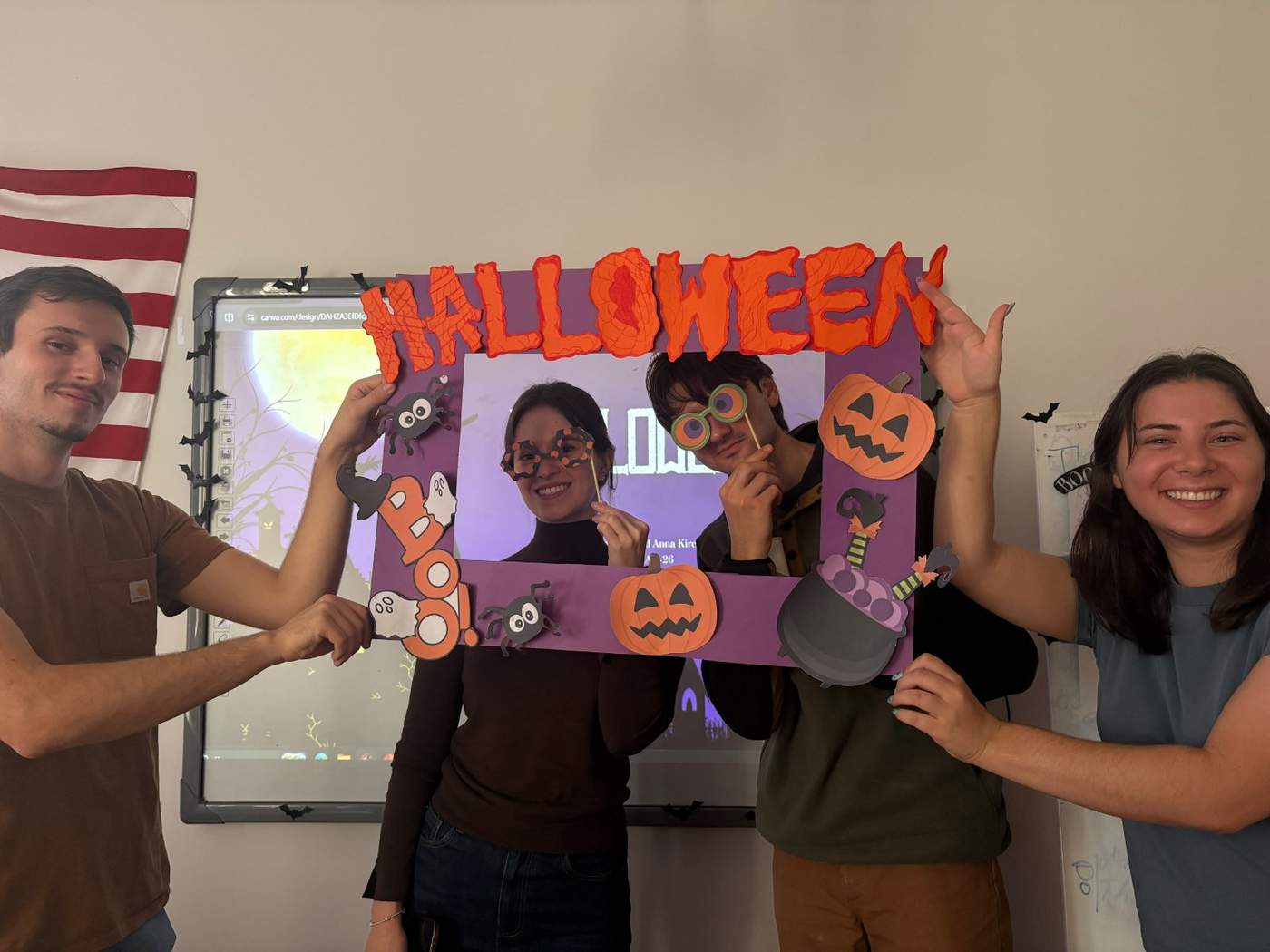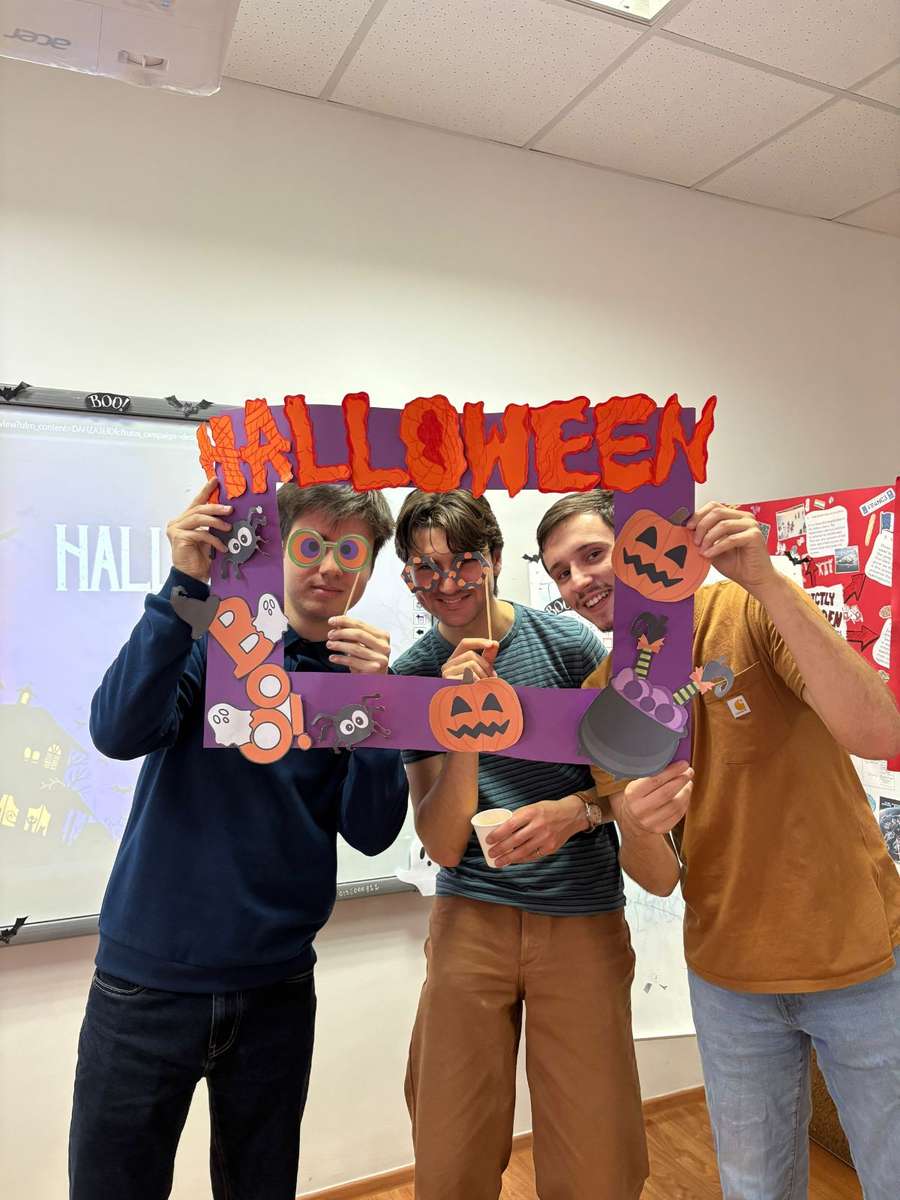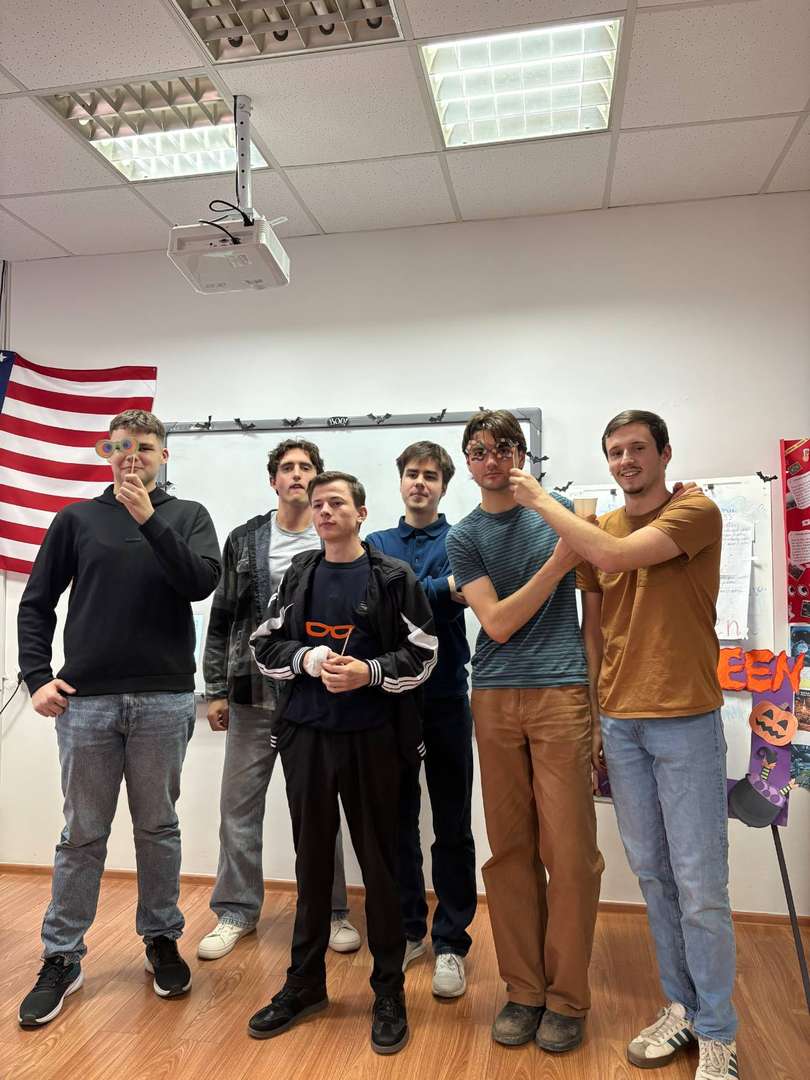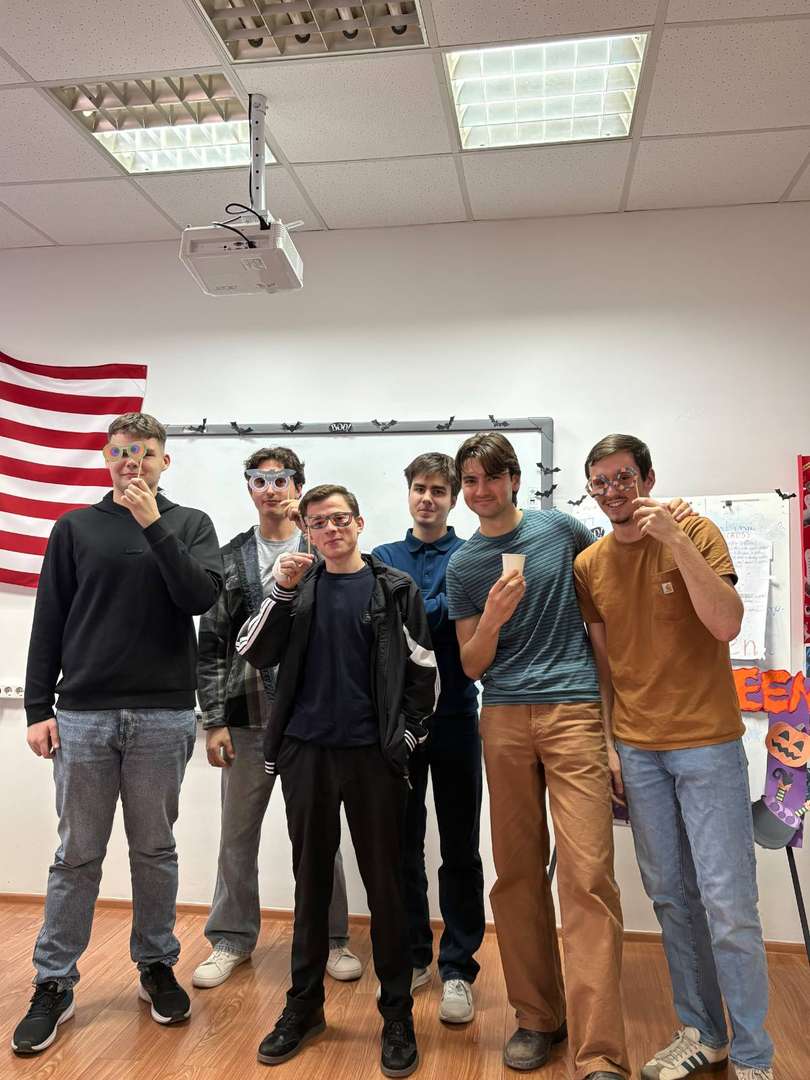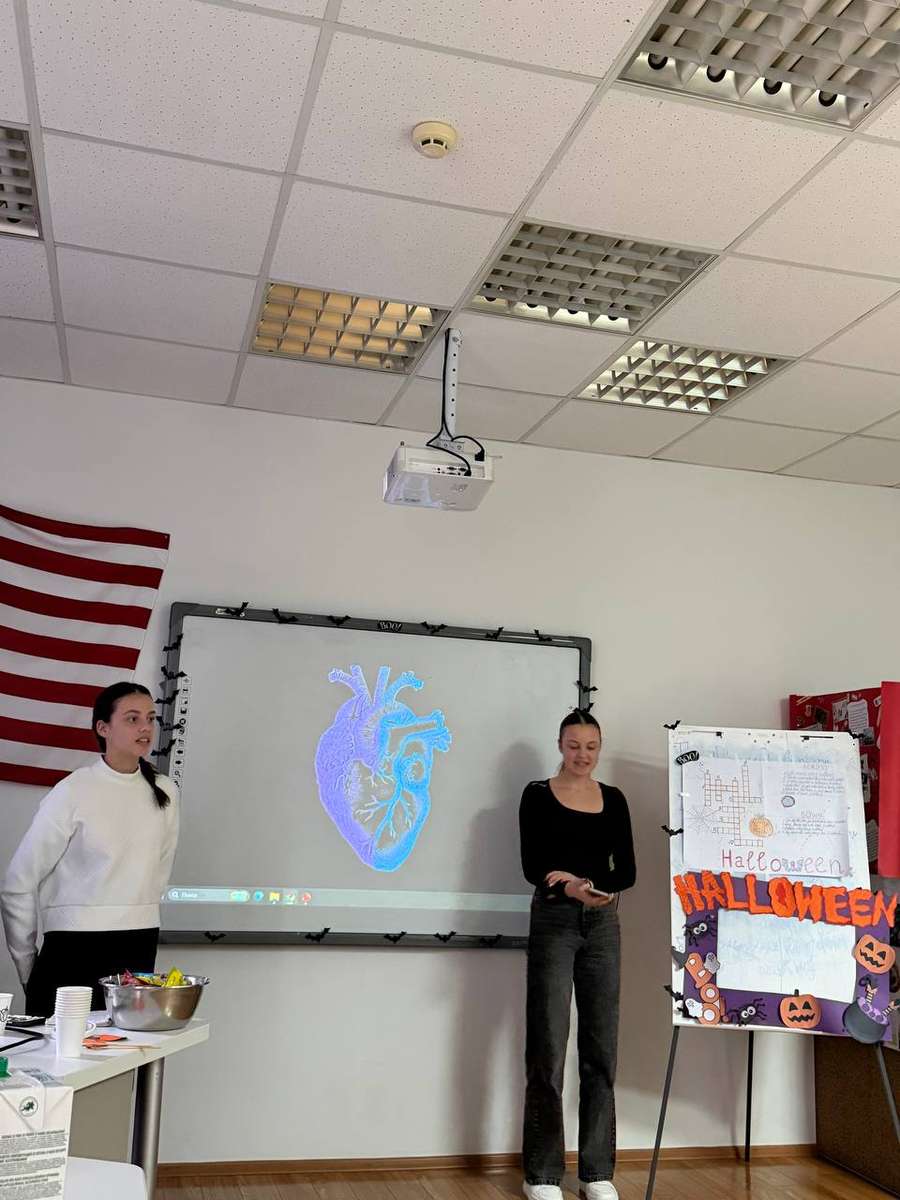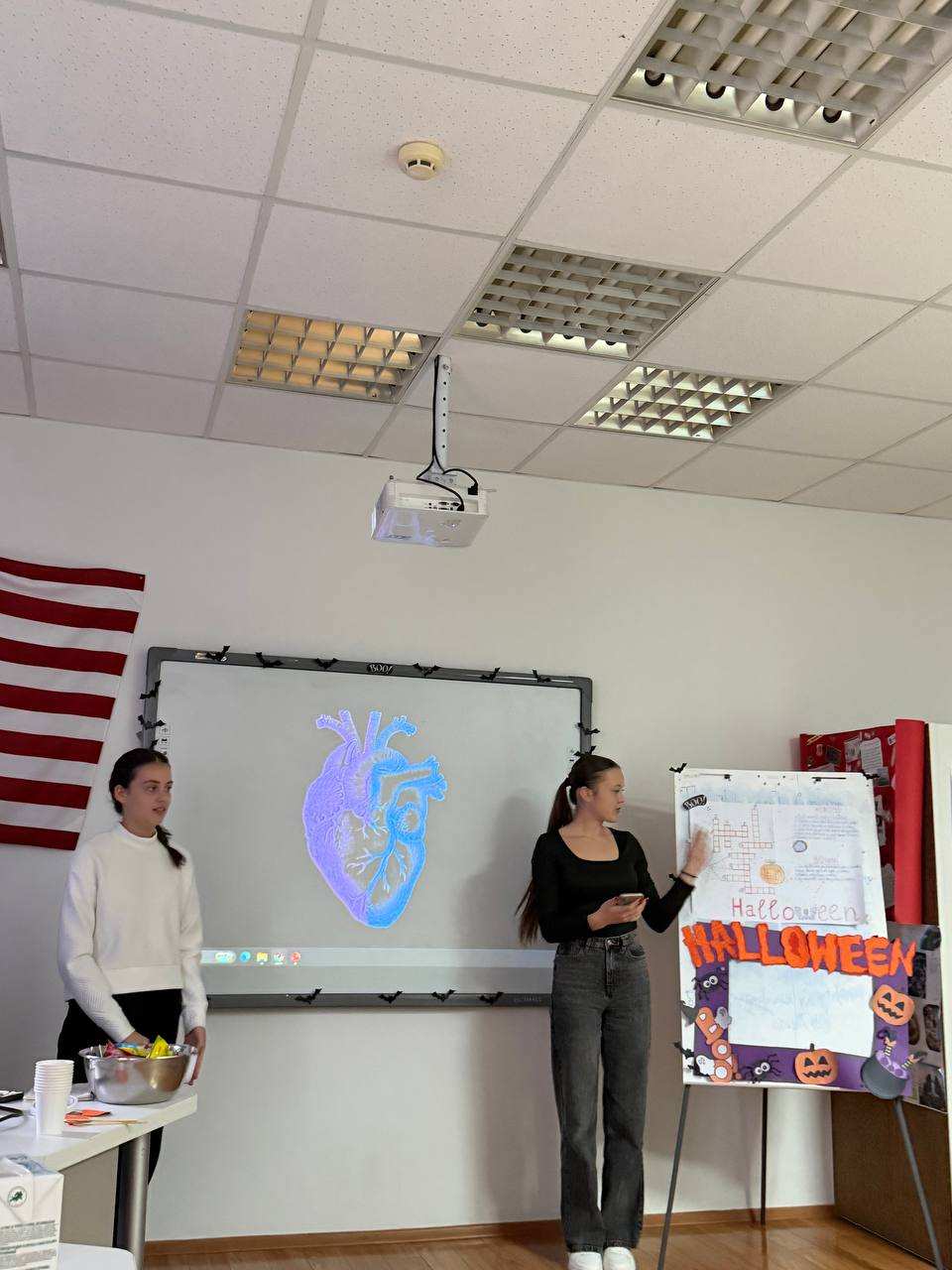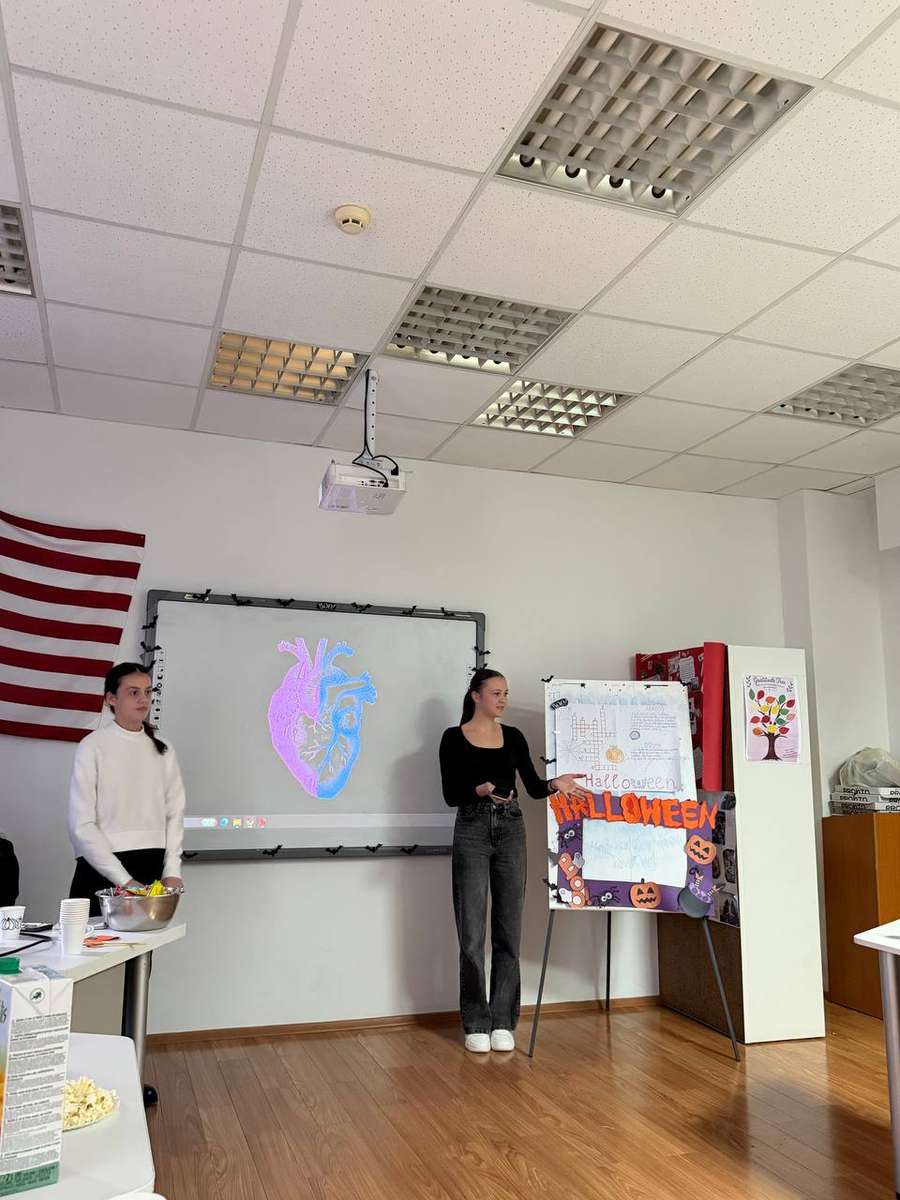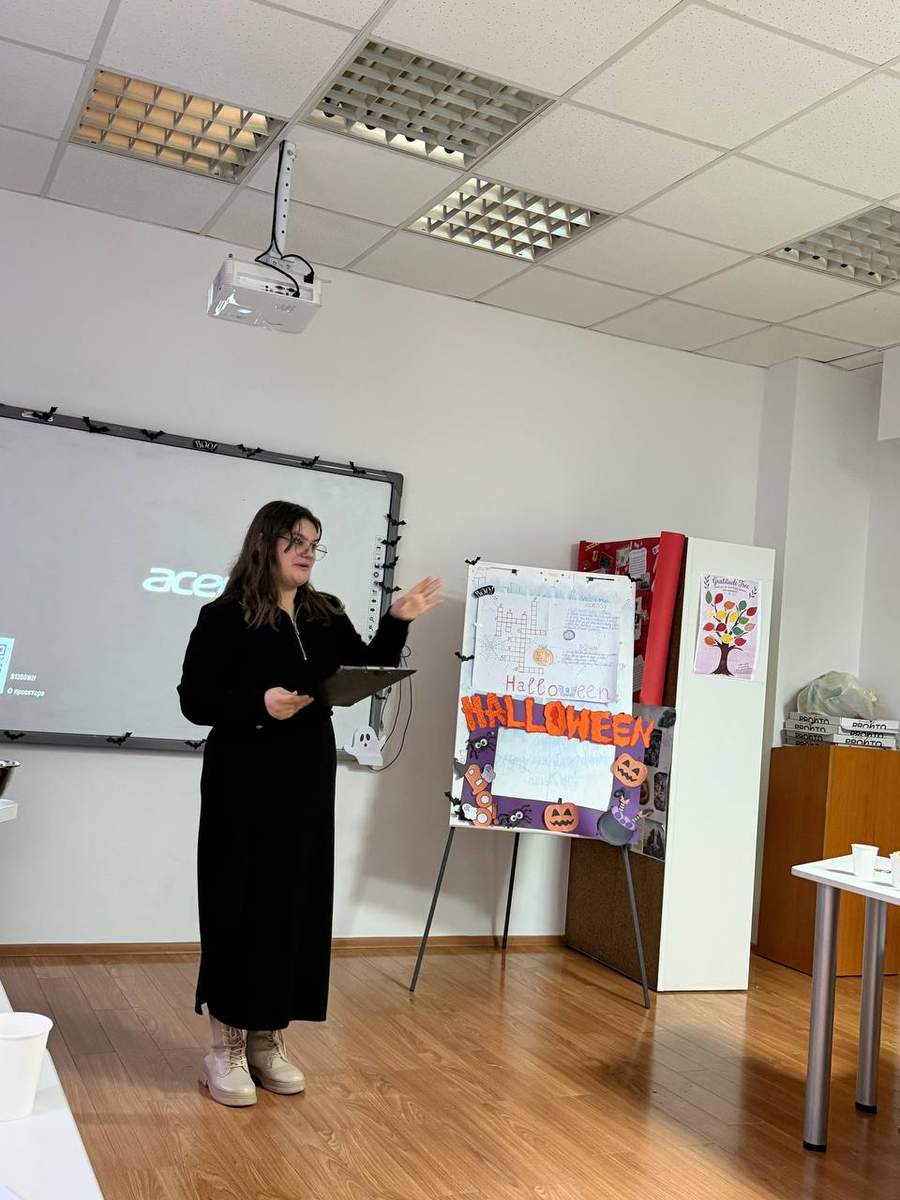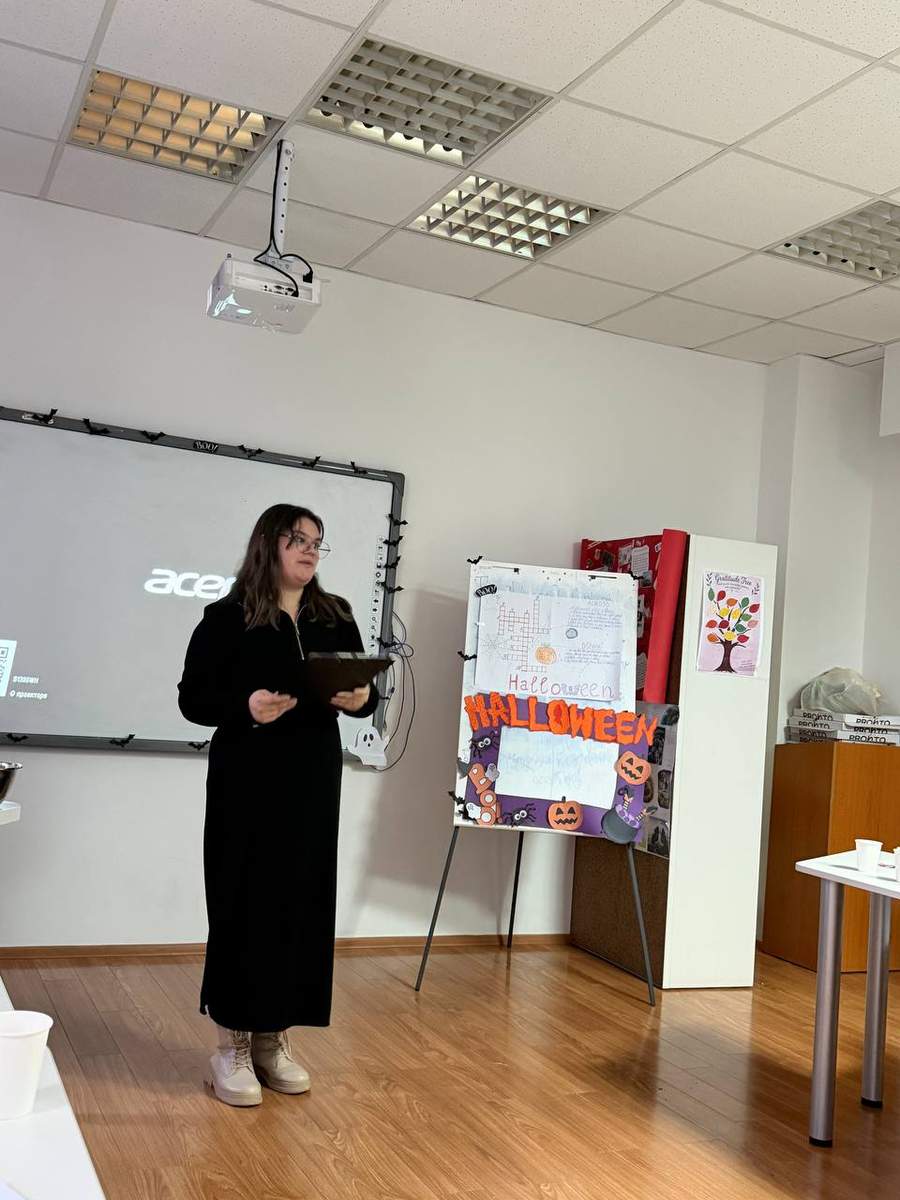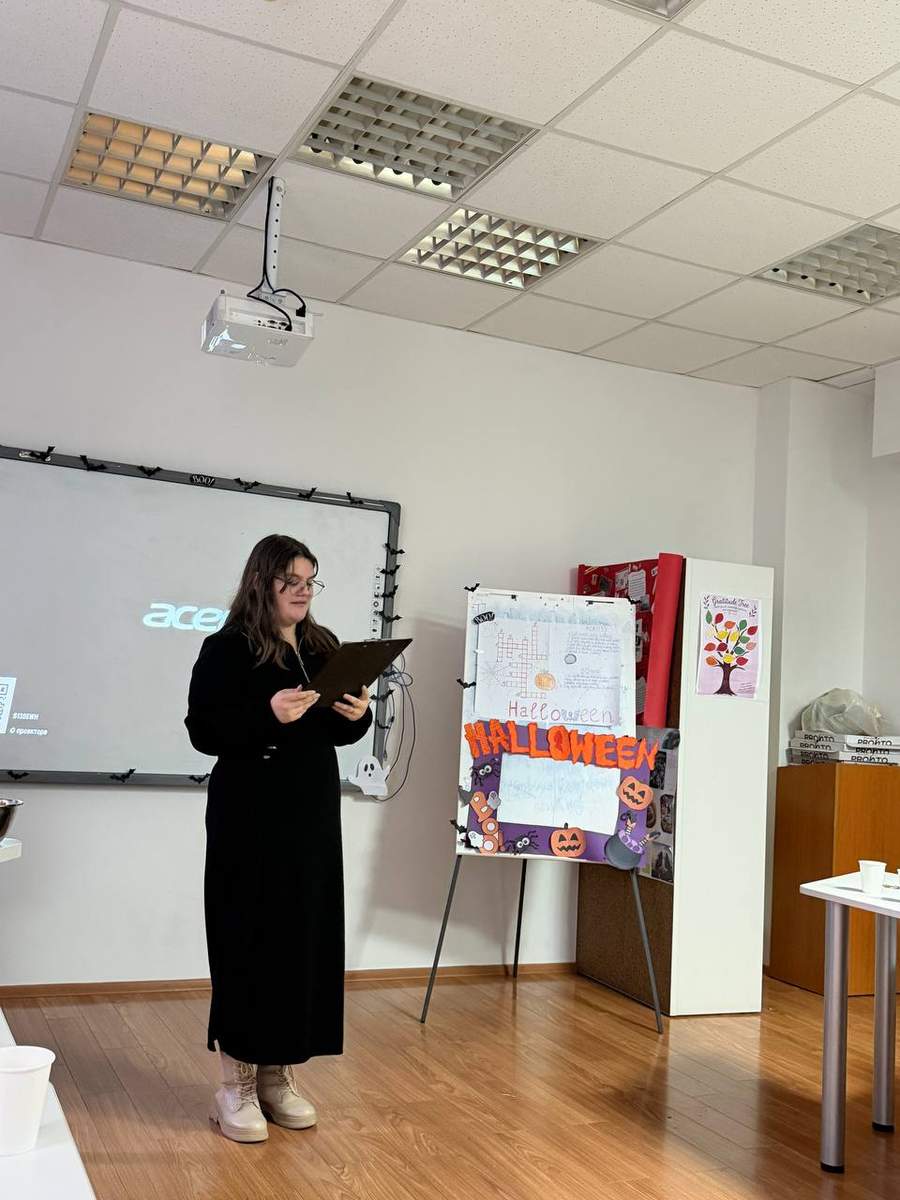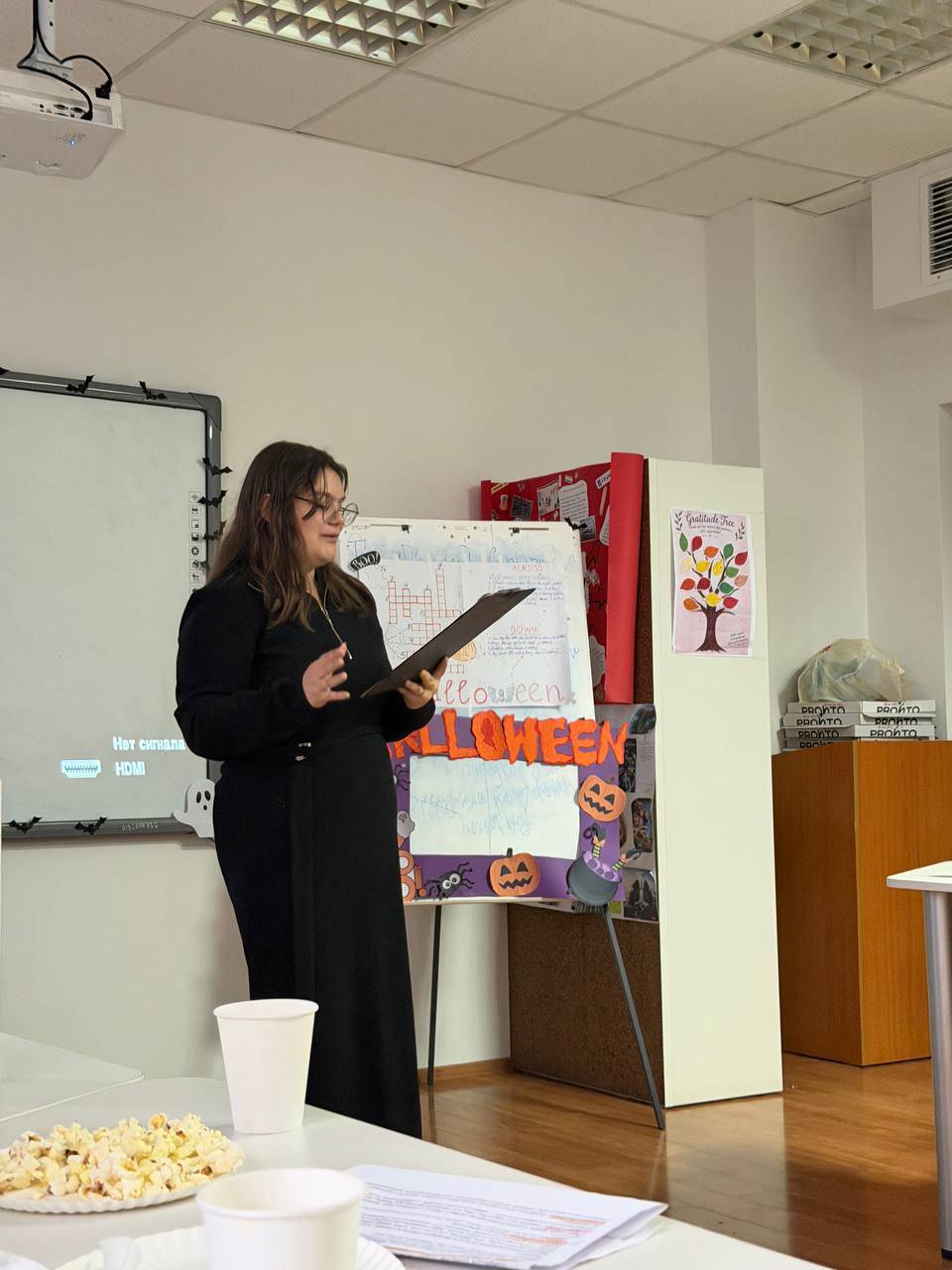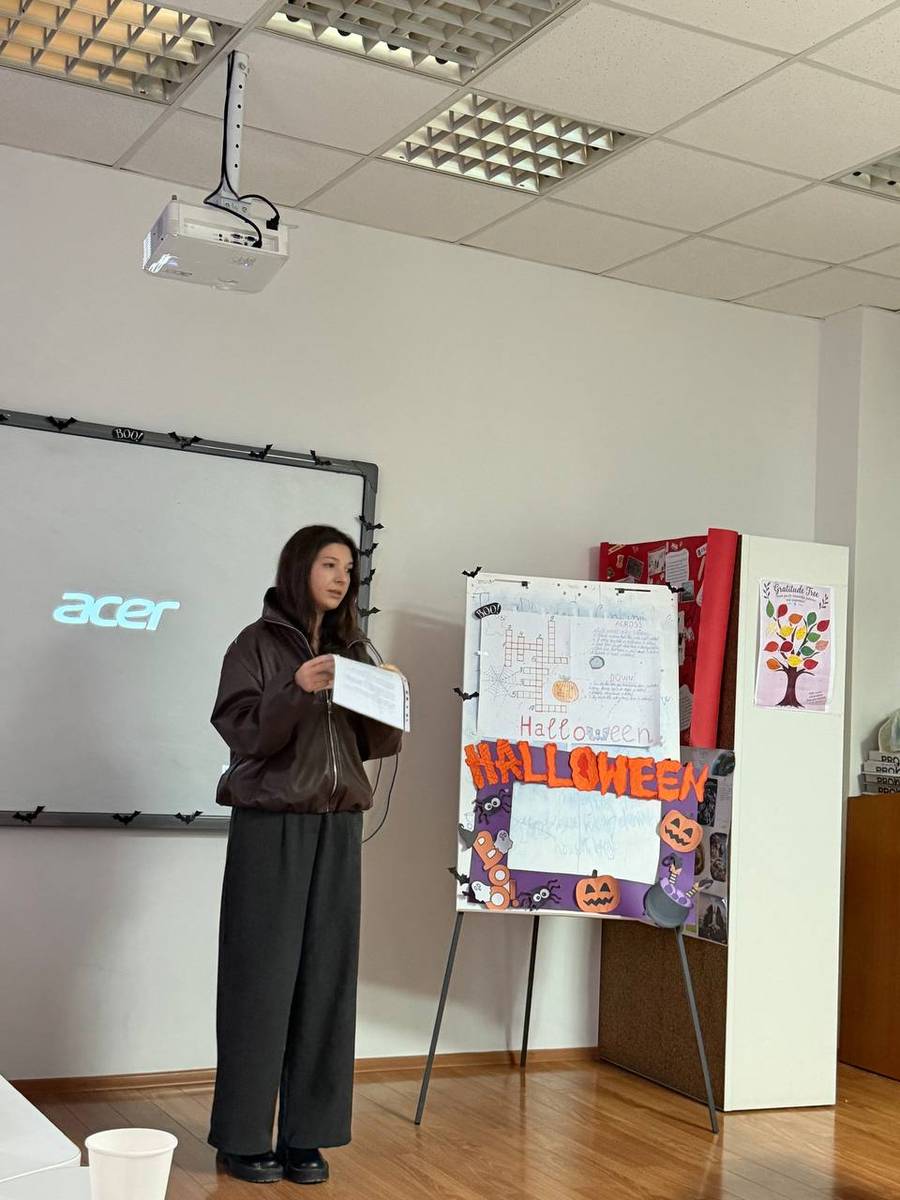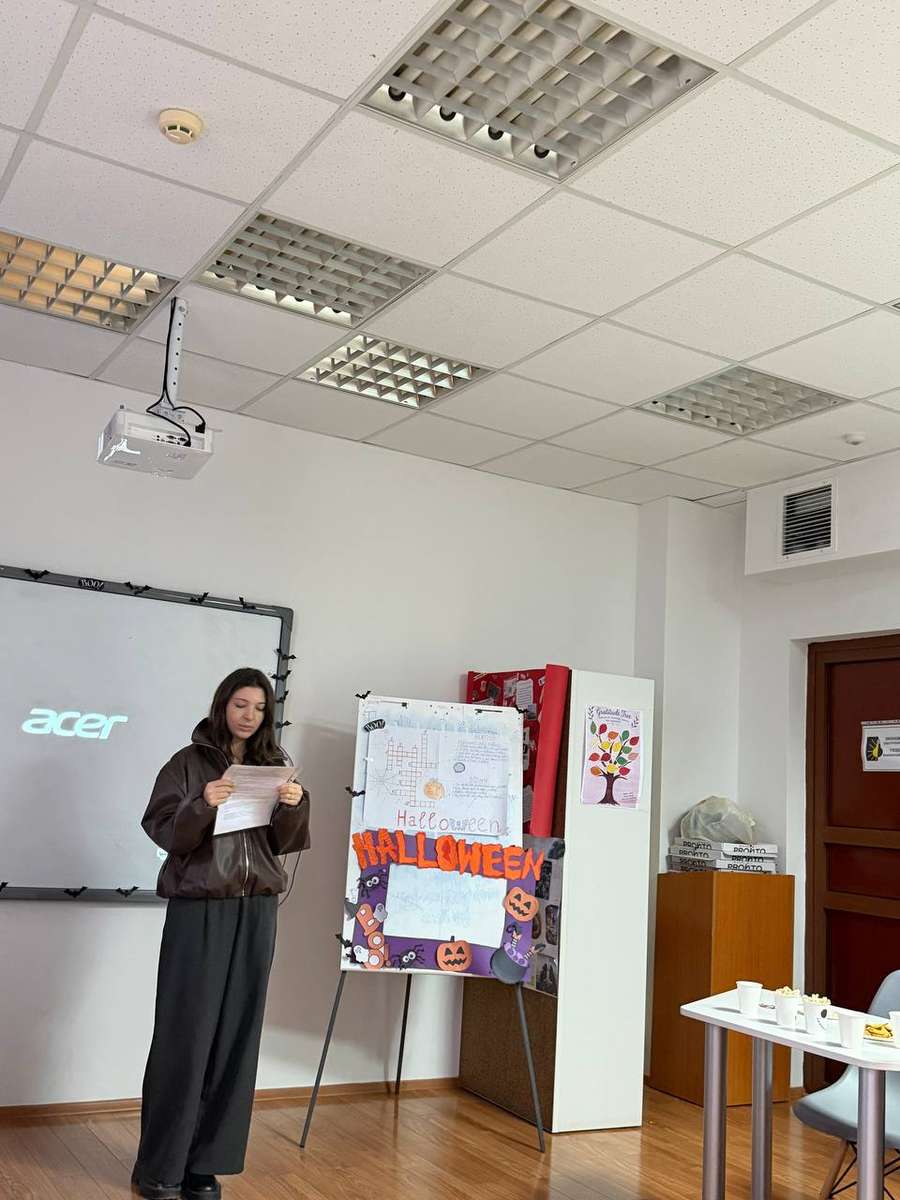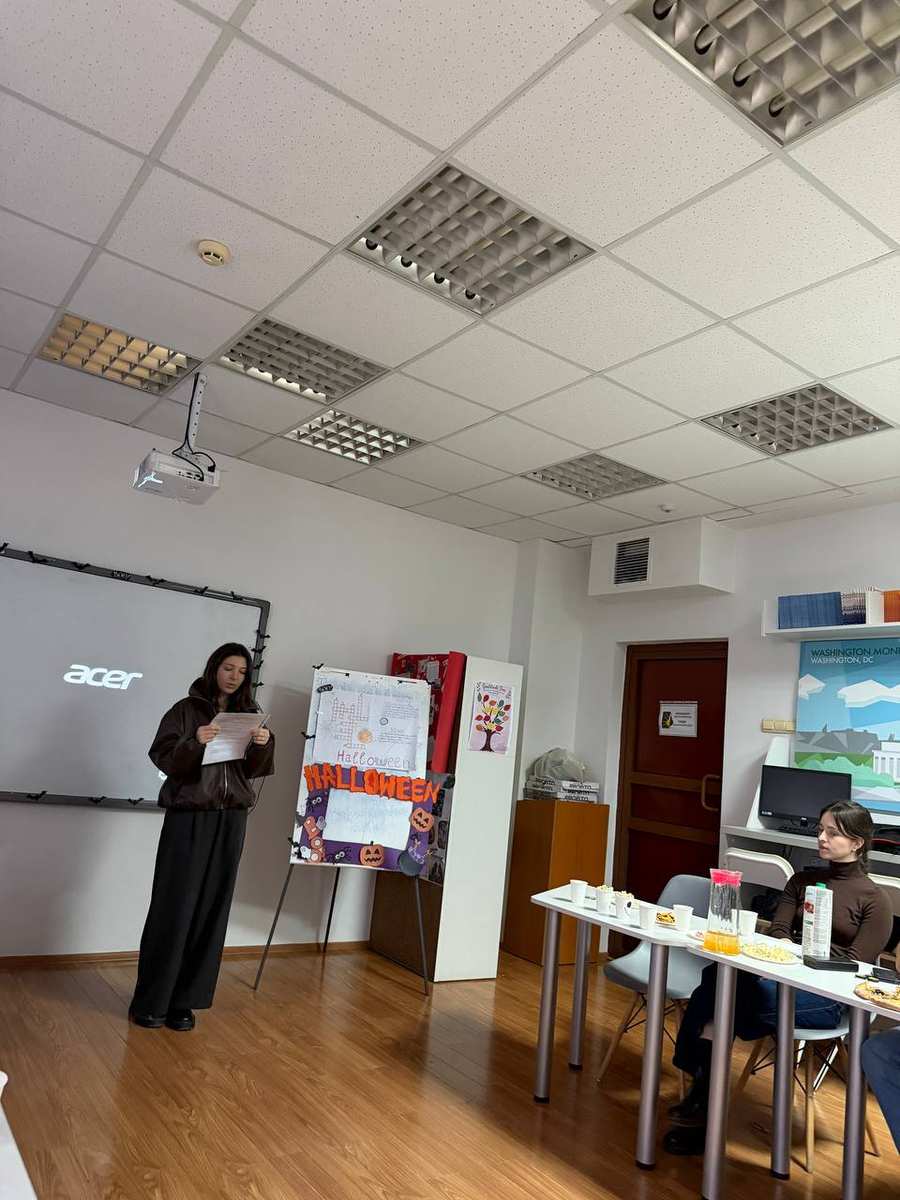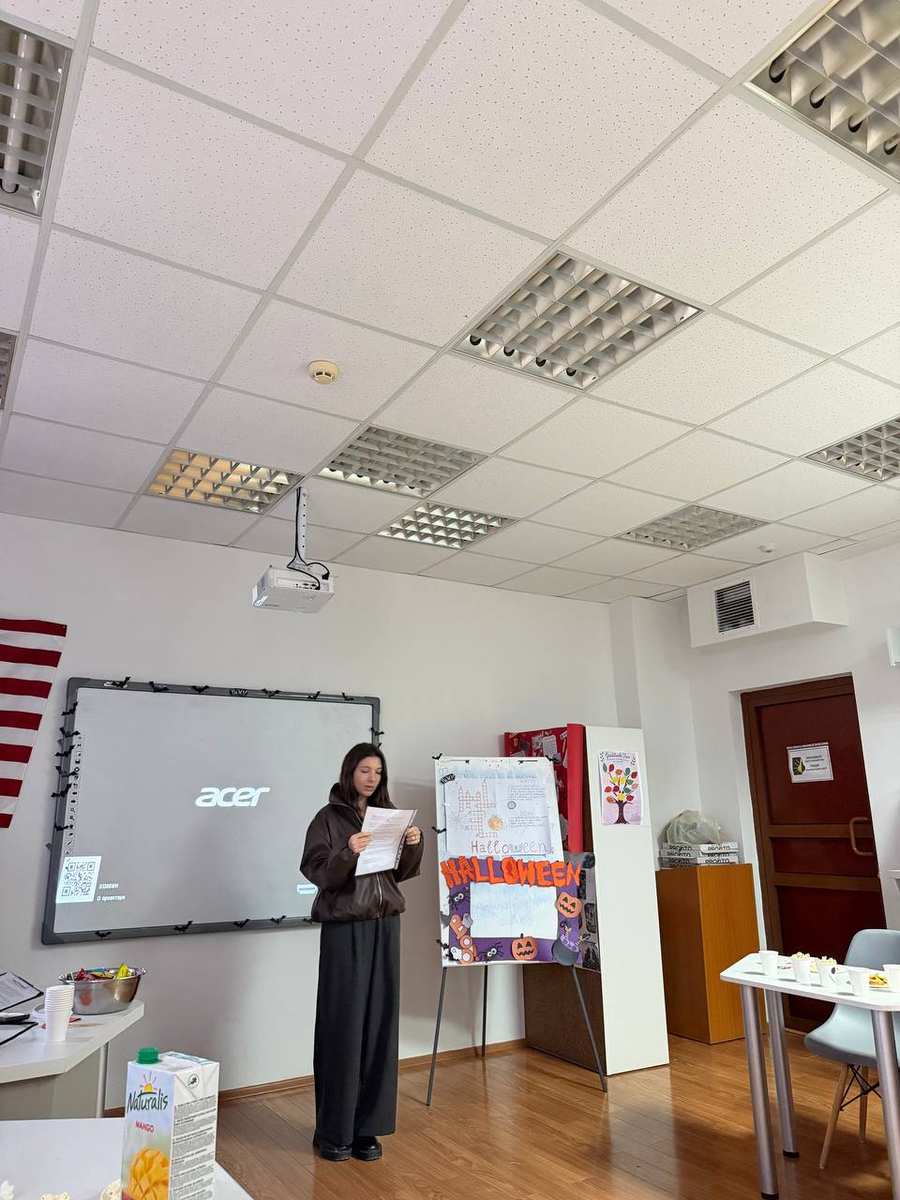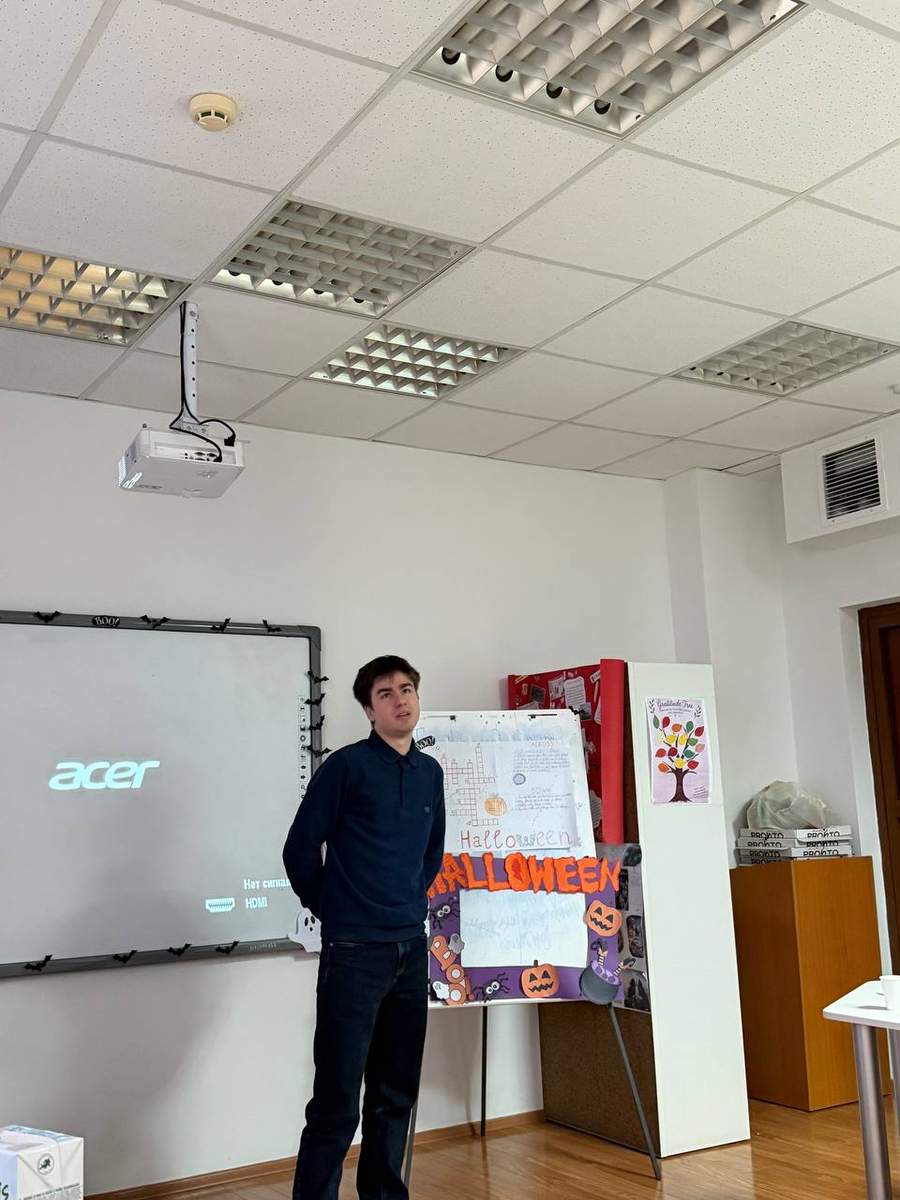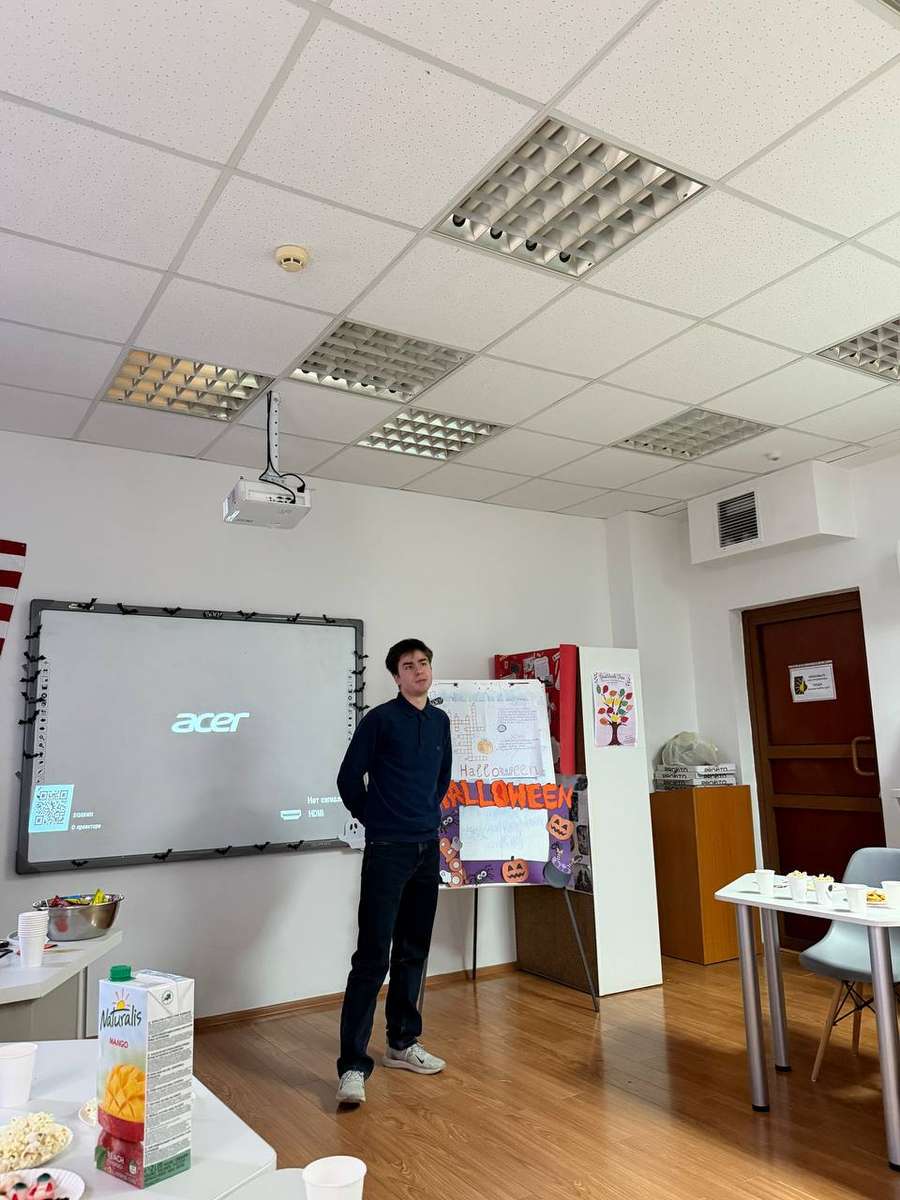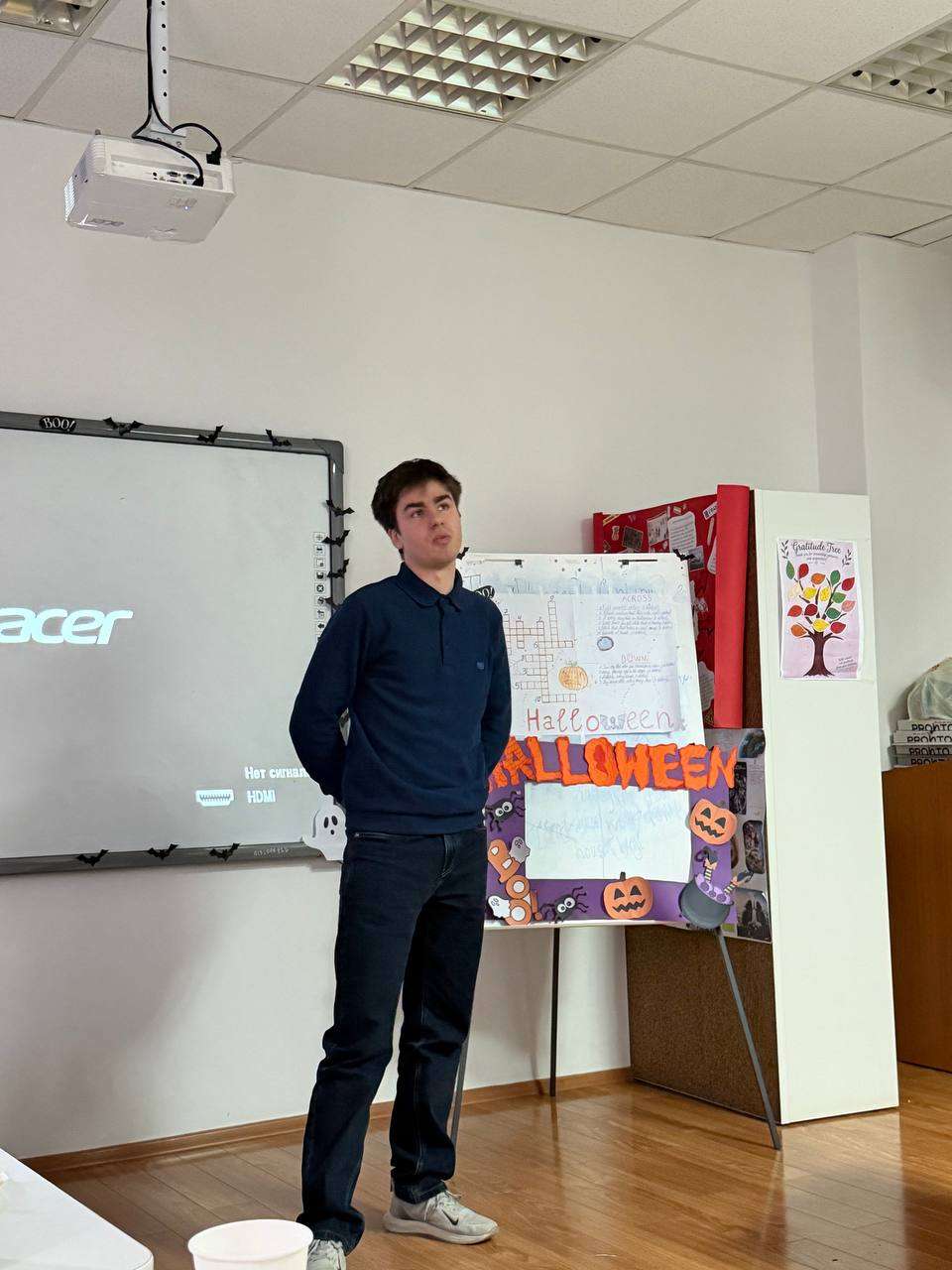



On Octomber 26th, 2026 students of Foreign Languages Department (group AN-26) with their English Language Lecturer Nicolaeva Prascovia Dmitrievna and guests (Fulbright English Teaching Assistants Zoya Meydbray, Rachel Bell, Max Annunziata, and Rocco Barbusca) gathered in a Spooky Town (Classroom 204 – American Center) of Comrat State University for a Halloween-themed event dedicated to exploring the history, traditions, and cultural significance of one of autumn holidays of the English-speaking world. The lesson combined informative presentations, interactive activities, and entertainment, creating an engaging atmosphere in which participants could practise English while discovering the fascinating world of Halloween.
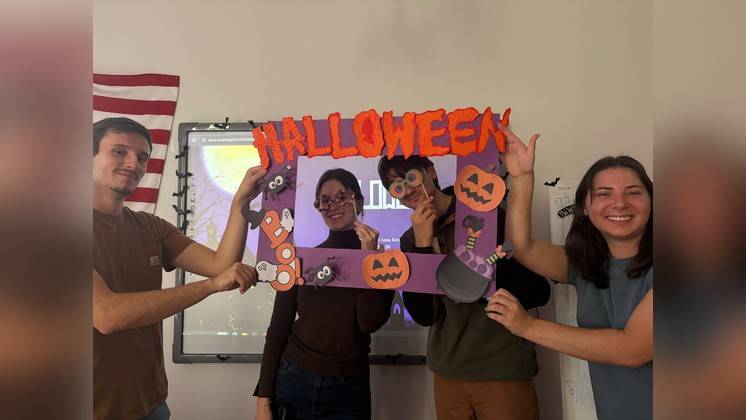
The programme began with a warm welcoming speech from the organizers, who introduced the day’s activities and invited participants to enjoy the festive atmosphere, complete with Halloween decorations, masks, a photo zone, and sweet treats.
The first presentation, delivered by Anna and Alina, focused on the origins and history of Halloween. Participants learned about the ancient Celtic festival of Samhain, the historical development of the celebration, and the origins of several traditions that remain popular today.
The lesson continued with a video and presentation by Daniil and Valeria, who explored how Halloween and related celebrations are observed in different countries. Their contribution highlighted the diversity of cultural customs and demonstrated how traditions can vary across communities.
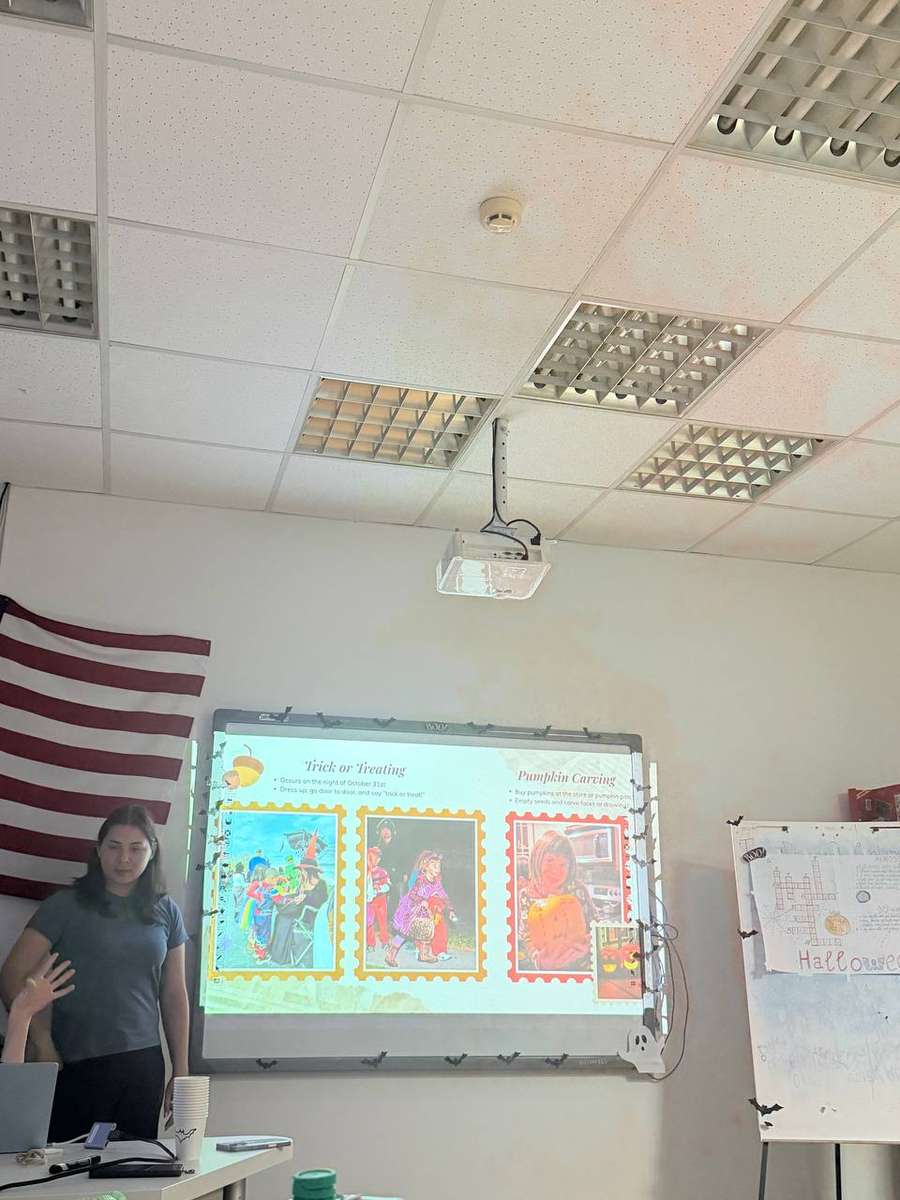
Next, Kirill introduced participants to Halloween traditions in English-speaking countries, including the United Kingdom, the United States, and Ireland. The speech explored familiar customs such as trick-or-treating, costume parties, and pumpkin carving, helping students deepen their understanding of the cultures associated with the English language.
Elena then presented a collection of fascinating facts about Halloween, offering participants new insights into the holiday’s symbols, customs, and popularity. The presentation encouraged everyone to look beyond the familiar costumes and decorations and discover the historical background of the celebration.
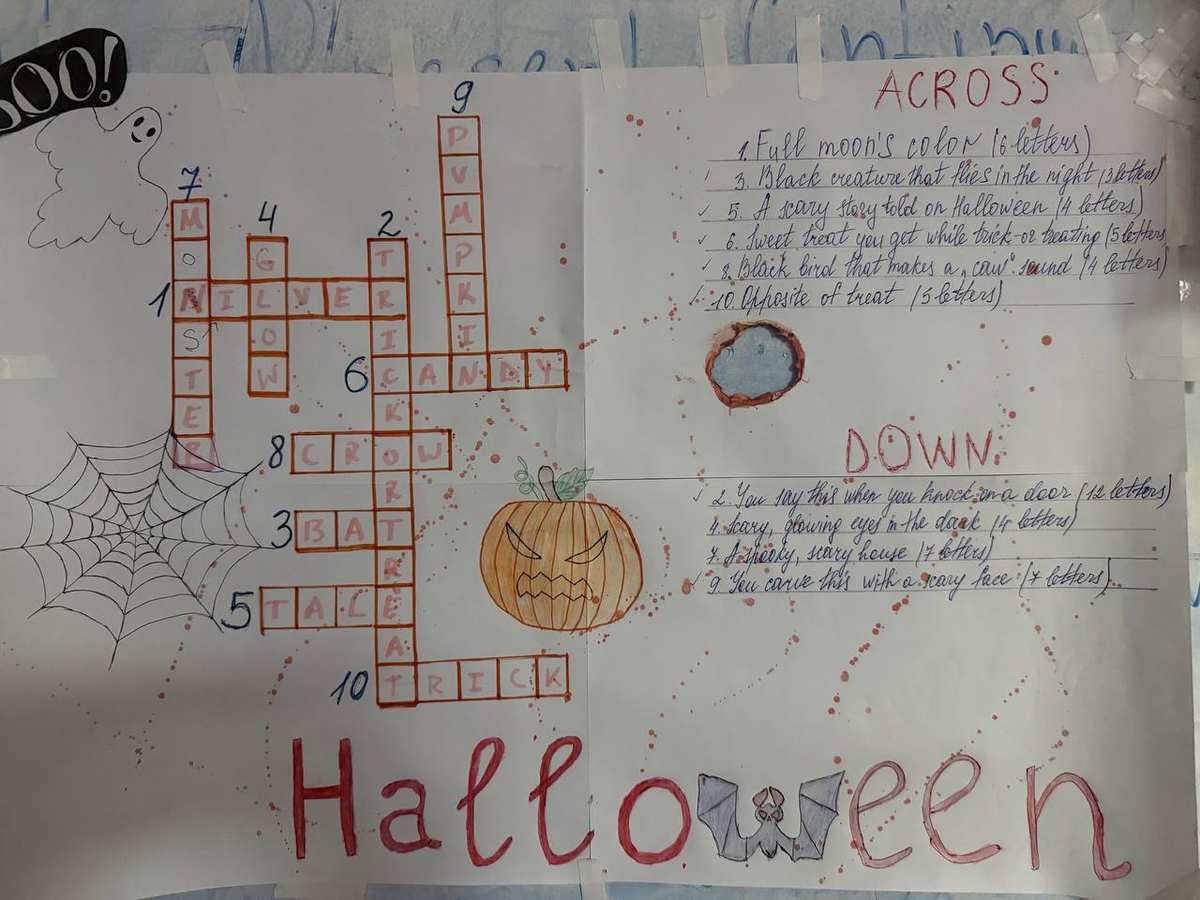
The lesson was followed by a series of interactive activities. Under the guidance of Evghenya and Irina, students took part in a Halloween crossword challenge, while invited guests had the opportunity to solve a large crossword displayed on a poster. The activity encouraged participants to apply their English vocabulary and problem-solving skills in a friendly, competitive atmosphere.
Victor continued the programme with a selection of English-language riddles on the topic. Participants tested their logic, creativity, and language comprehension as they tried to solve the questions and uncover the answers.
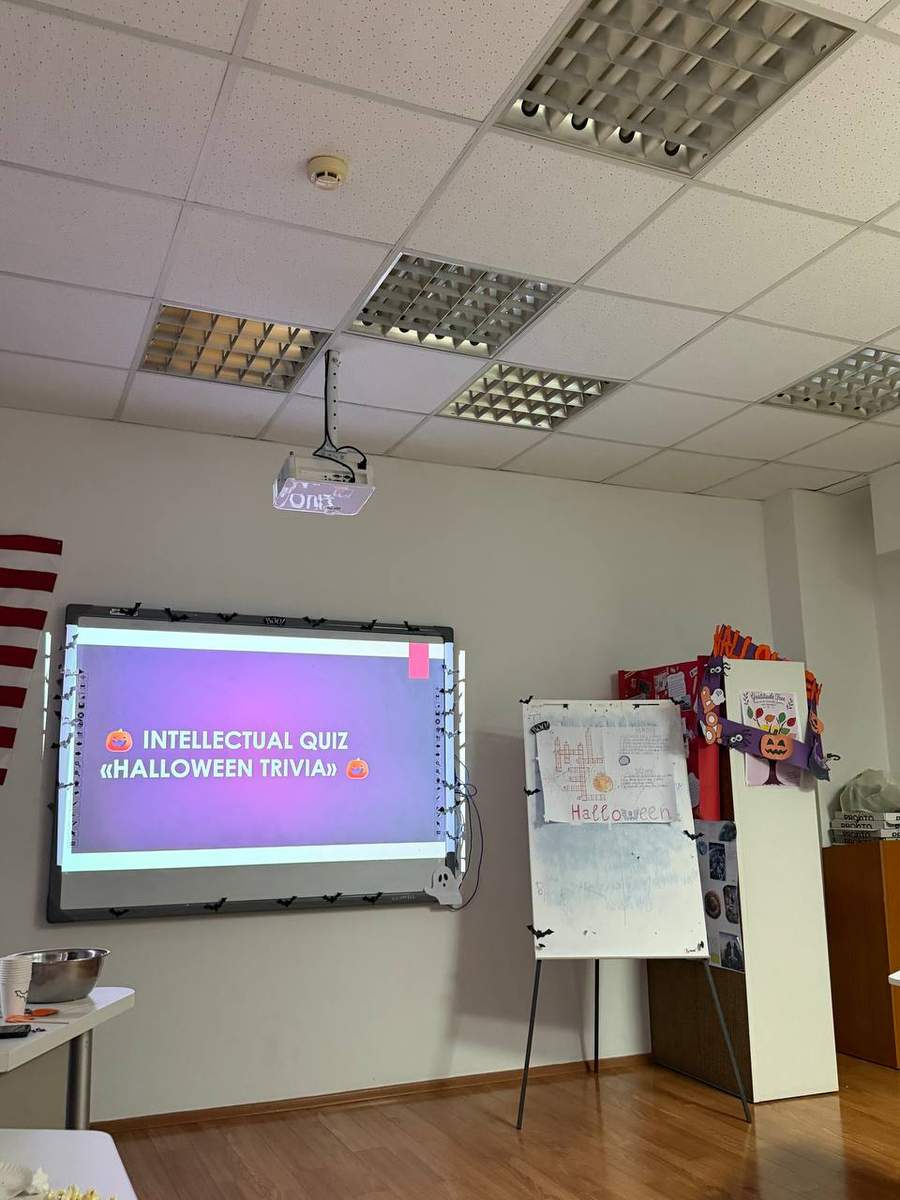
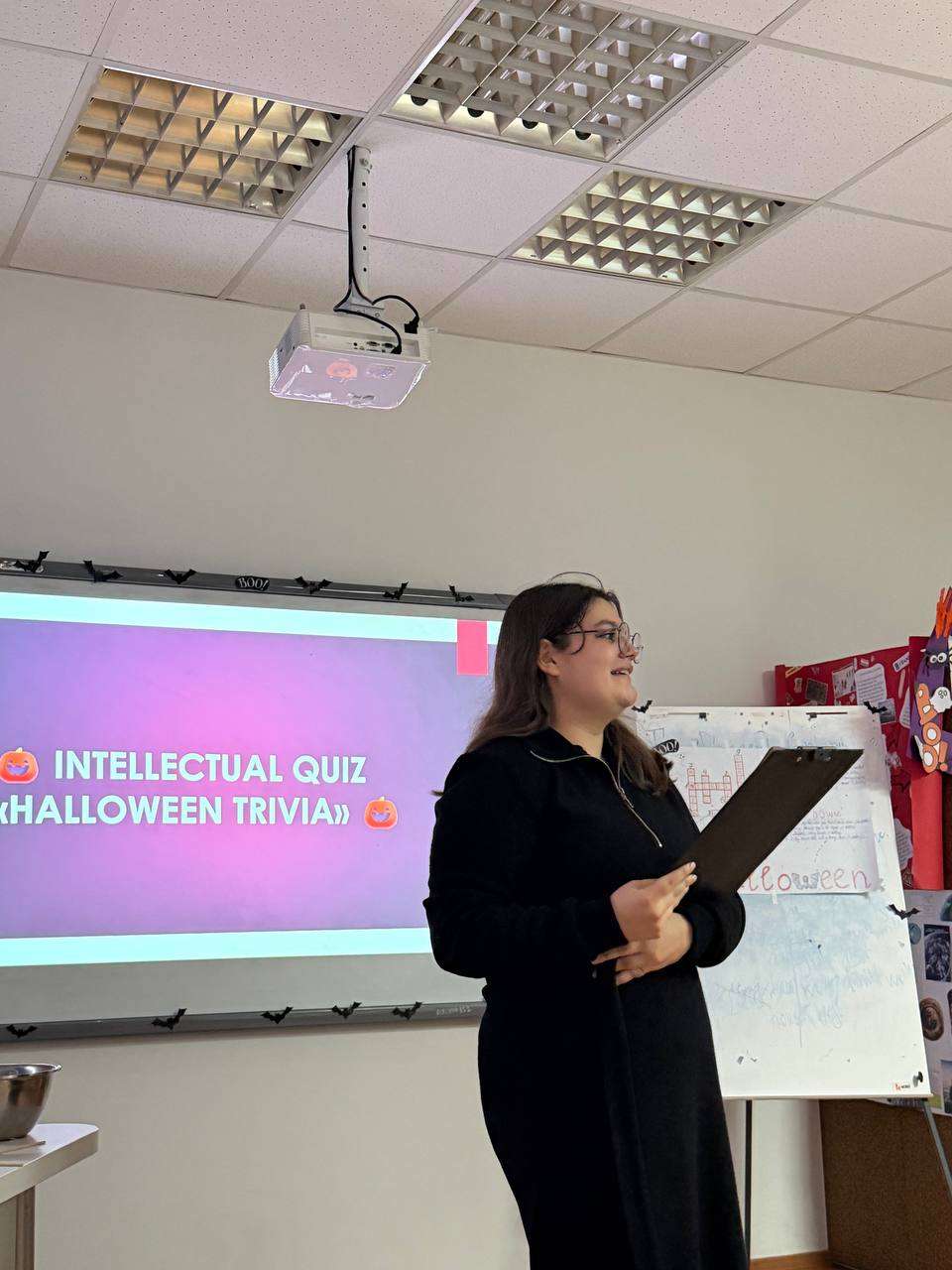
One of the most anticipated activities was the Halloween quiz organized by Lia. Participants answered questions about Halloween history, international traditions, and interesting facts about the celebration. Correct answers were rewarded with sweet treats, adding an extra element of excitement and motivation.
Throughout the event, students had the opportunity to communicate in English, share their knowledge, work with others, and learn about cultural traditions in an informal and enjoyable atmosphere. The combination of presentations, videos, games, and creative activities demonstrated how foreign language learning can extend beyond the traditional classroom.
The event concluded with words of appreciation for everyone who contributed to its success. Participants were encouraged to take photographs at the Halloween photo zone and enjoy the festive atmosphere together.
The Halloween lesson was a valuable opportunity to combine education, intercultural awareness, and entertainment. It helped promote interest in English language learning, encouraged active participation, and reminded everyone that discovering another culture can be both informative and fun.
The event concluded on a cheerful note, leaving participants with new knowledge, enjoyable memories, and a stronger appreciation of the connection between language and culture.