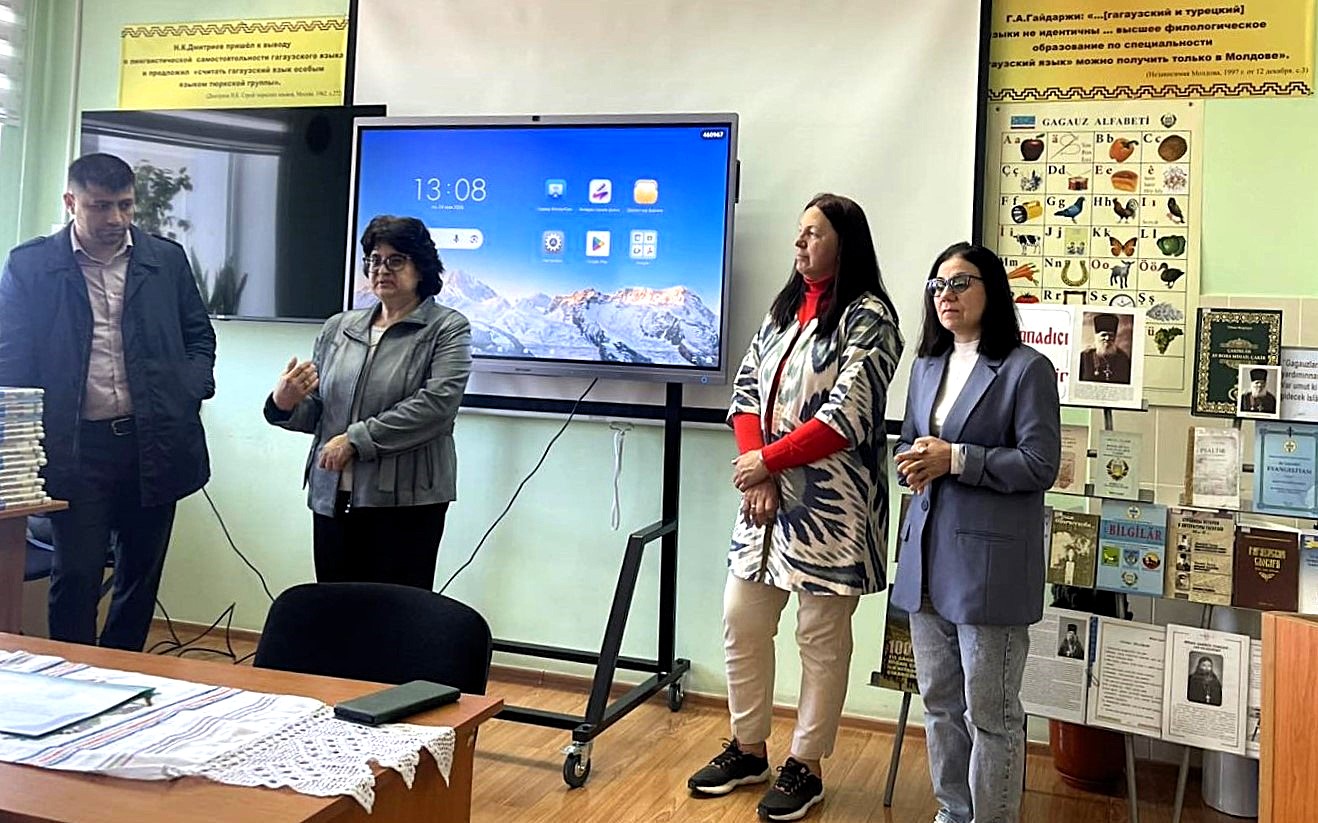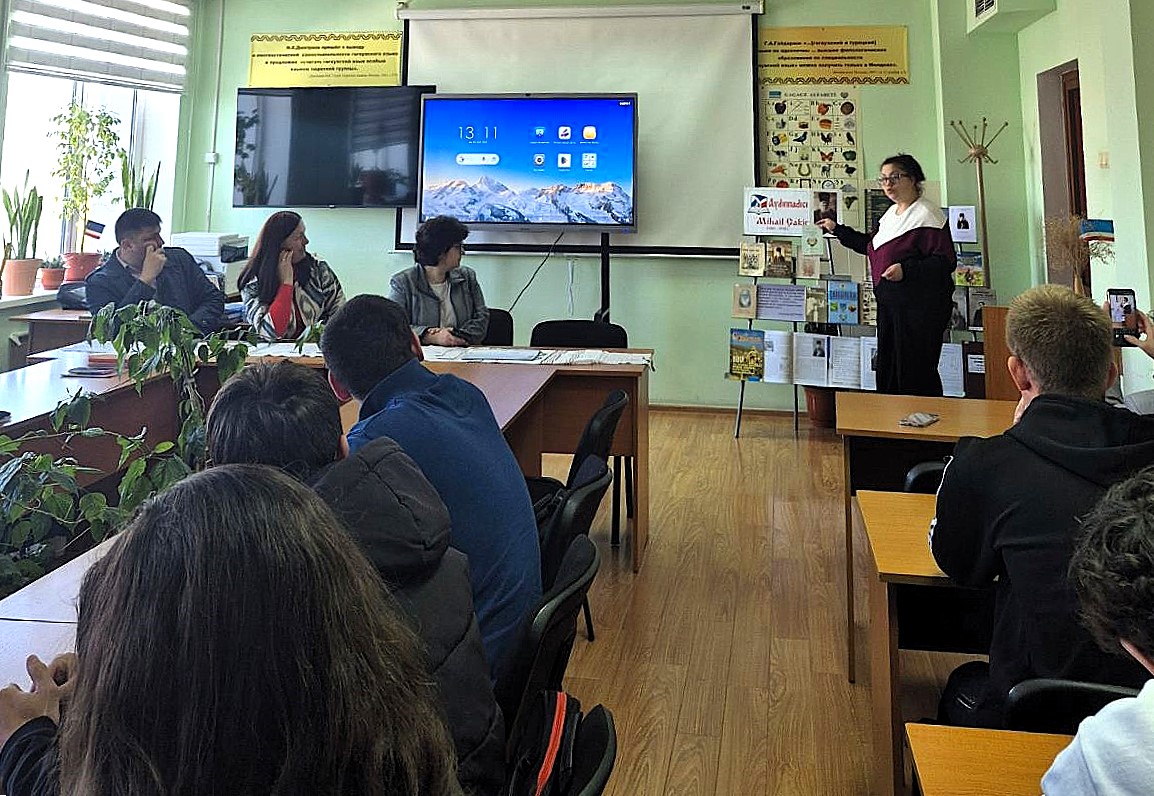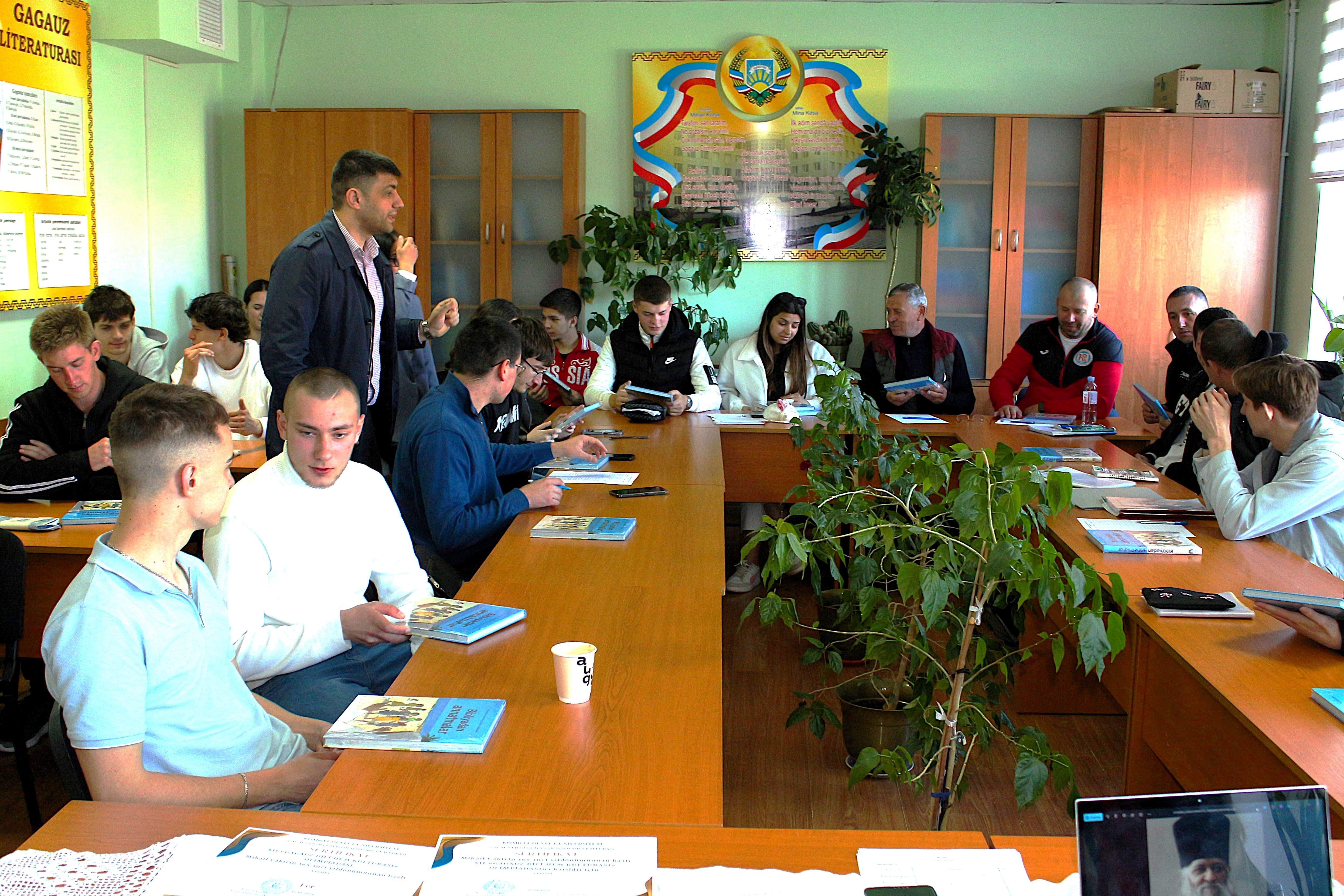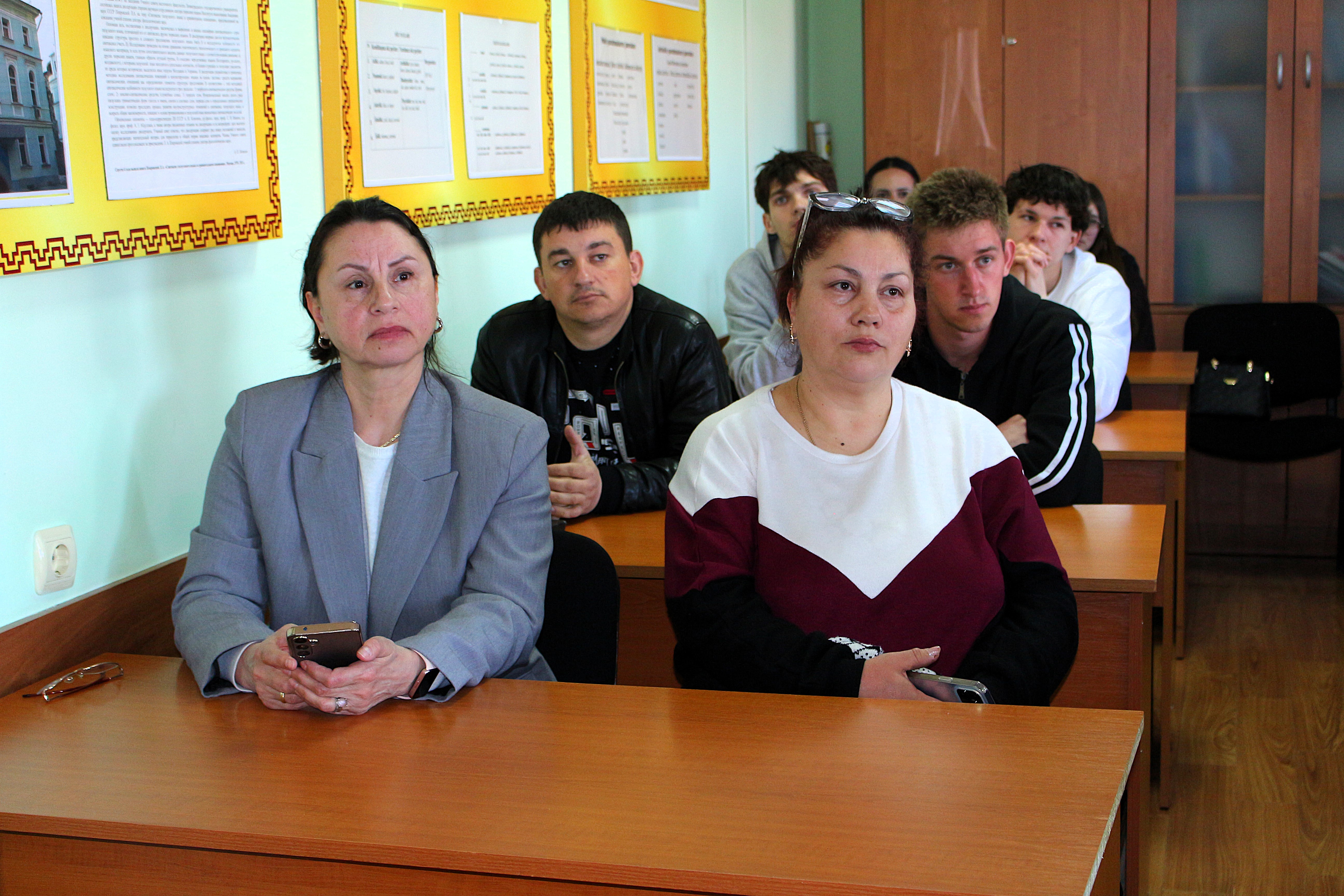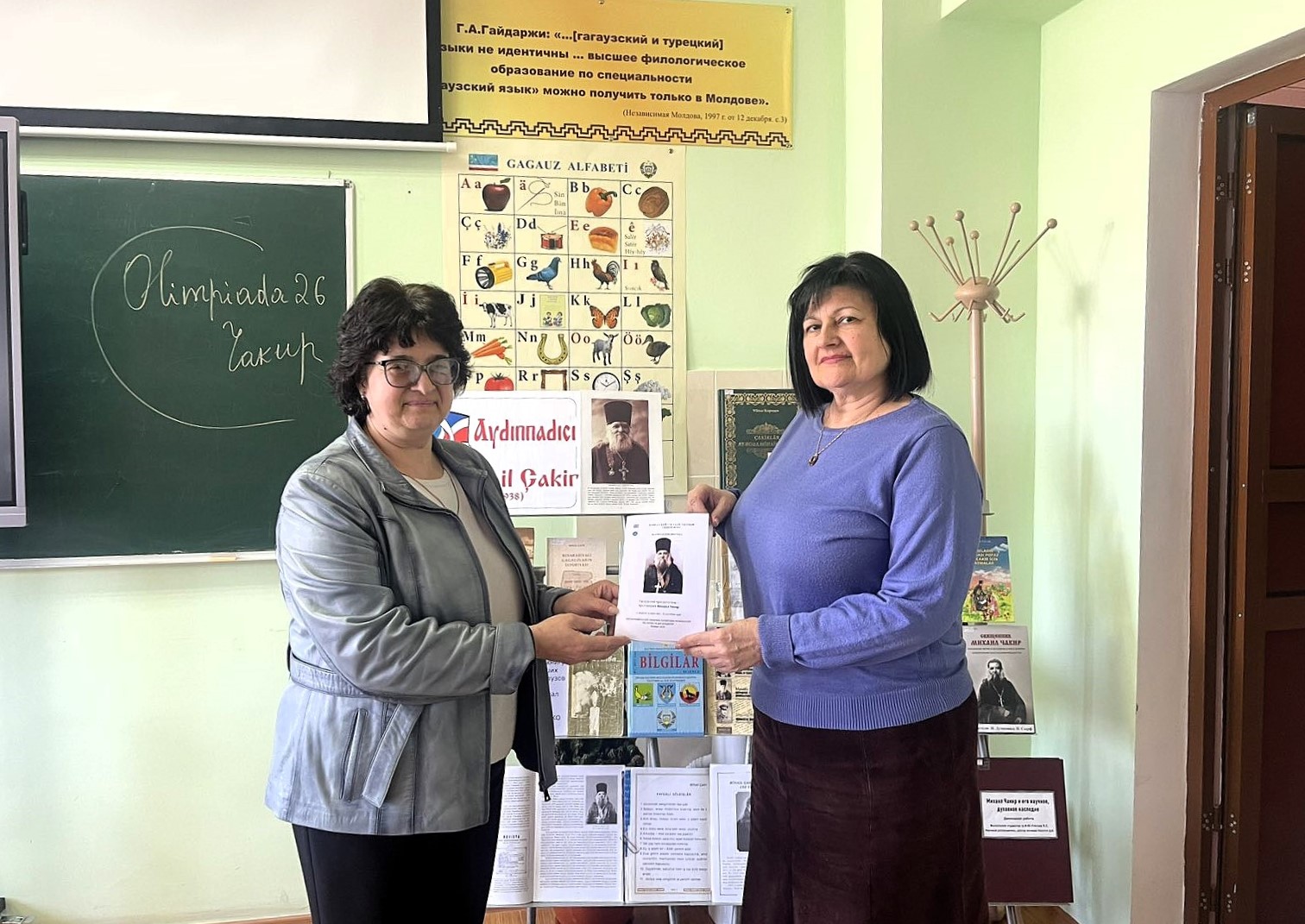



To mark the 165th anniversary of the birth of the outstanding son of the Gagauz people, educator, teacher, translator, and archpriest Mihail Çakir, the Department of Gagauz Philology and History organized the XII Olympiad in the Gagauz Language and Culture among university students of non-linguistic specialties.
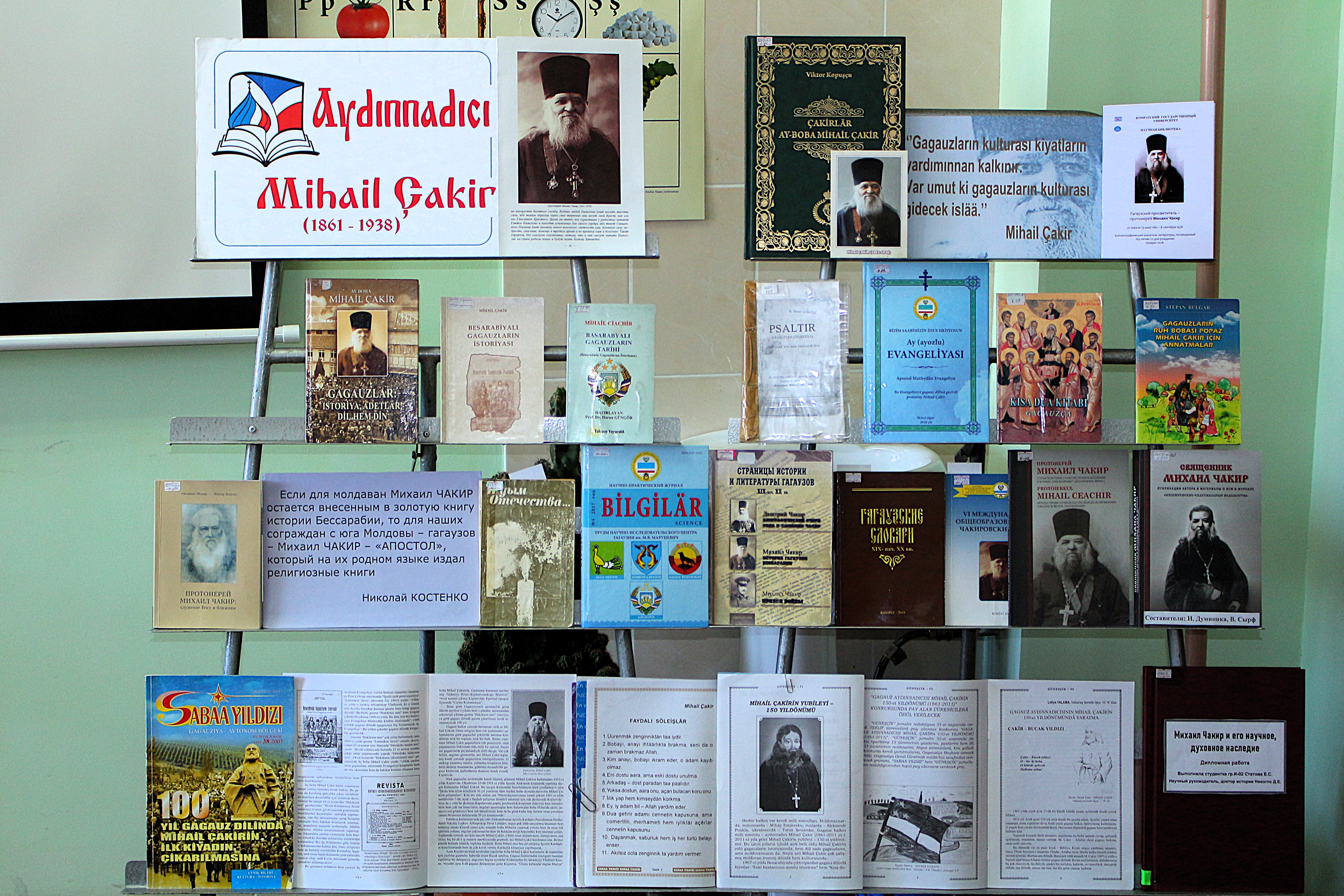
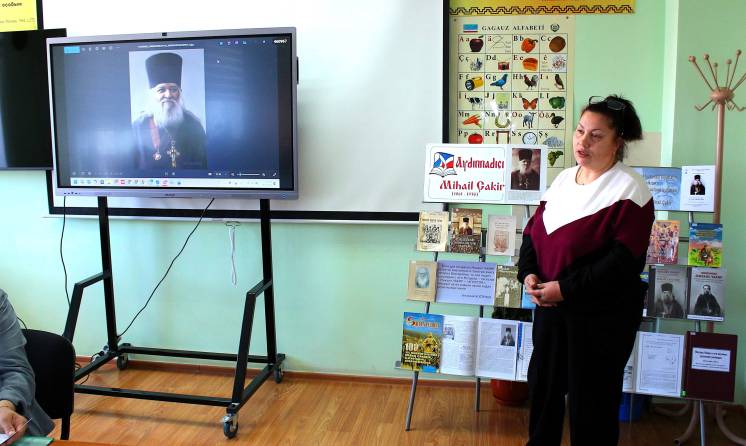
An important part of the event was the bibliographic review presented by the chief librarian of the Scientific Library of Comrat State University, Anna Kösyä. The personal exhibition “Aydınnadıcı Mihail Çakir” revealed three dimensions of the enlightener’s activity:
1. SPIRITUAL ENLIGHTENMENT:
Mihail Çakir was the first to systematically publish books in the Gagauz language, initially using the Cyrillic alphabet and later the Latin script. Believing that faith should be understandable to every parishioner, he translated the main sacred texts from Church Slavonic into the Gagauz language.
The exhibition featured rare editions, including:
“The Gospel of Matthew” (1909) — this publication enabled the Gagauz people to hear church services in their native language for the first time;
“Psalter” (1936);
“Kısa dua kitabı: gagauzça”;
“Gagauzların ruh Bobası Popaz Mihail Çakir için annatmalar” and others.
2. HISTORY AND CULTURE:
In these works, Çakir laid the foundations of Gagauz identity by describing the origin and everyday life of the people.
Among the exhibited works were:
“Besarabiealâ Gagauziarân Istorieasâ (History of the Gagauz of Bessarabia)” (1934) — a landmark work published in the Gagauz language, in which the author summarized knowledge about the ethnogenesis and history of his people;
“Gagauzlar: istoriya, adetlär, dil hem din” and others.
Mihail Çakir also published numerous essays on culture in the journals “Viața Basarabiei” (“Bessarabian Life”) and “Chișinău Diocesan News.” These materials can be found in the collections:
“Priest Mihail Çakir: Author’s Publications and Materials about Him in the Journal ‘Chișinău Diocesan News’”;
“Archpriest Mihail Çakir: Articles on the History and Culture of the Gagauz of Bessarabia in the Journal ‘Viața Basarabiei’ (‘Bessarabian Life’)”.
3. LINGUISTICS:
In order to improve the literacy of his people, M. Çakir compiled dictionaries and self-study manuals.
A key exhibit was the “Dicționar gagauzo (tiurco)-român pentru gagauzii din Basarabia” (Gagauz-Romanian Dictionary, 1938), published in the final year of the author’s life. It was the first attempt to document the language using the Latin alphabet.
For this memorable date, chief bibliographer Natalia Garçu prepared the bibliographic index “The Gagauz Enlightener, Archpriest Mihail Çakir.”
Such olympiads and exhibitions allow students not only to strengthen their knowledge of the language, but also to realize the significance of the spiritual feat of Mihail Çakir, who gave his people the written word and preserved their history for future generations.
Scientific Library of Comrat State University