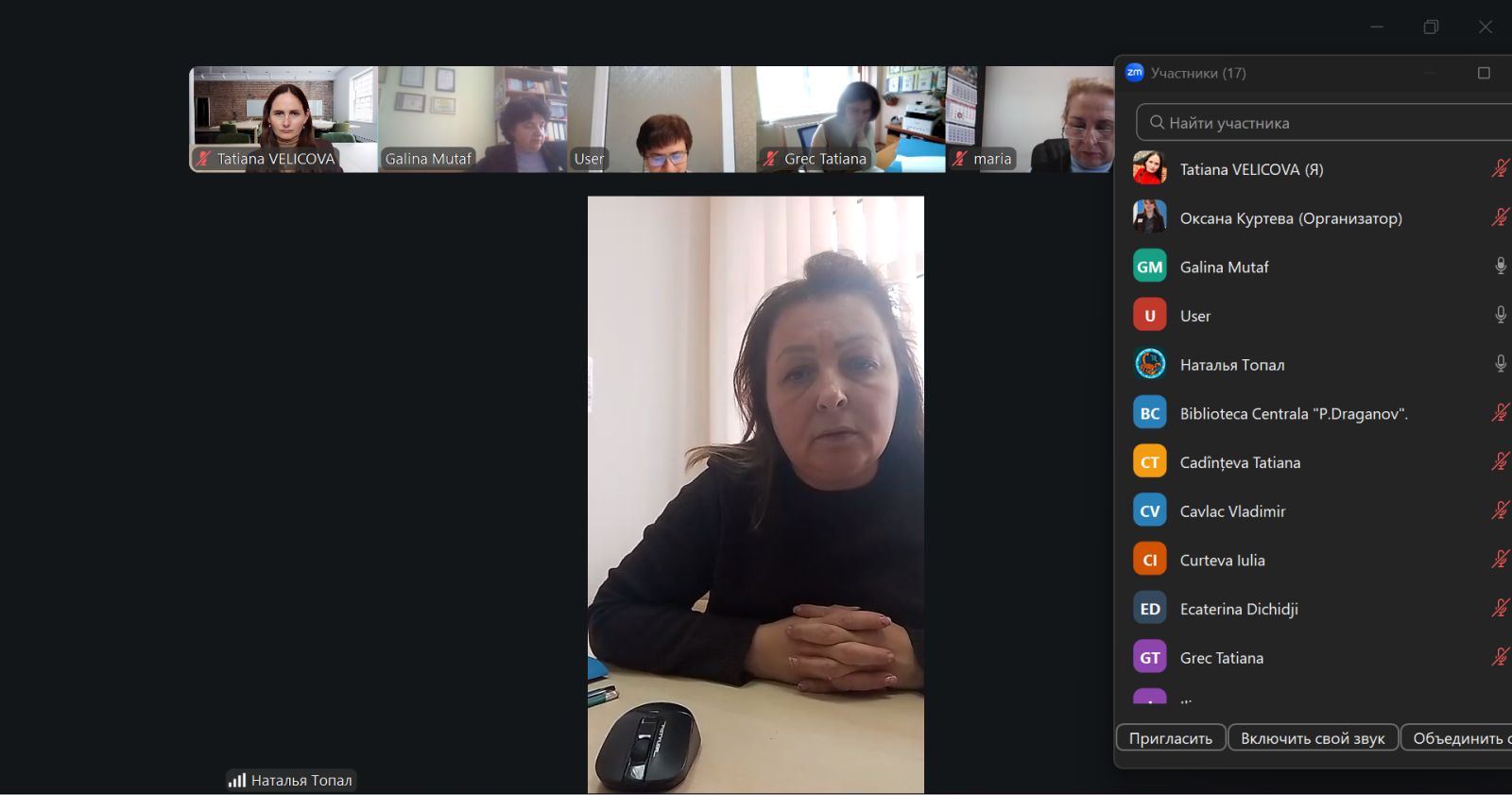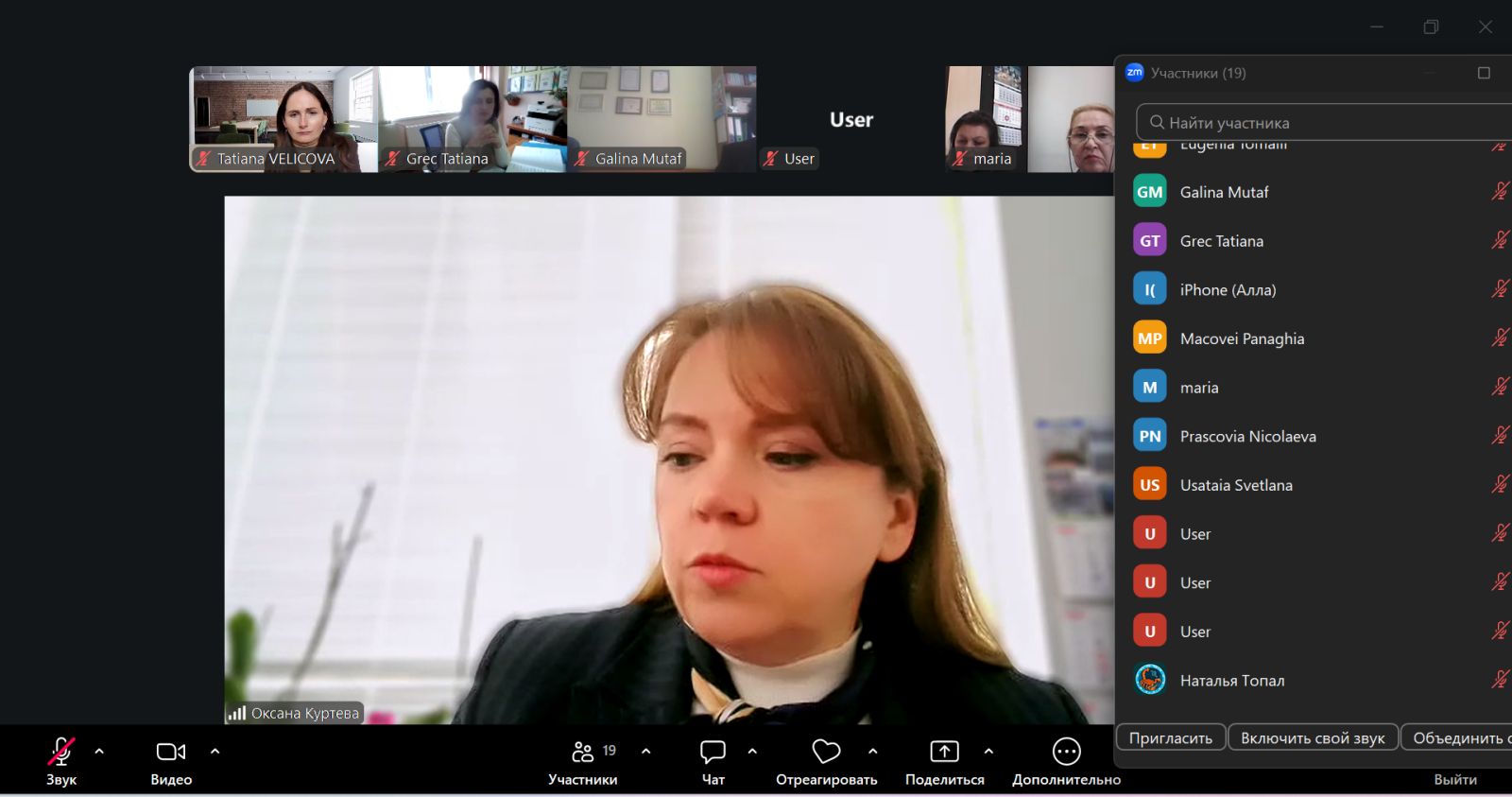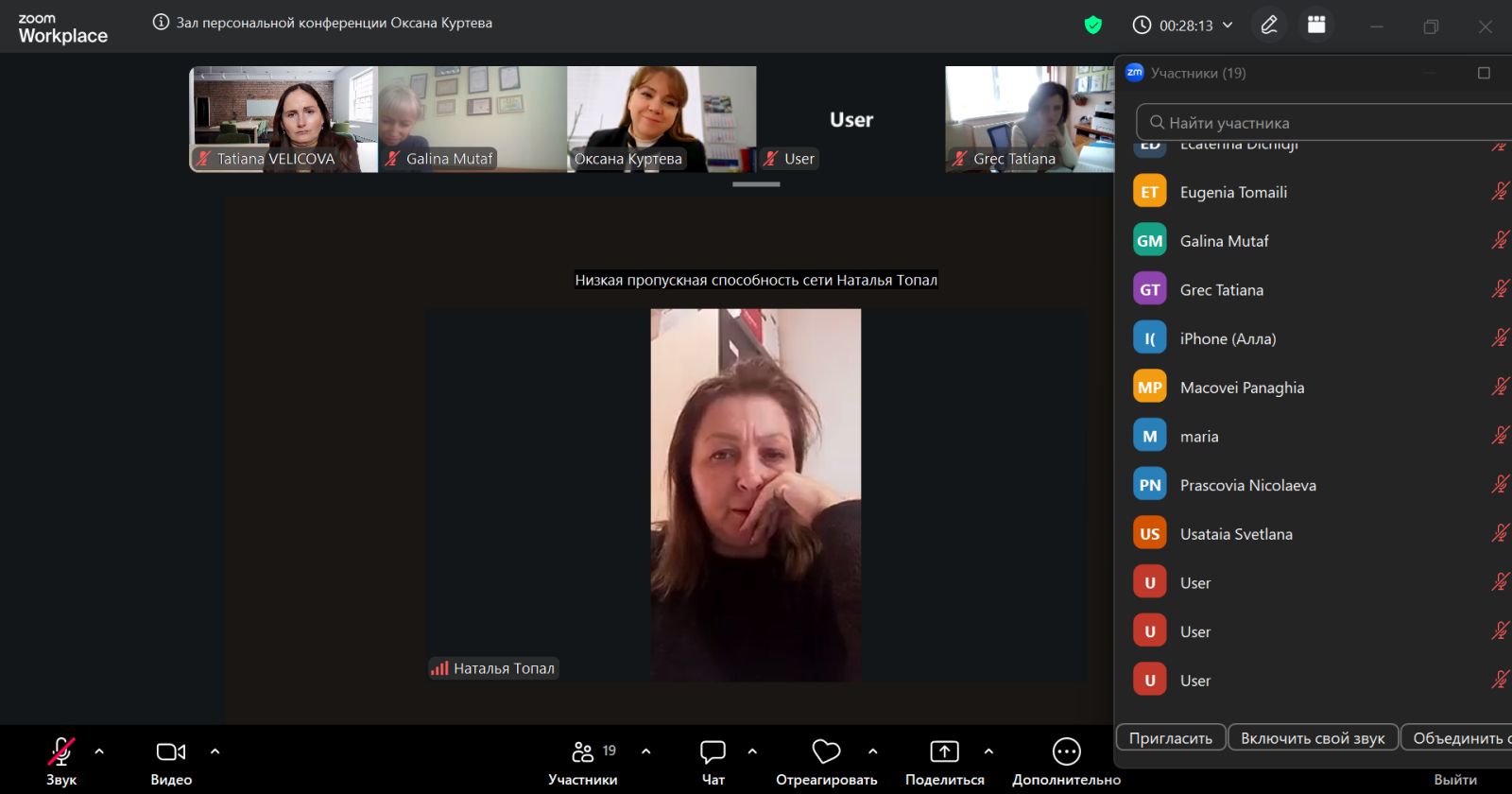



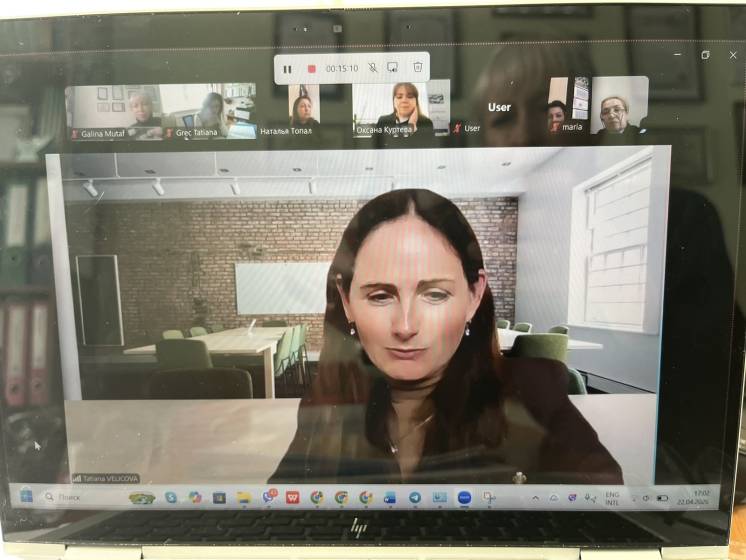

Within the framework of the international project REFLECT “Quality Learning through Peer-to-Peer System in Moldova”, the team of Comrat State University conducted an online coaching session with inspectors from the General Directorate of Education of ATU Gagauzia, as well as from the education departments of Taraclia and Basarabeasca.
The coaching meeting was a logical continuation of the practice-oriented seminar “Quality Learning through Peer-to-Peer System in Moldova”, which had previously been held at CSU. After participating in the seminar, the inspectors were invited to pilot certain elements of the REFLECT methodology in their own professional practice: to observe lessons delivered by colleagues, use the forms proposed in the project training materials, and describe the results of observation in a non-evaluative format.
The aim of the online meeting was to support the participants during the piloting stage of the REFLECT methodology, clarify emerging questions, and discuss the first results of applying lesson observation tools.
During the coaching session, the inspectors asked questions related to the organization of observation, completion of forms, formulation of evidence-based observations, separation of facts from evaluative judgments, and the specific features of professional discussion after lesson observation. Special attention was paid to how to record observed pedagogical actions, students’ learning activity, and elements of classroom interaction without subjective evaluation and administrative control.
An important part of the meeting was the discussion of preliminary results obtained by the inspectors during lesson observations. The participants shared their first conclusions, difficulties, and professional insights that emerged while applying the REFLECT approach. The discussion focused on three key elements of REFLECT: quality teaching, evidence-based lesson observation, and constructive professional dialogue.
The inspectors noted that the proposed approach makes it possible to view lesson observation in a new way: as a tool for teachers’ professional development, joint analysis of educational situations, and the formation of a culture of trust-based feedback. This format helps shift the focus from control to support, from evaluation to professional interaction, and from formal lesson visits to meaningful pedagogical observation.
The CSU project team provided methodological explanations, answered clarification questions, and outlined possible ways for further application of REFLECT tools in the activities of education departments. During the meeting, it was emphasized that successful implementation of the methodology requires consistency, openness to professional dialogue, and teachers’ readiness to analyze their own practice on the basis of facts and observations.
The online coaching confirmed the inspectors’ interest in further mastering the REFLECT approach and using it in educational practice. The meeting became an important stage in supporting the piloting process, strengthened professional interaction among the project participants, and created conditions for further dissemination of a culture of non-evaluative observation, constructive feedback, and peer learning.
The REFLECT project continues to contribute to the development of professional cooperation among teachers, the formation of a culture of support, and the improvement of the quality of the educational process through the peer-to-peer system.
Publication: O.V. Curteva, PhD, Associate Professor, Institutional Project Coordinator