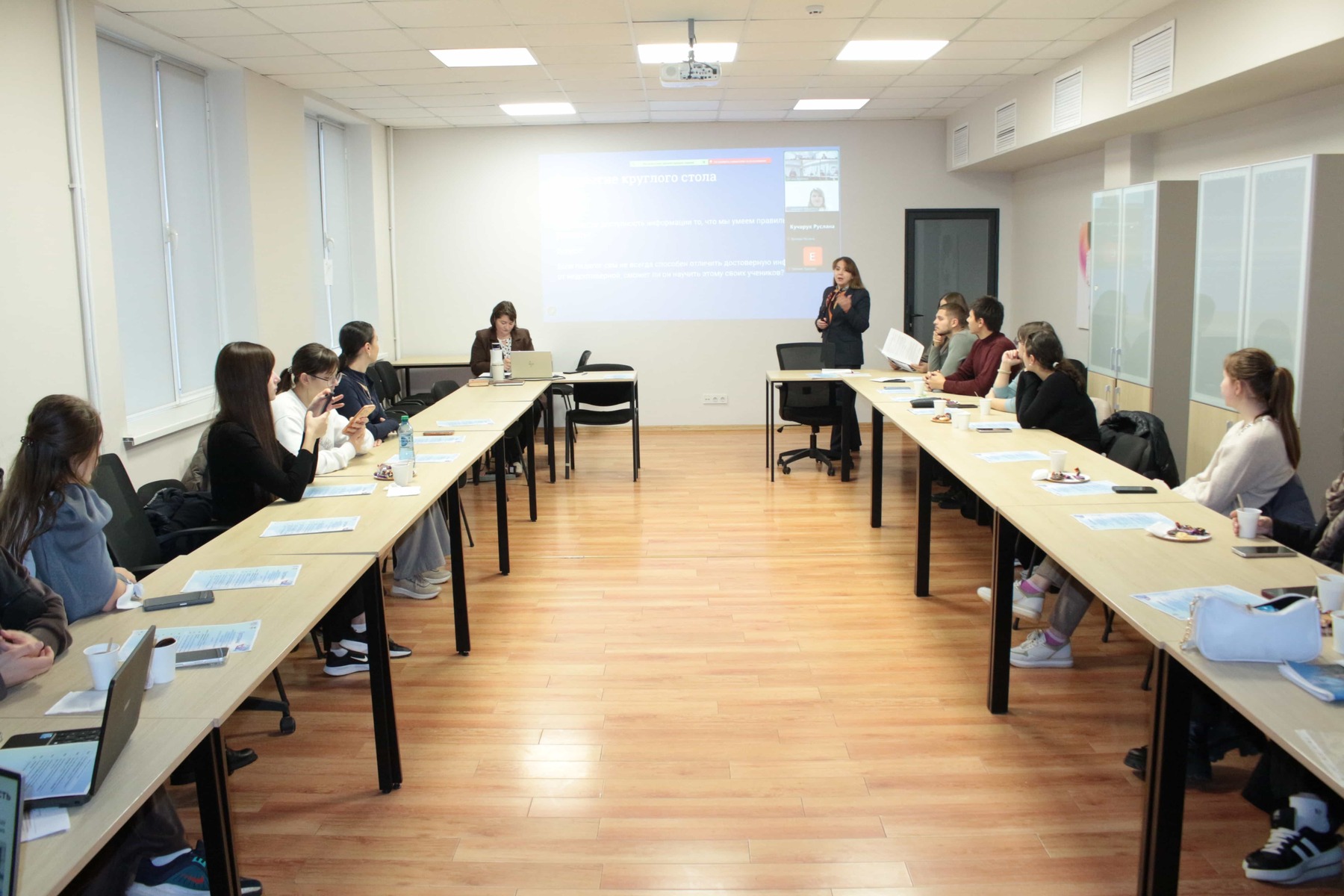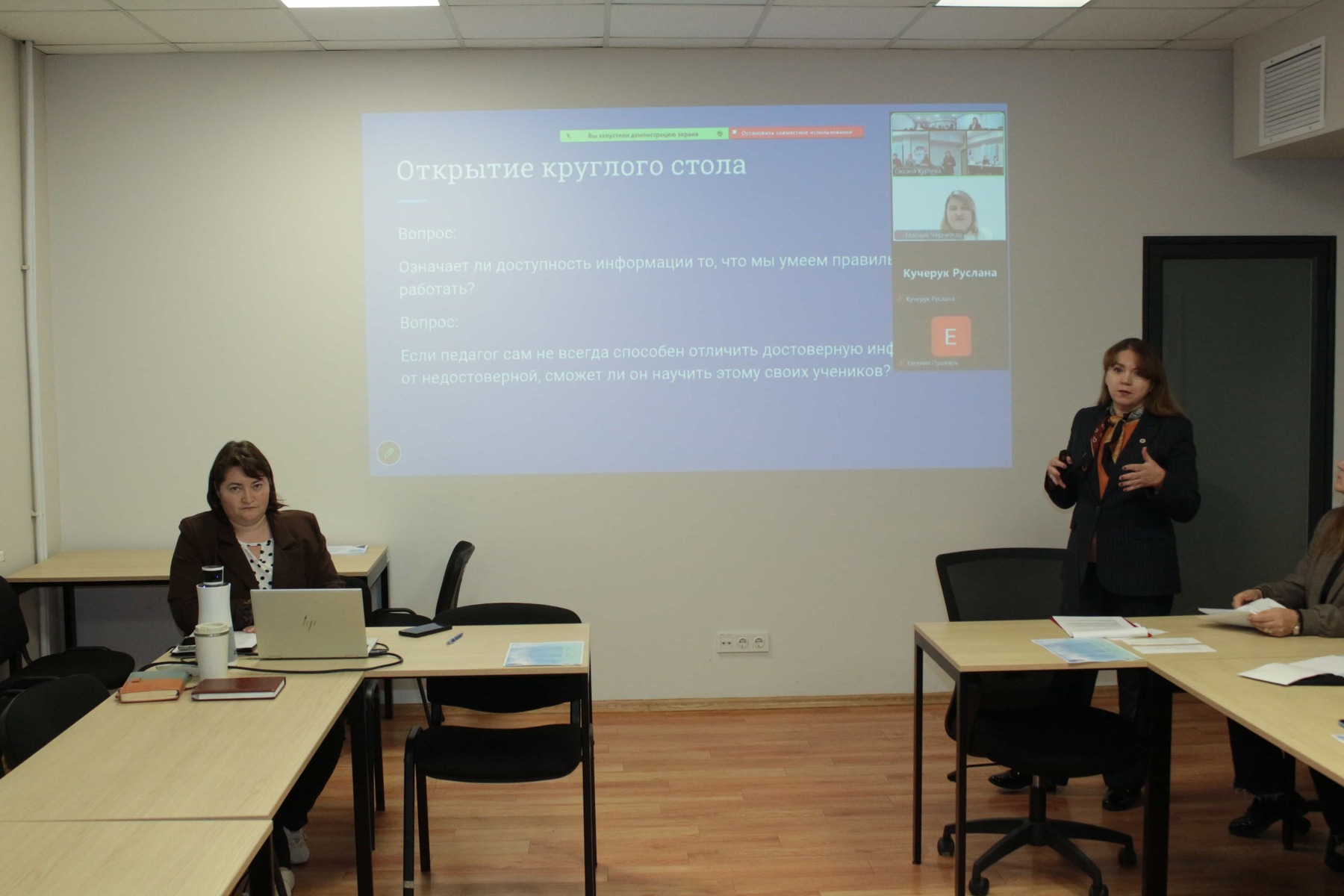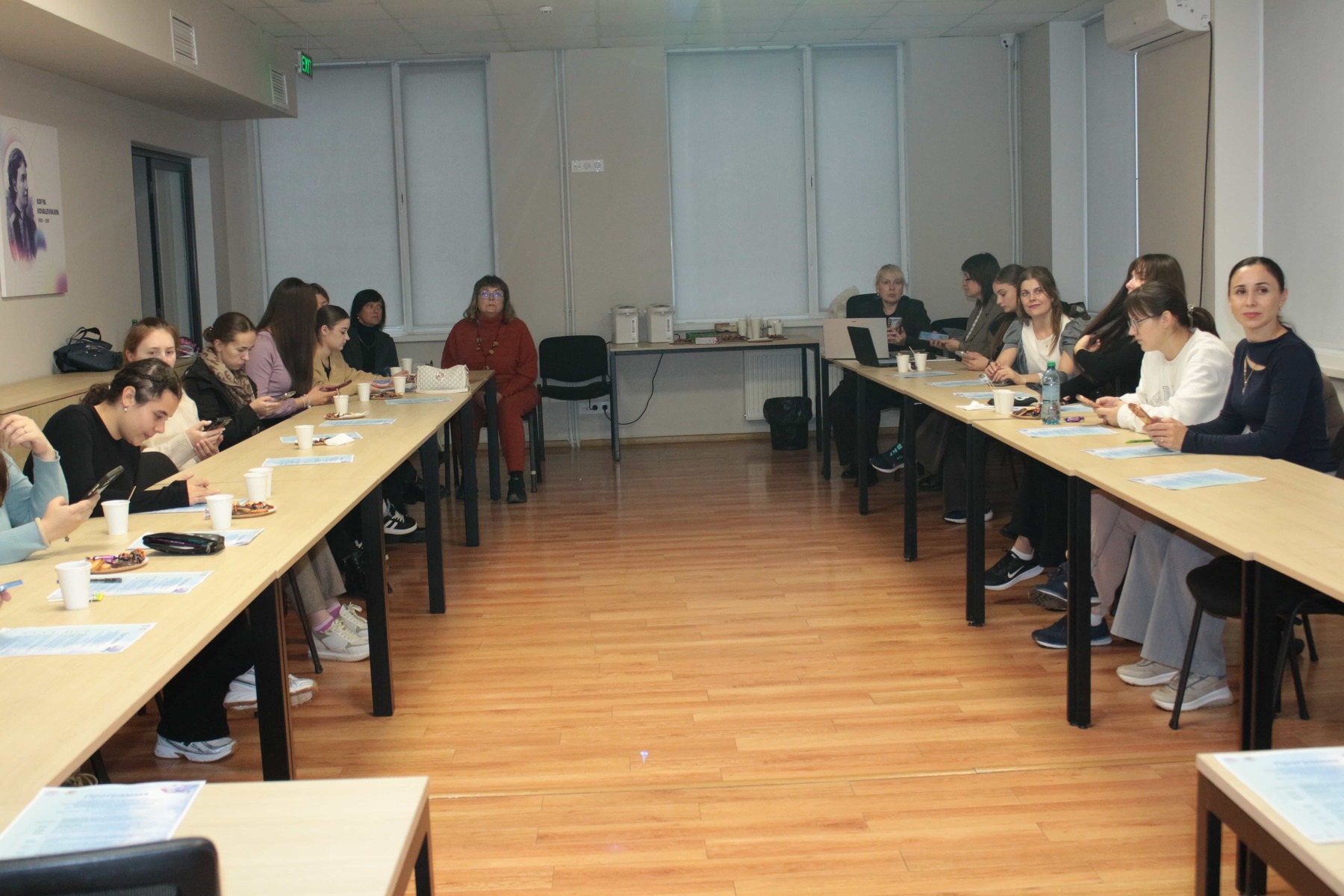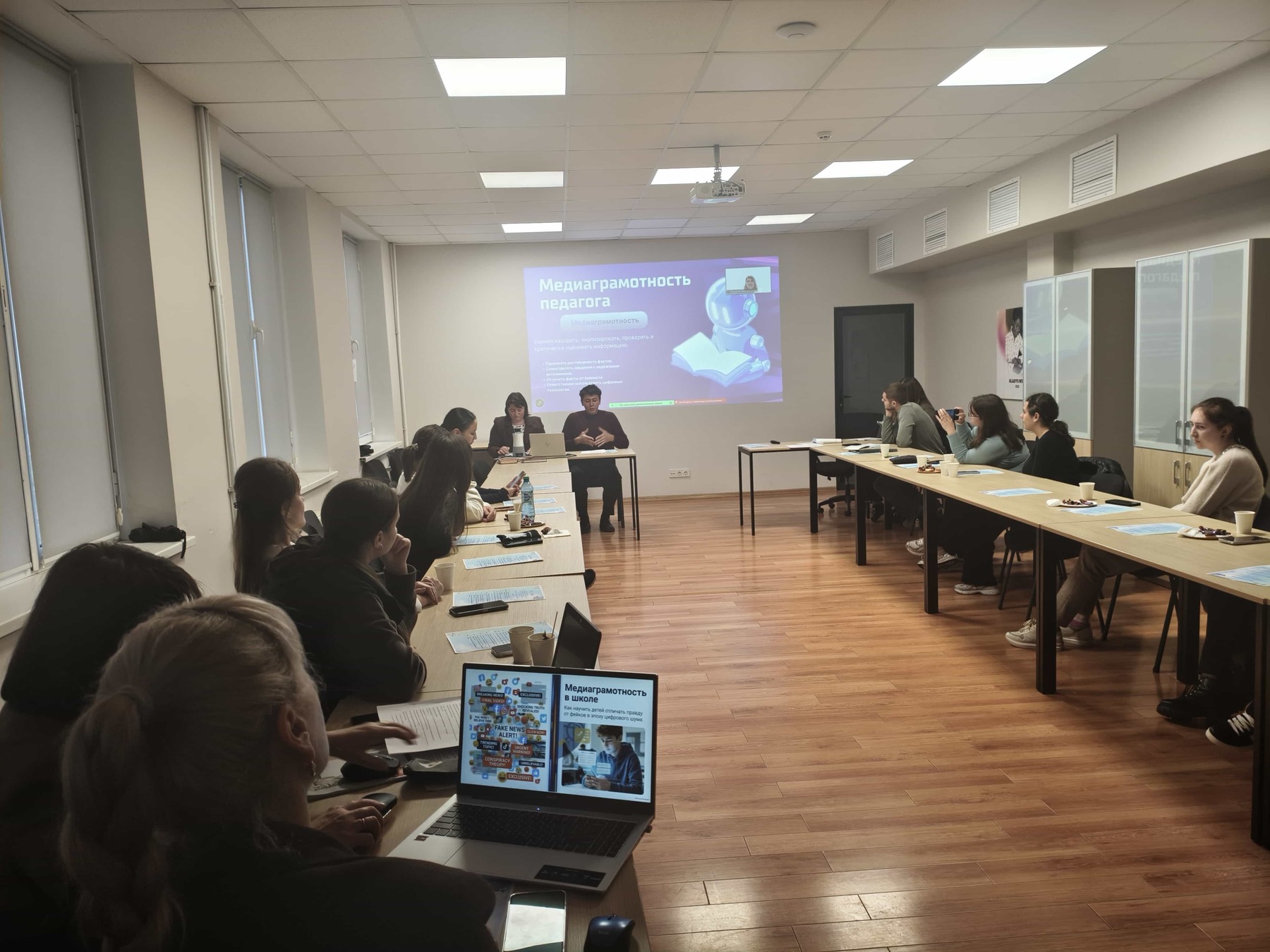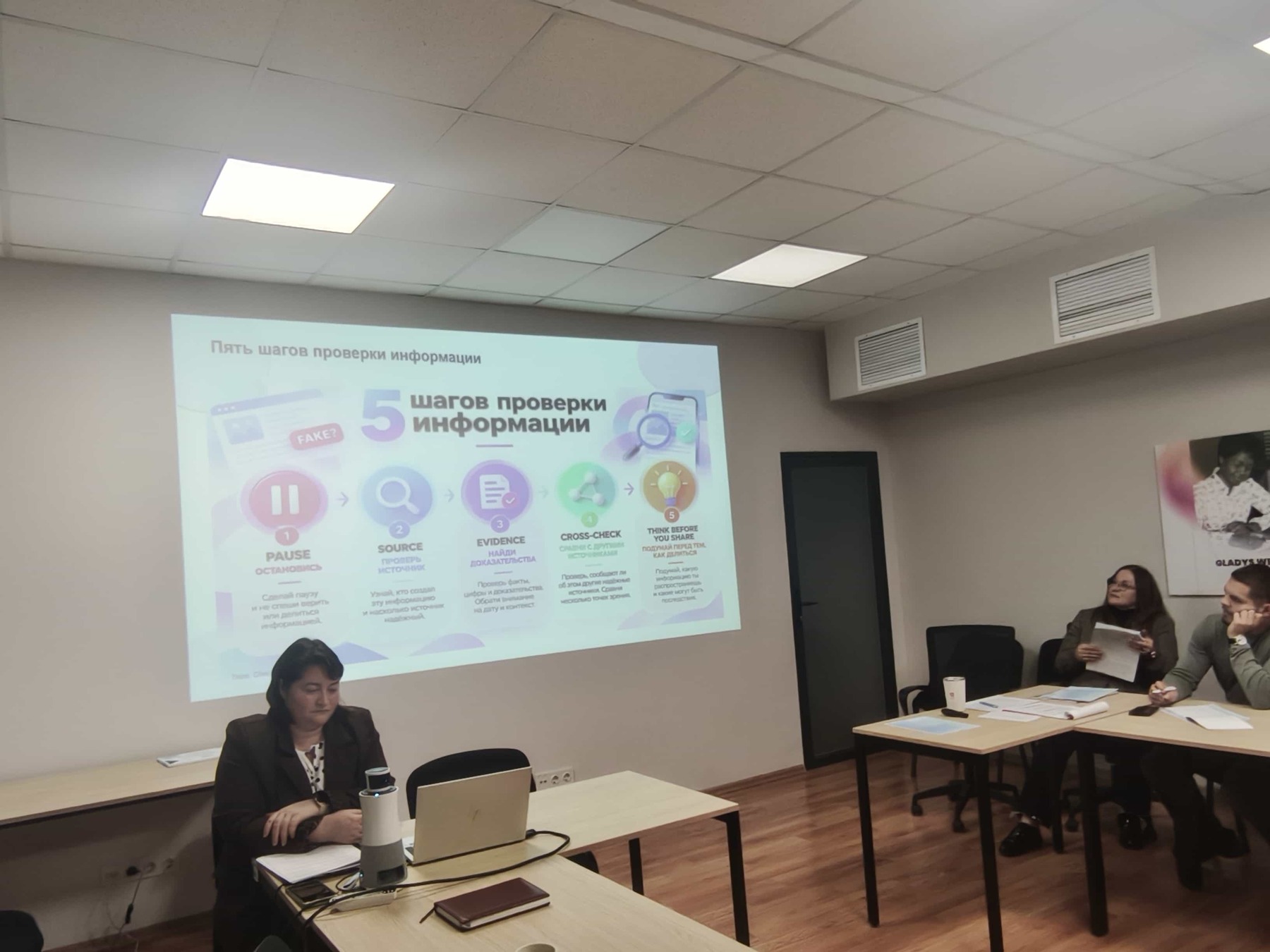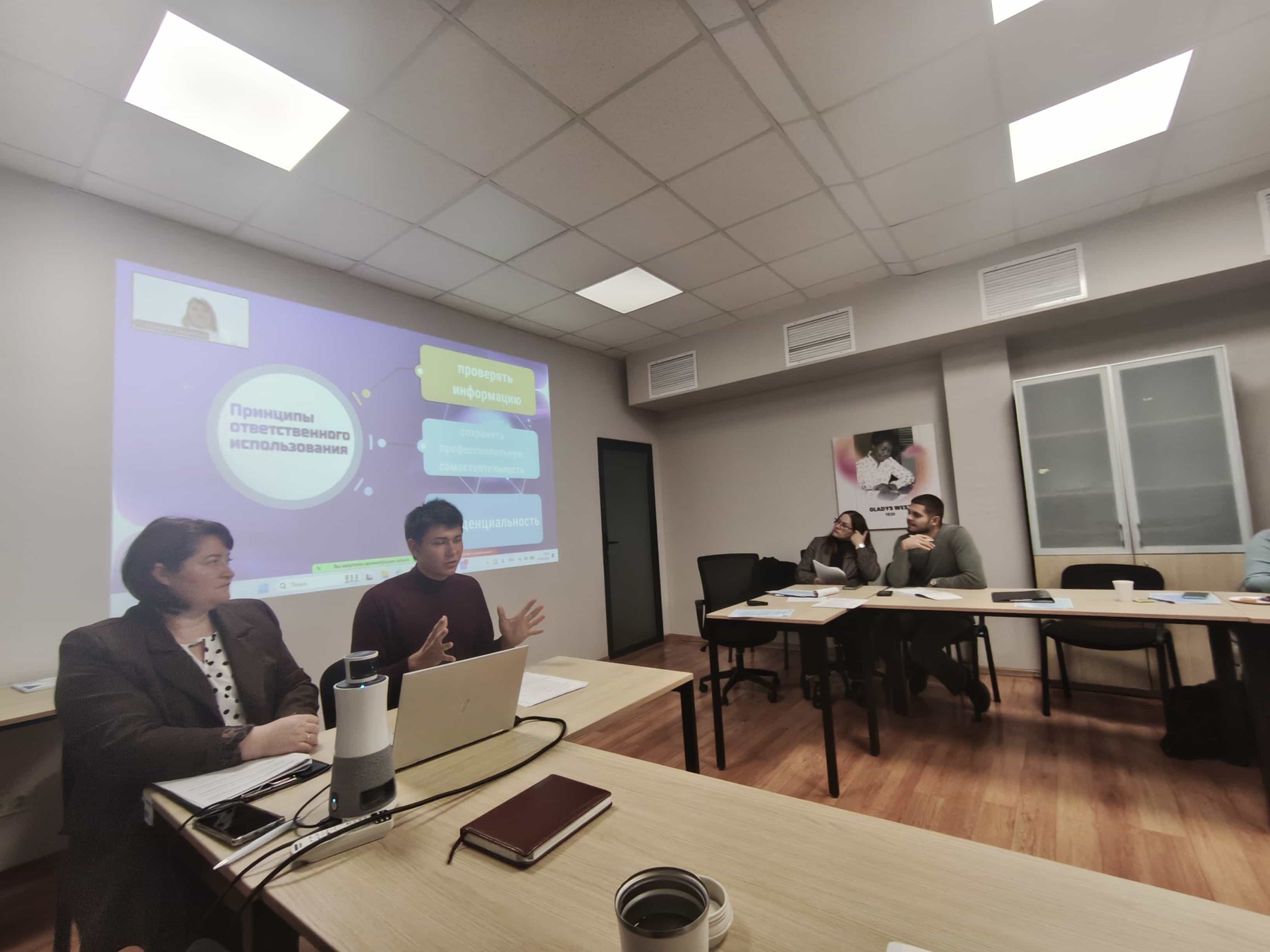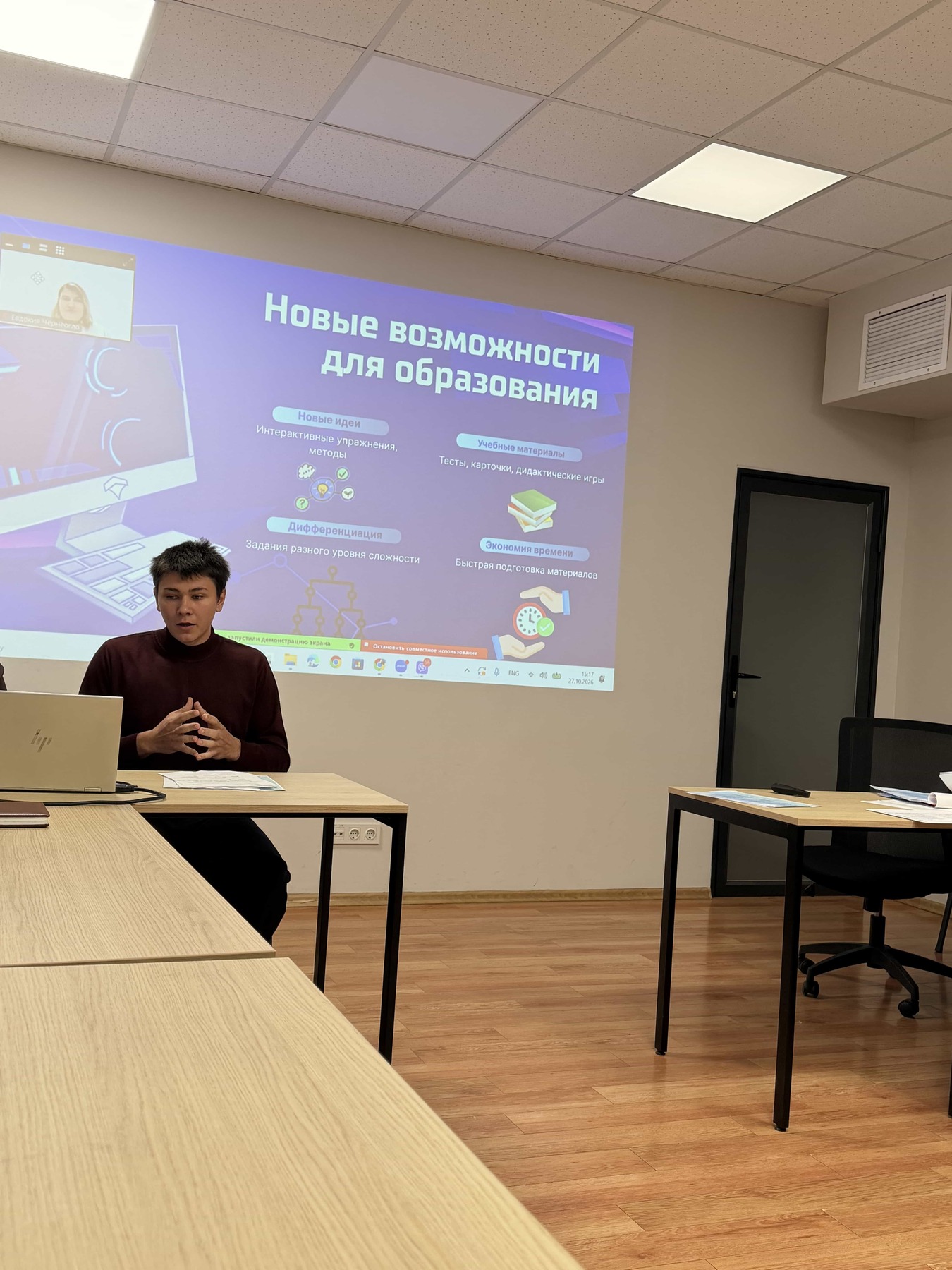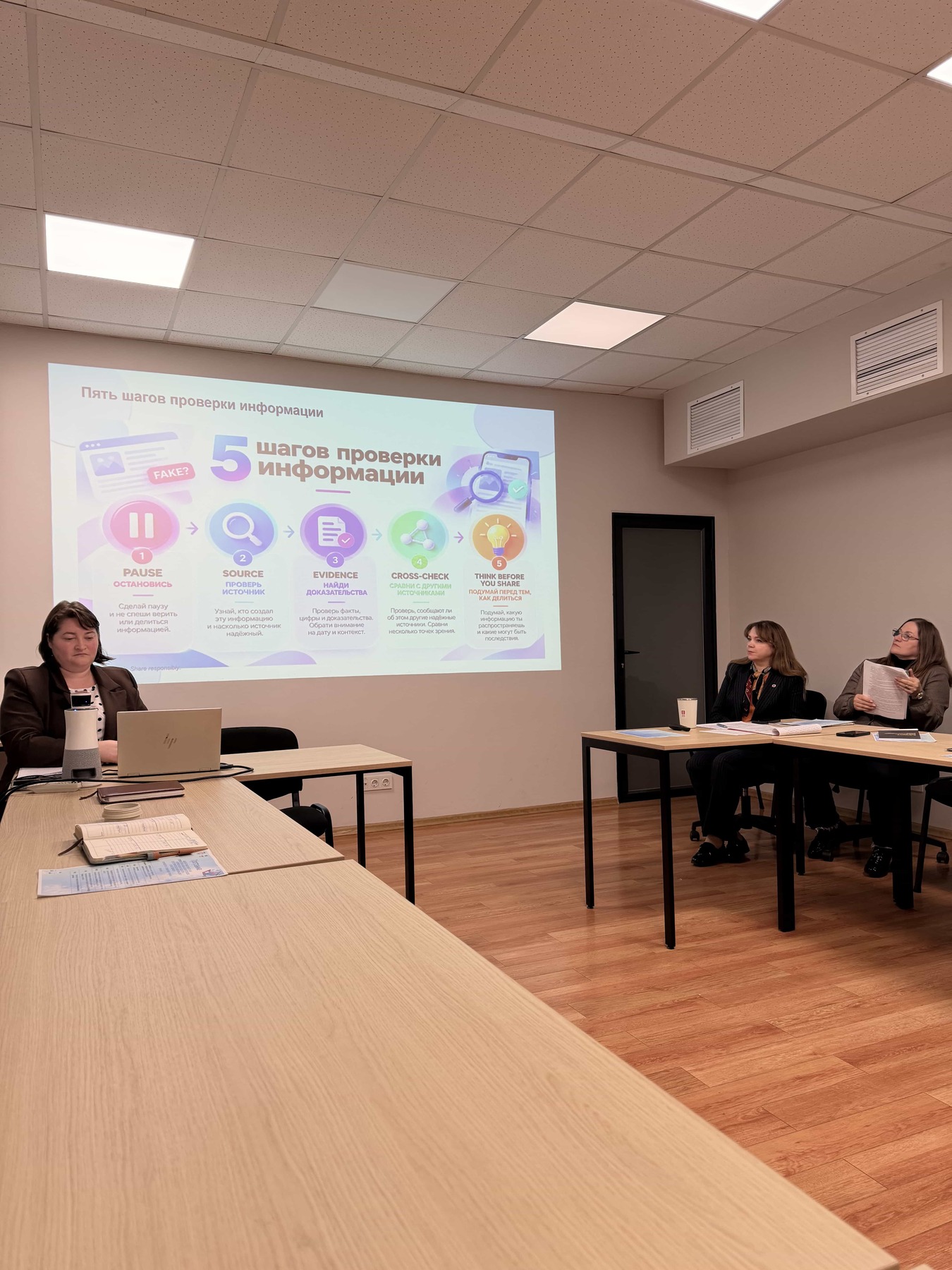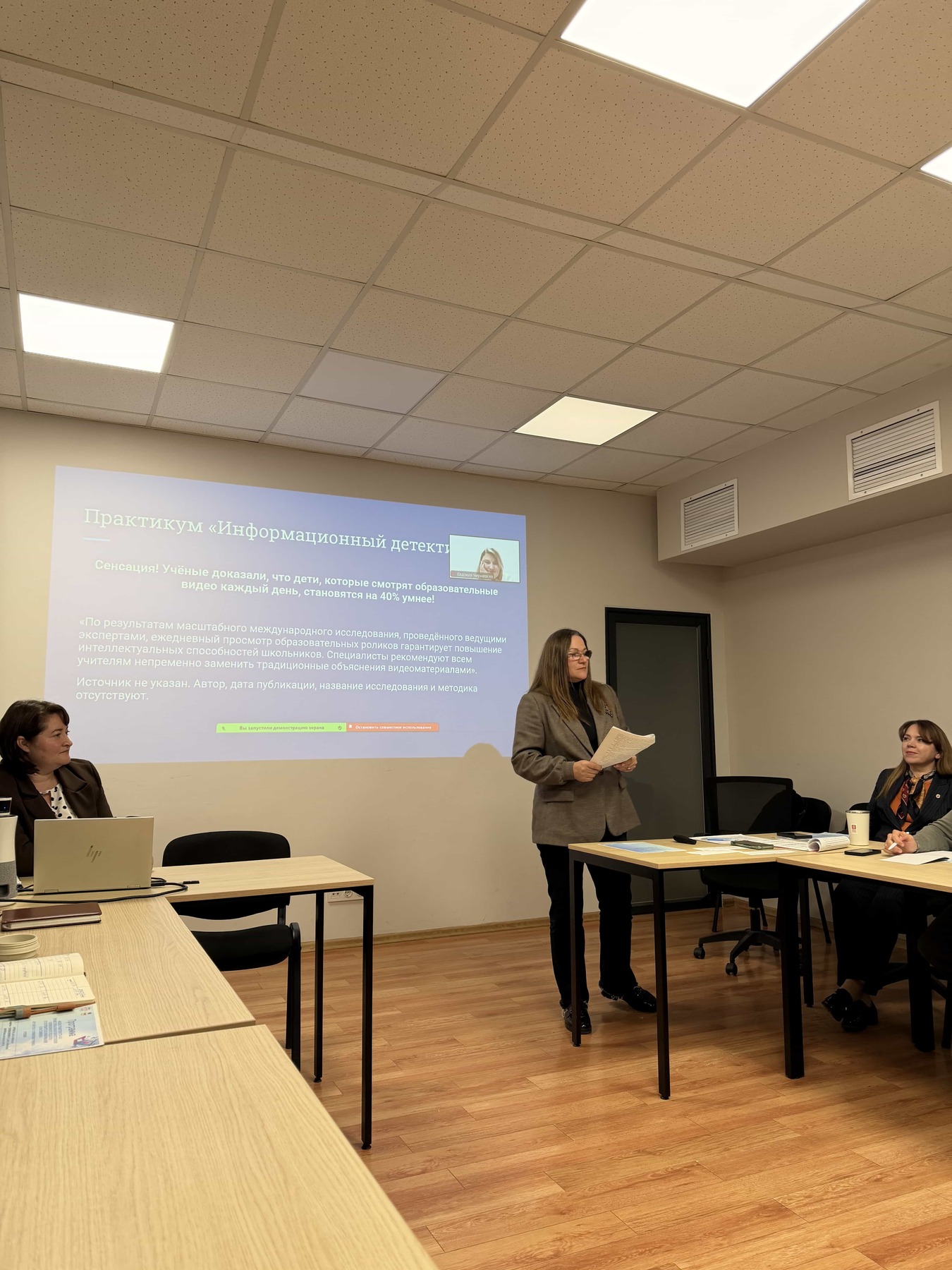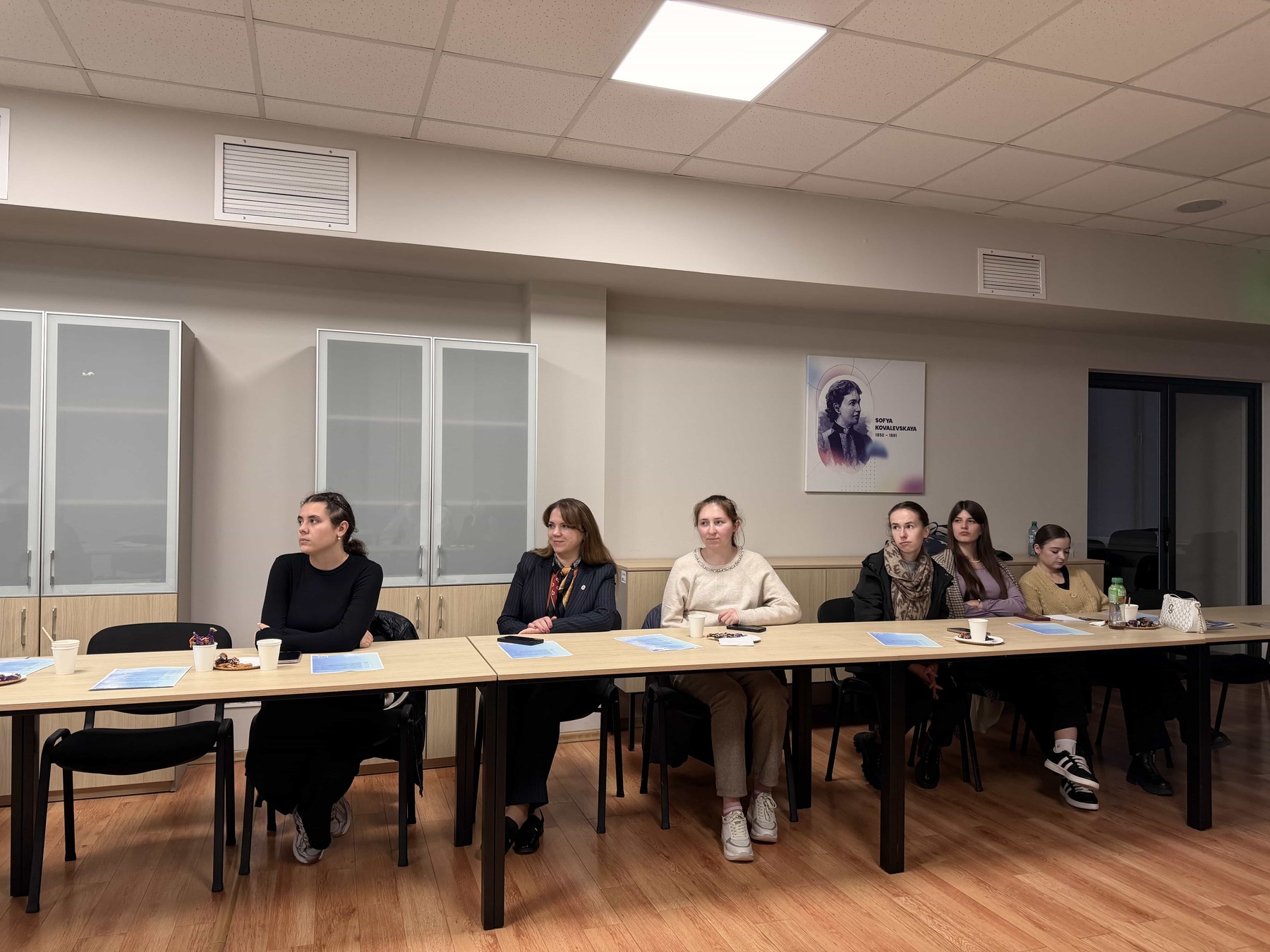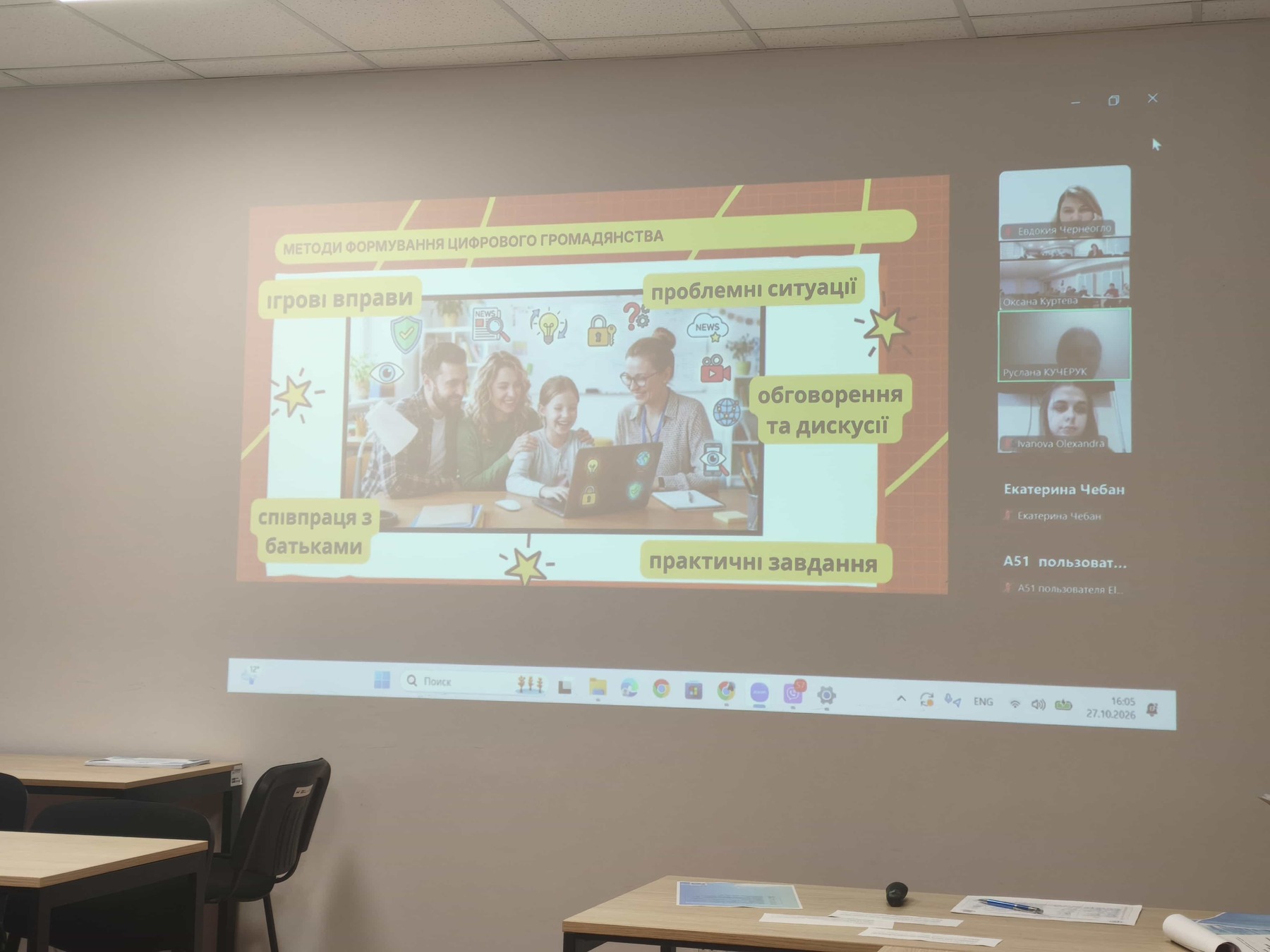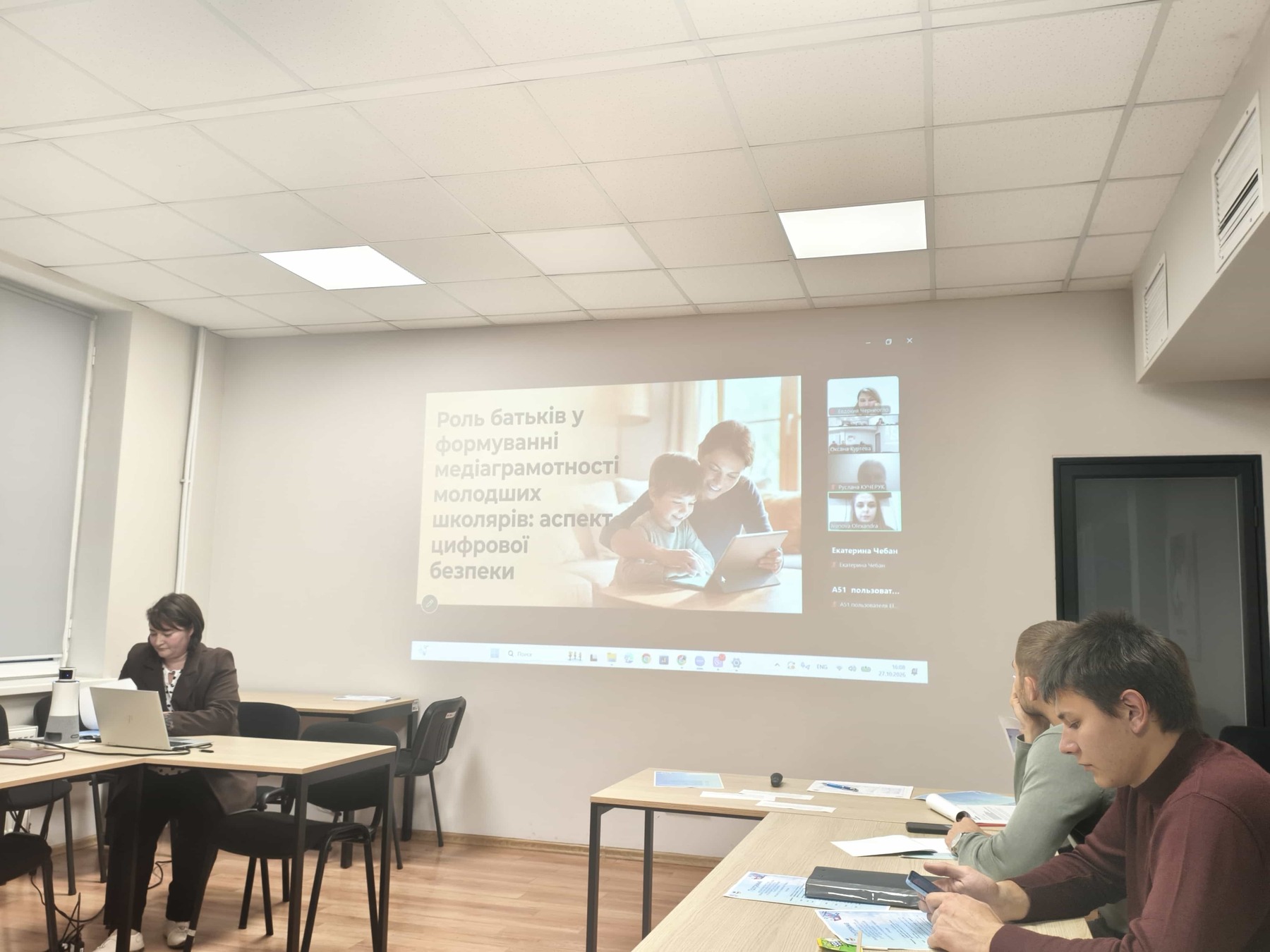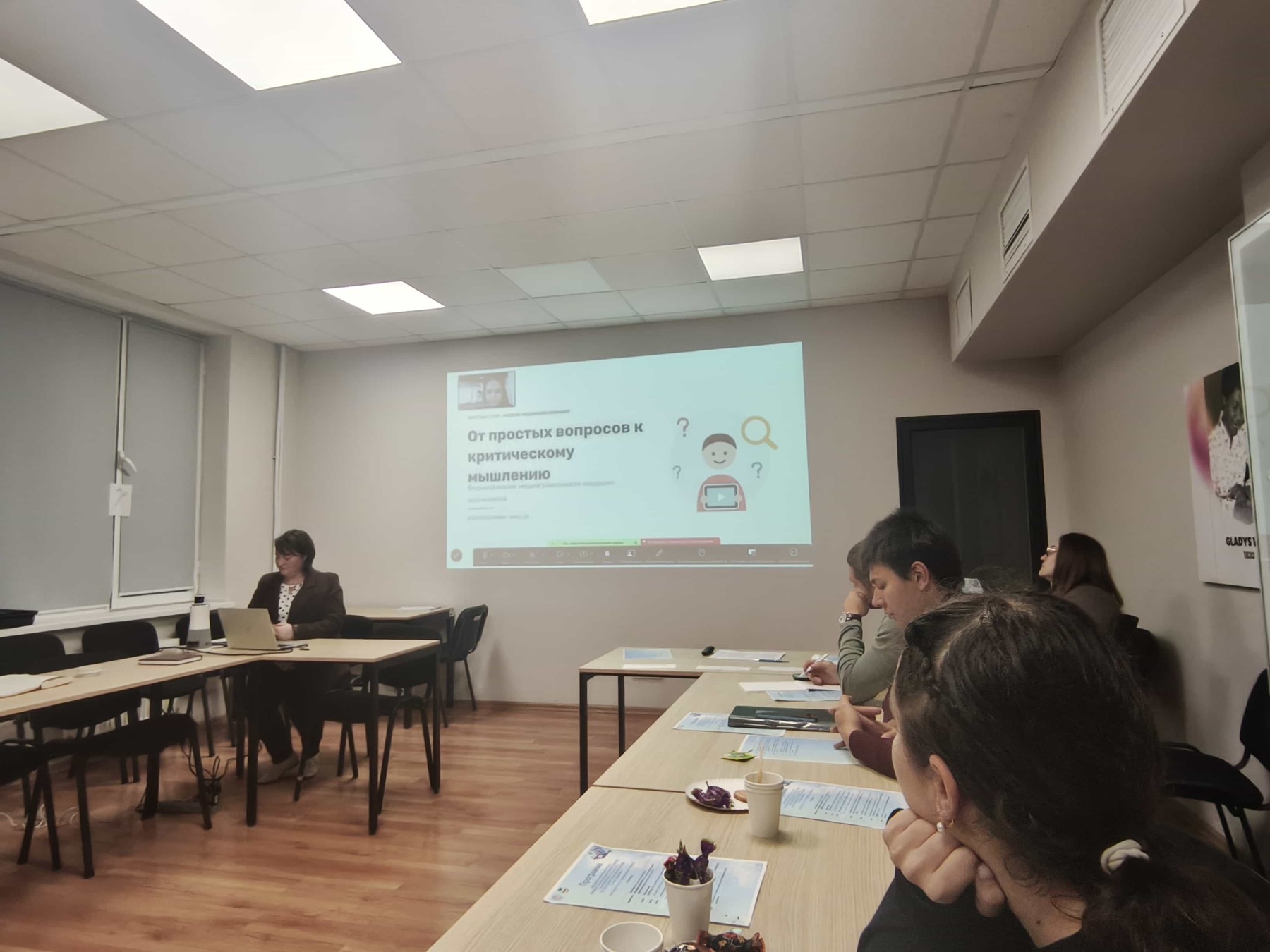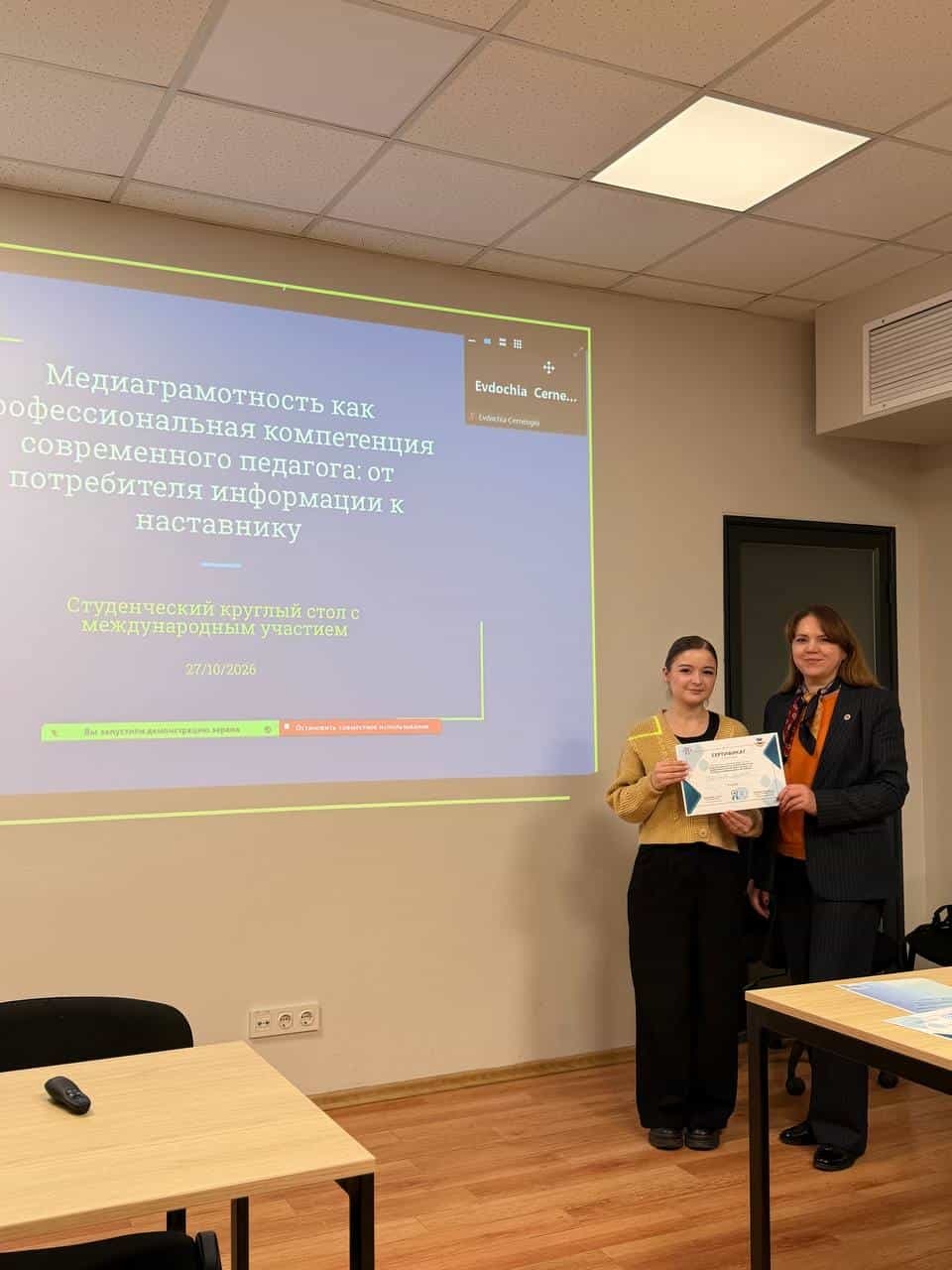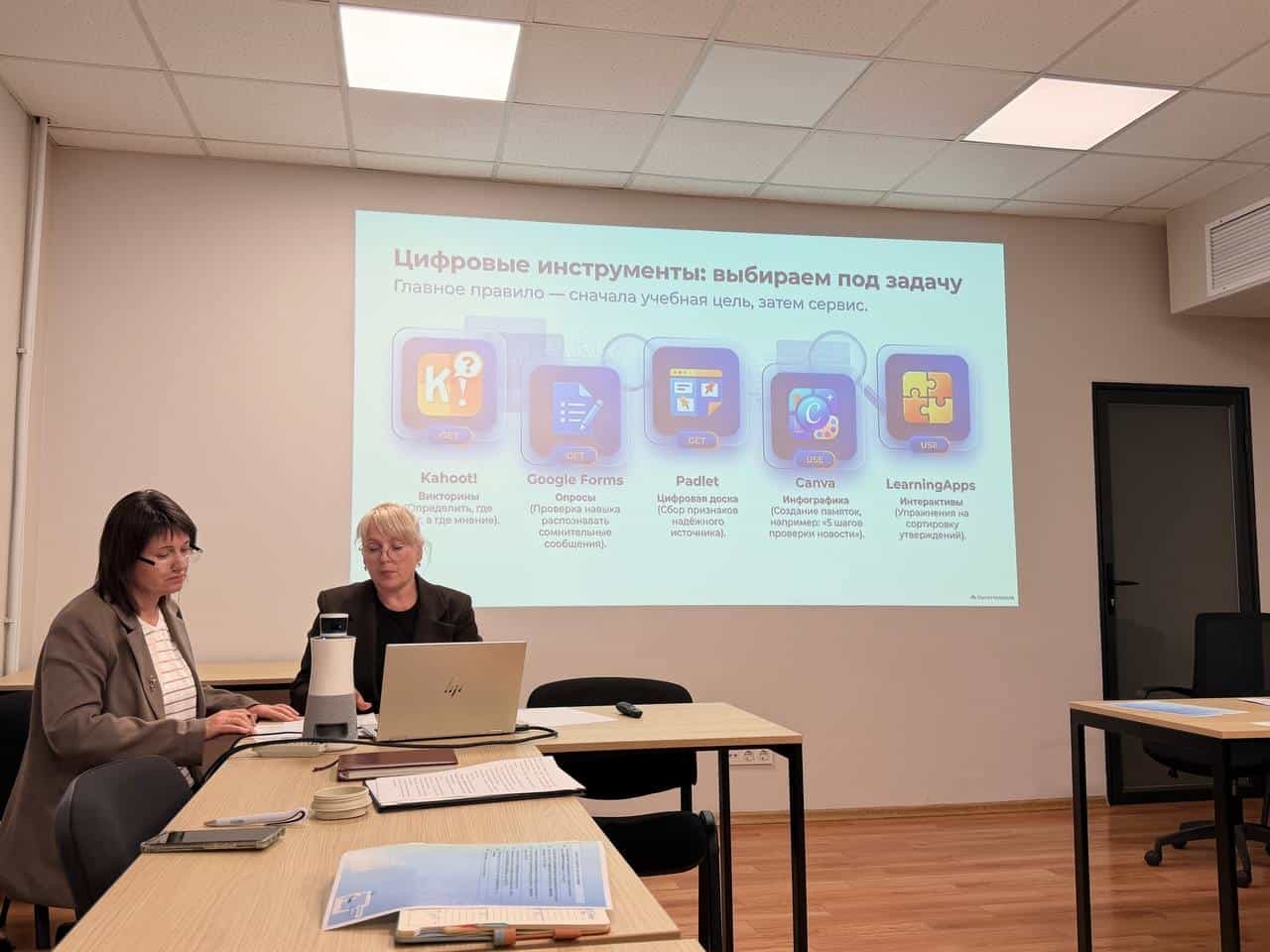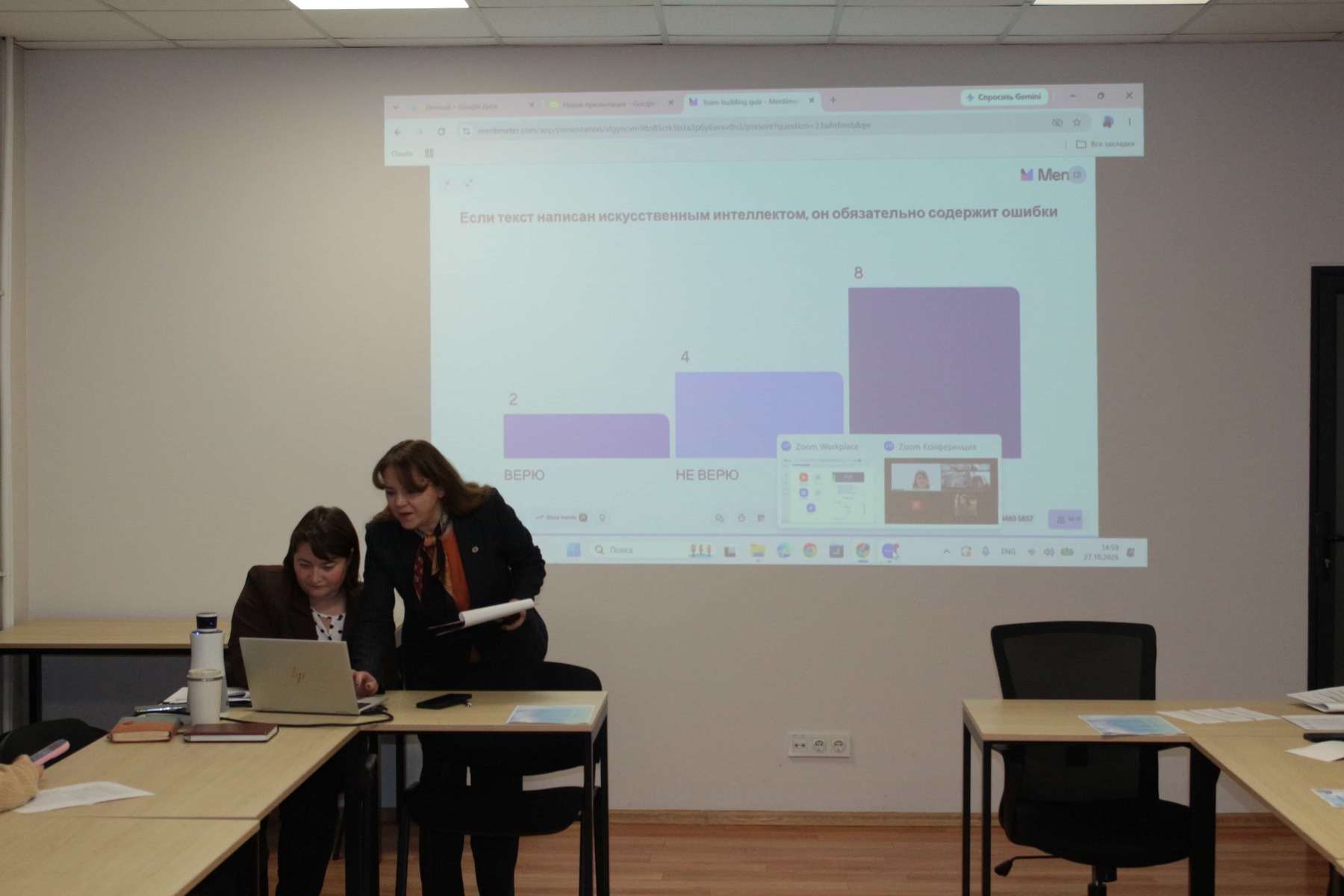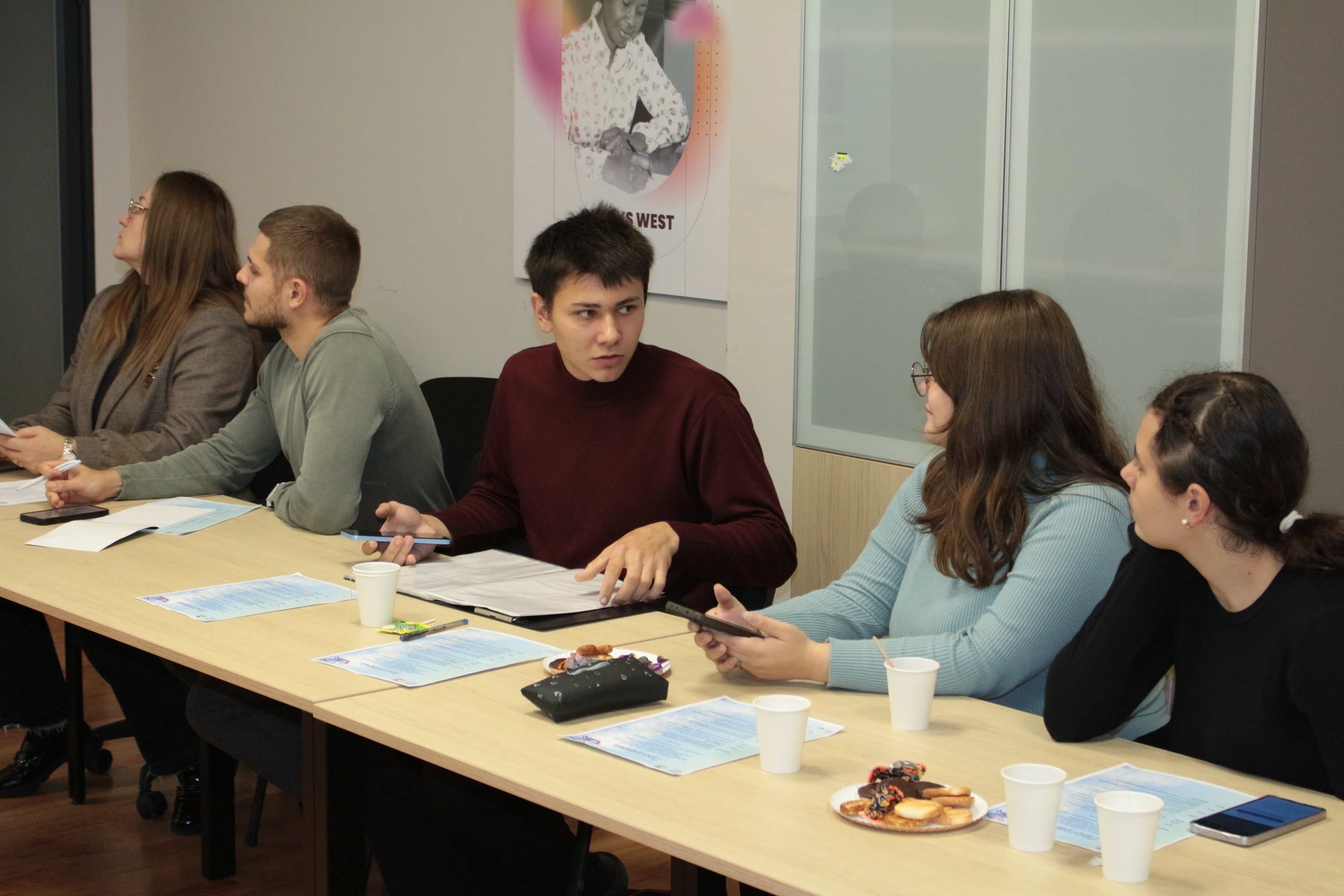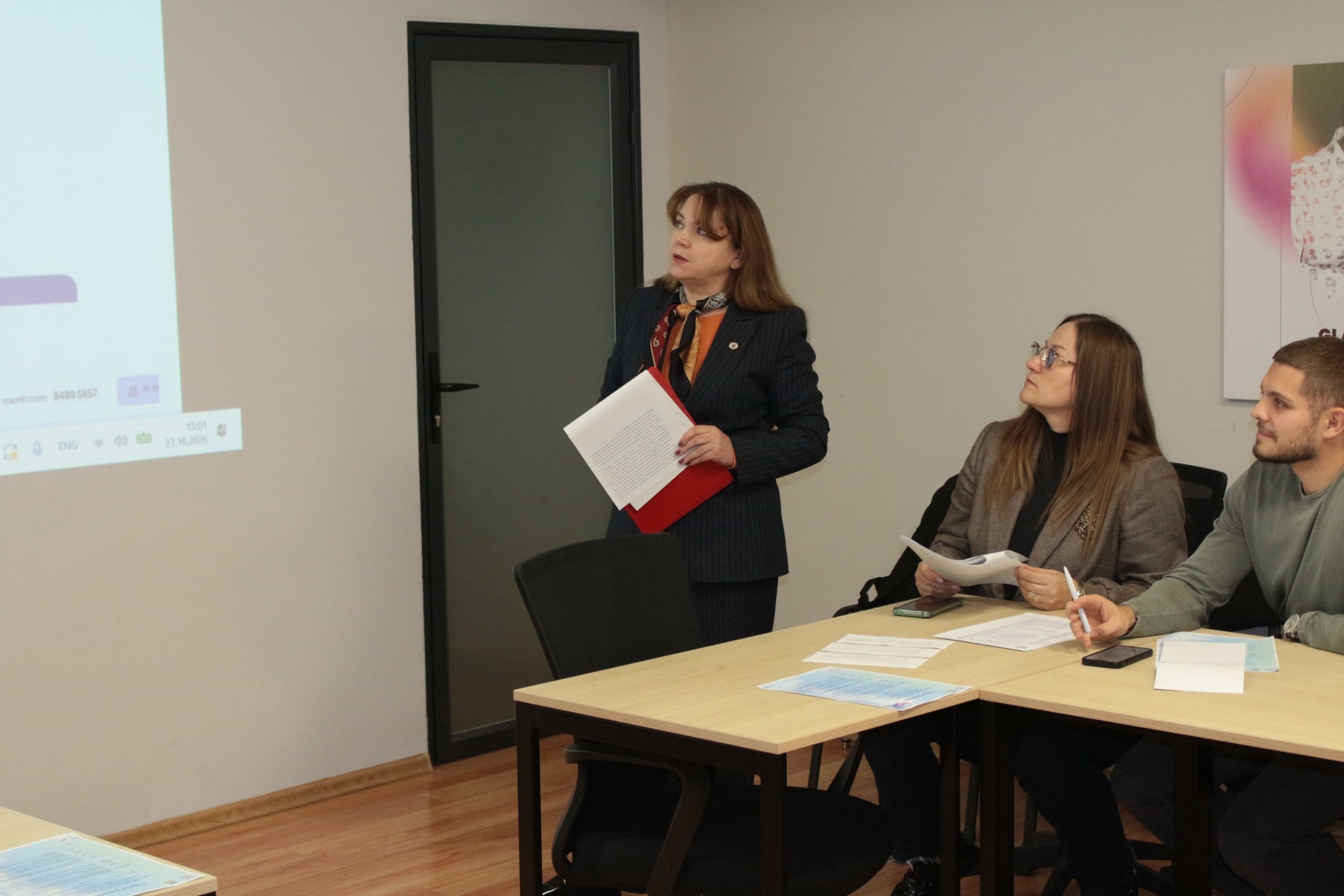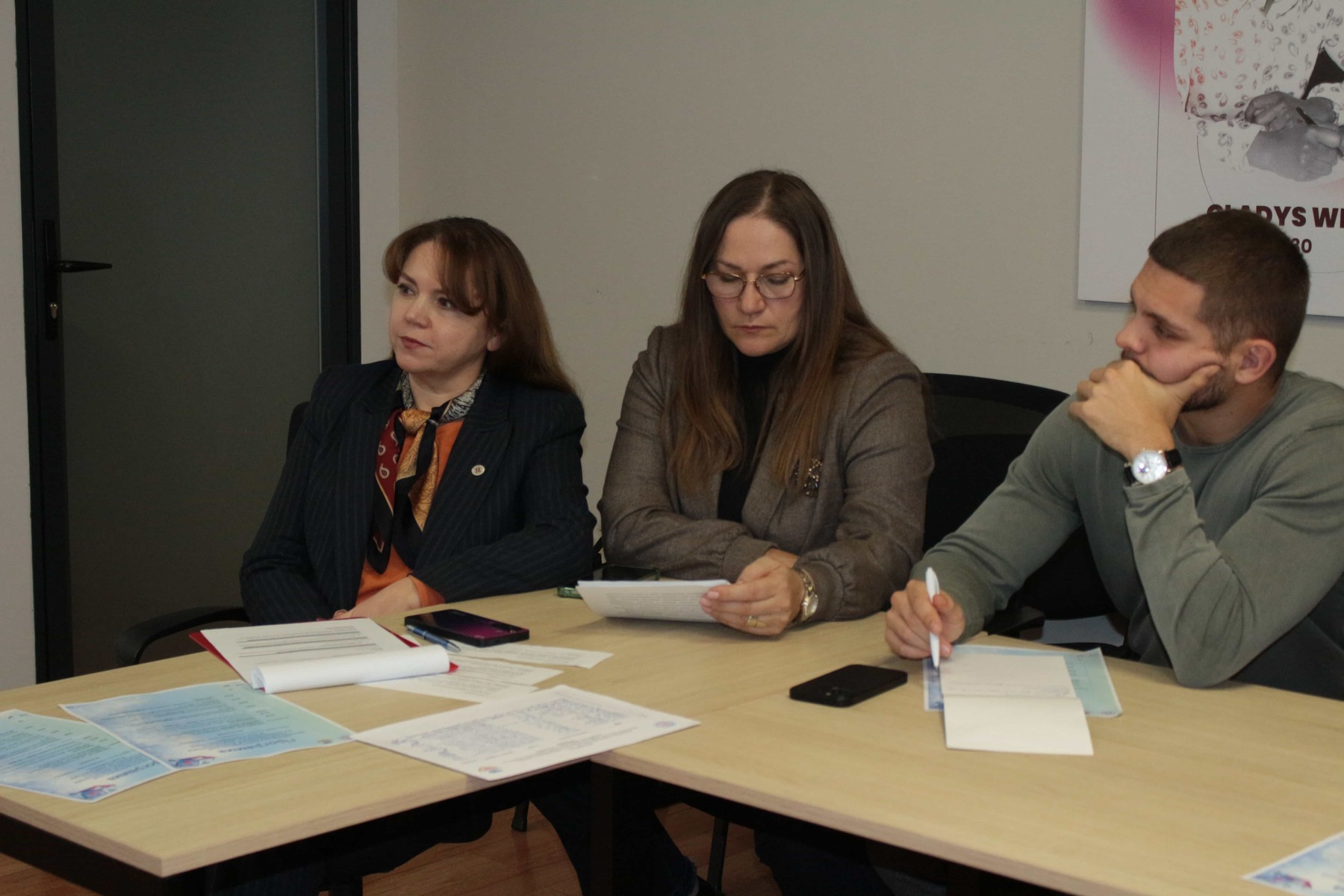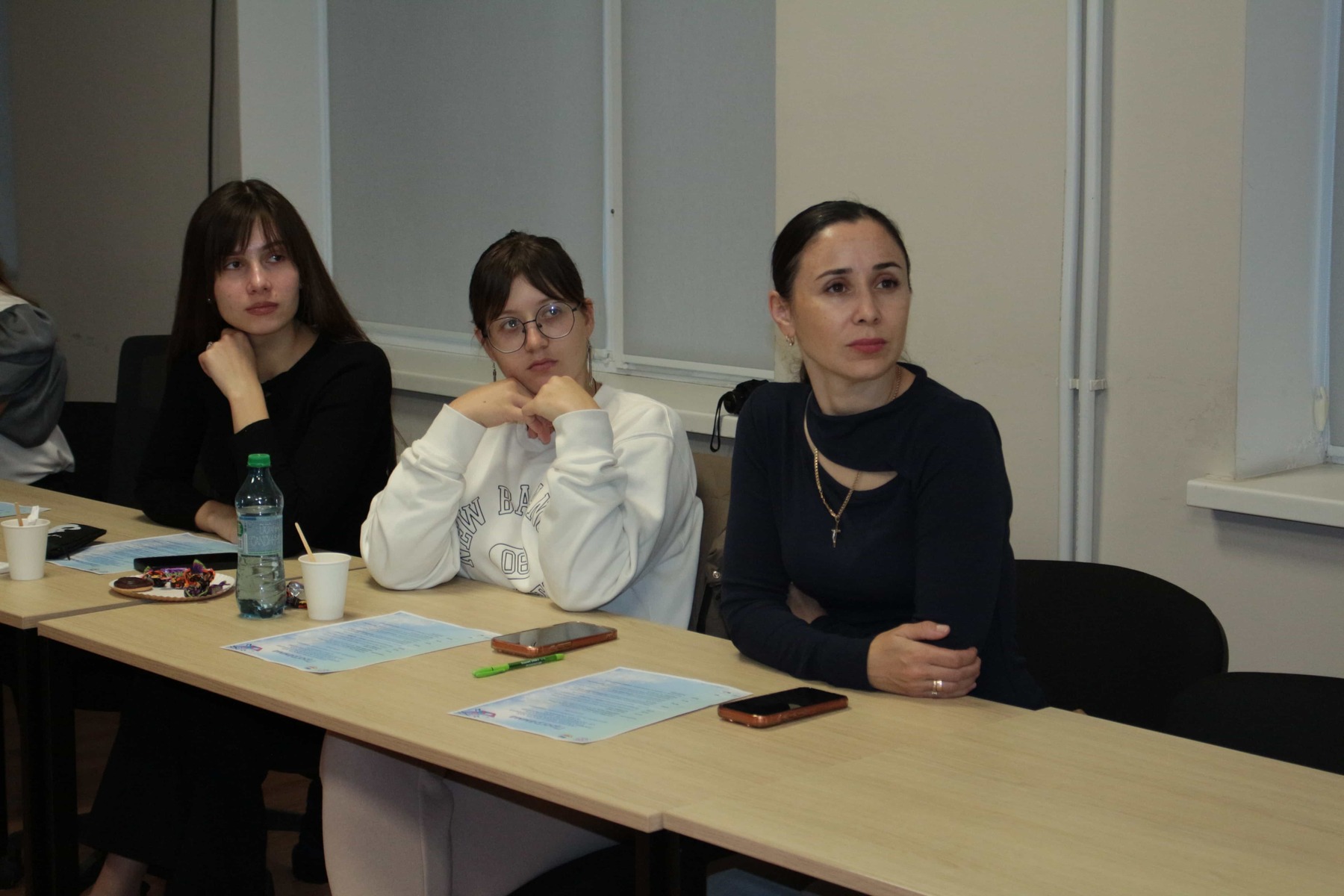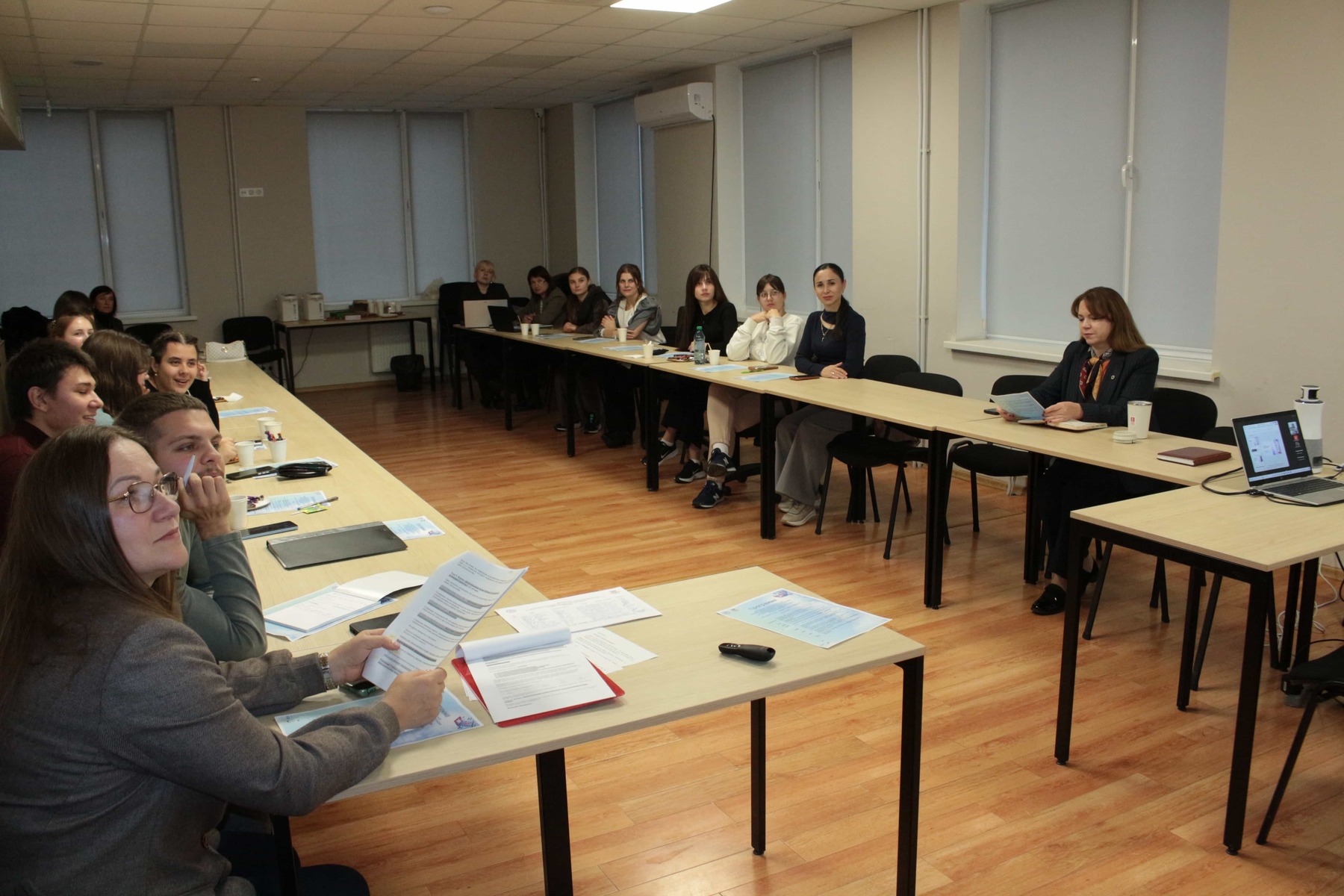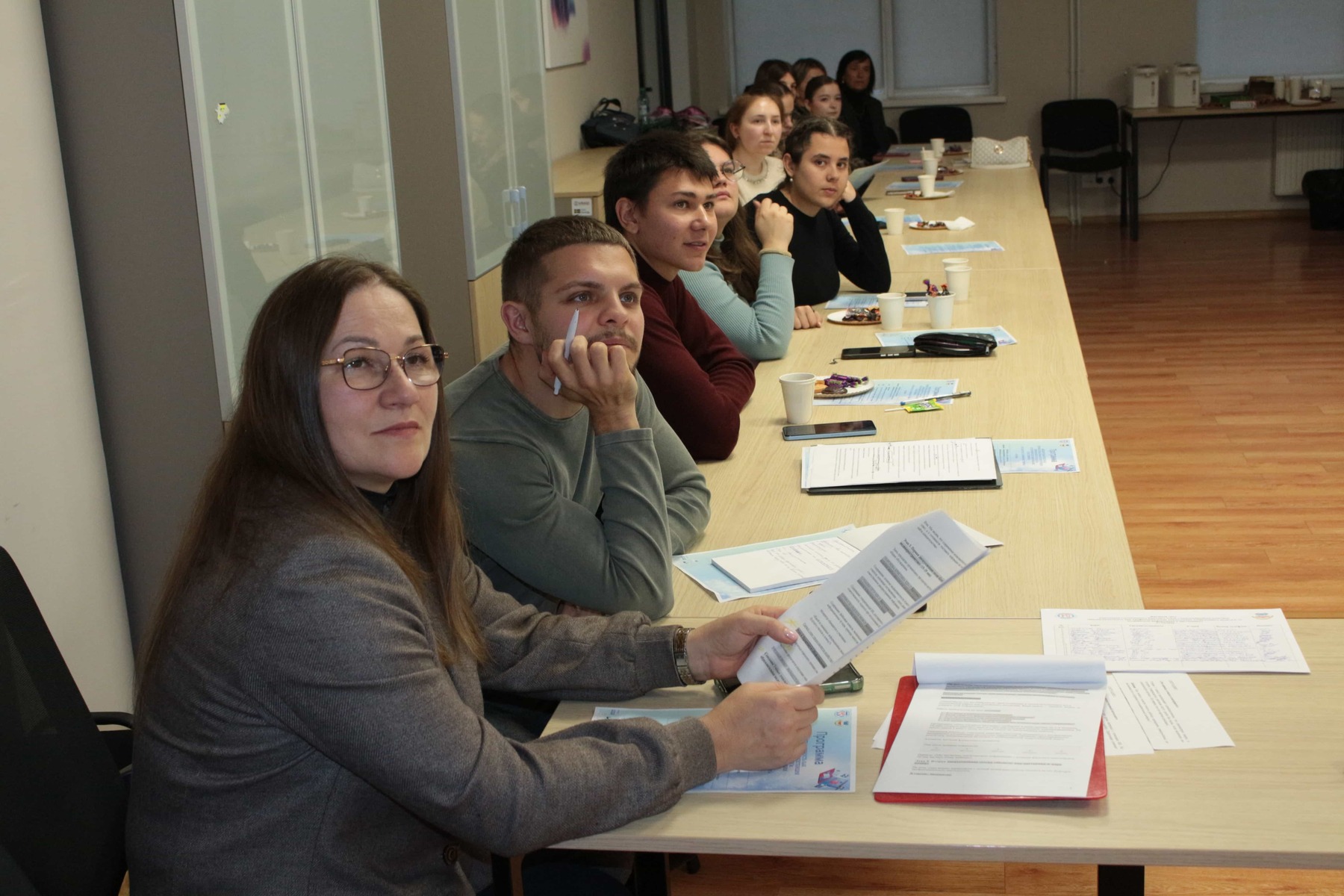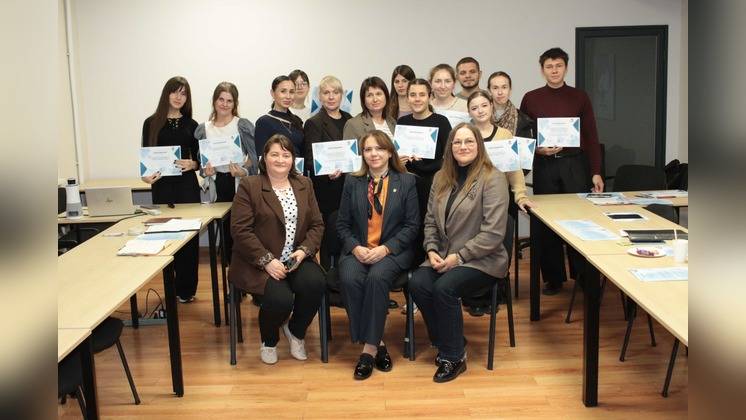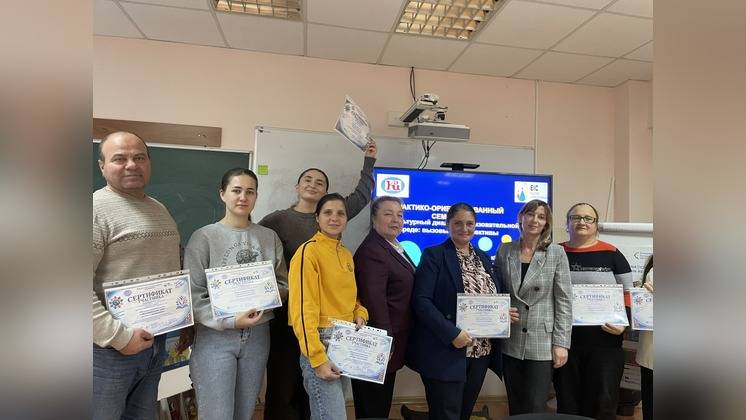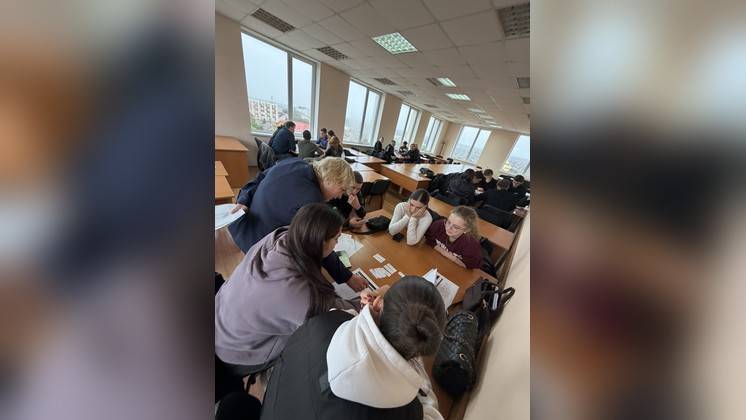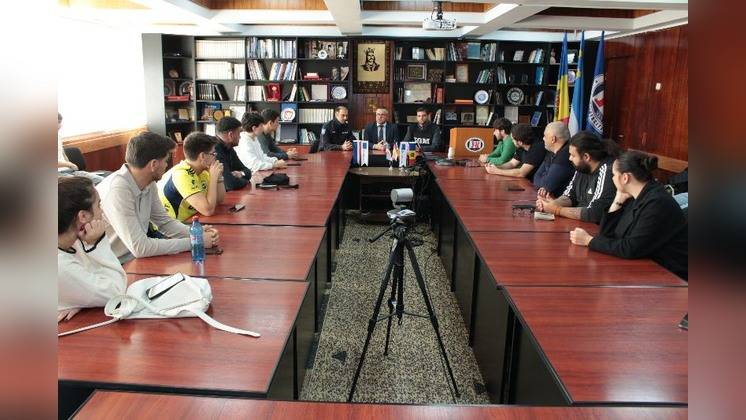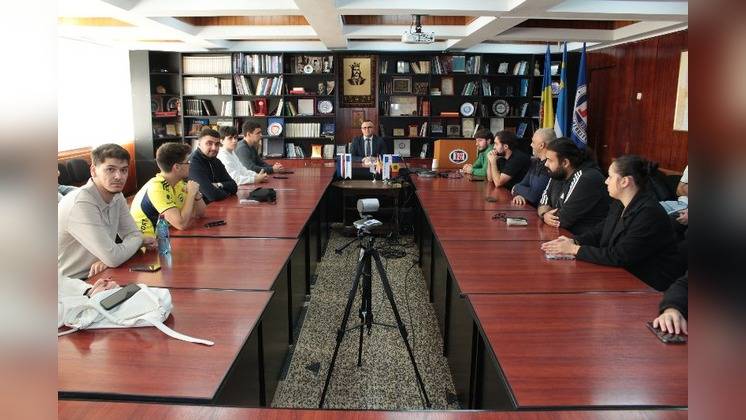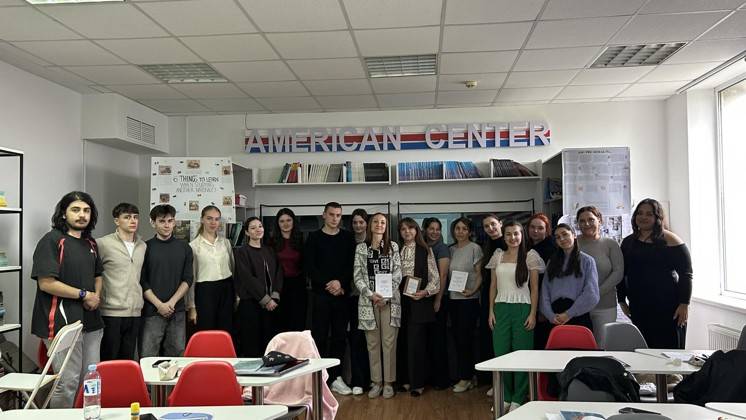







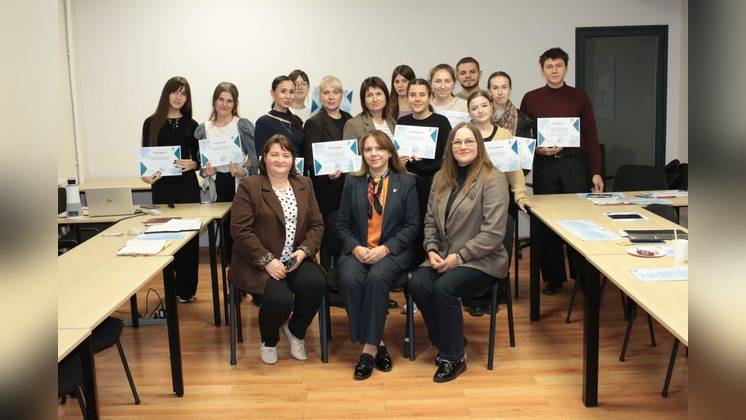
On October 27, 2026, an international student round table entitled “Media Literacy as a Professional Competence of the Modern Educator: From Information Consumer to Mentor” was held at Comrat State University, in the TEKWILL Hall. The event was organized by the Faculty of National Culture in a hybrid format, bringing together students and academic staff participating both in person and online.
Students enrolled in teacher education programmes at Ivan Ohiienko Kamianets-Podilskyi National University (Ukraine) joined the discussions online. The joint participation of students from the two universities in scientific and educational events has already become a valued tradition, contributing to the development of international academic cooperation, professional communication, and the exchange of pedagogical experience.
The round table aimed to discuss the role of media literacy in the professional training of modern educators, develop critical thinking among future teachers, and introduce practical approaches to fostering media literacy and digital safety among learners.
The discussions focused on current challenges in modern education, including the reliability of information in the digital environment, identifying disinformation and manipulation, the opportunities and risks associated with artificial intelligence, children's digital safety, the foundations of digital citizenship, and the development of critical thinking among primary school pupils.
A distinctive feature of the event was the combination of student presentations, interactive activities, training elements, and professional discussions. Participants analysed problem-based situations, explored methods for verifying the reliability of information, and exchanged views on the educator's role in developing children's responsible attitudes towards the digital environment.
Particular attention was paid to teachers' professional responsibility when using digital educational resources and generative artificial intelligence, observing digital ethics, protecting personal data, and creating a safe digital learning environment.
During the discussions, participants concluded that modern educators need well-developed media literacy competencies and should act as mentors capable of teaching children to critically evaluate information, assess its reliability, justify their own opinions, and use digital technologies responsibly.
The round table provided a platform for meaningful professional dialogue, international student interaction, and the exchange of pedagogical ideas. The interactive format encouraged students to engage actively in discussions of current educational challenges and reflect on their future professional roles in the context of society's digital transformation.
The event was moderated by O. Kurteva, PhD, Associate Professor; A. Polevaia-Secareanu, PhD, Associate Professor; and I. Ivarlac, Teaching Assistant.
Organizing such events contributes to the development of future teachers' professional competencies, the promotion of a culture of critical thinking, and the strengthening of academic ties between Comrat State University and its international partners.
Article by O. Kurteva, PhD, Associate Professor,
Dean of the Faculty of National Culture