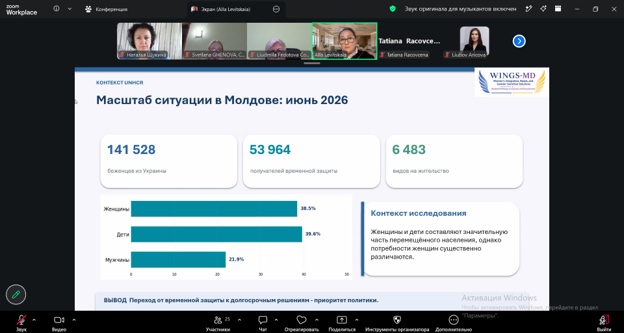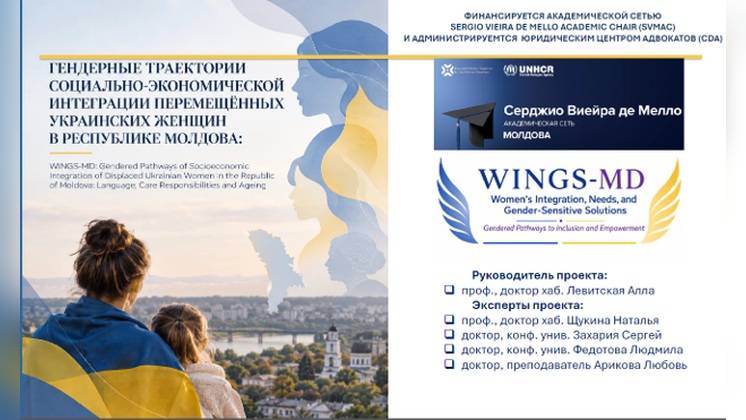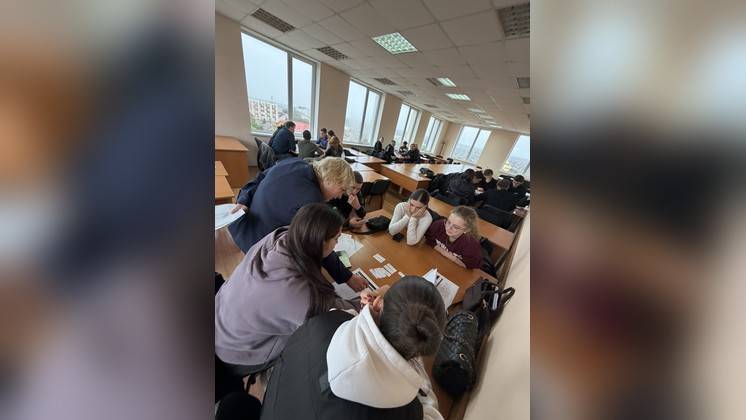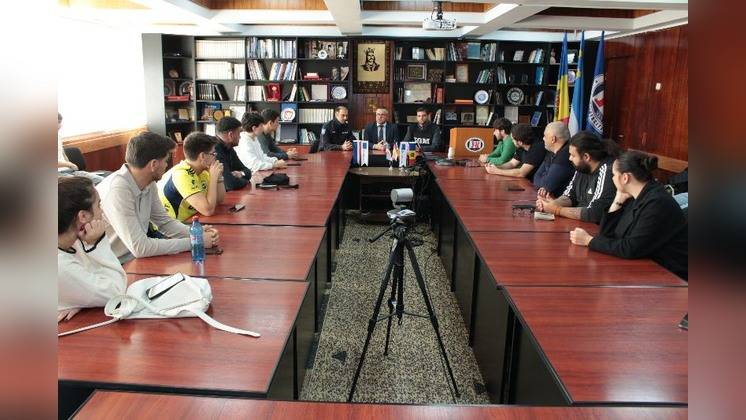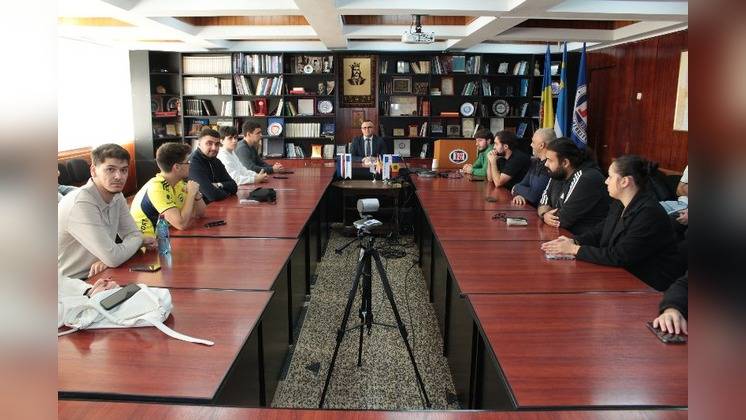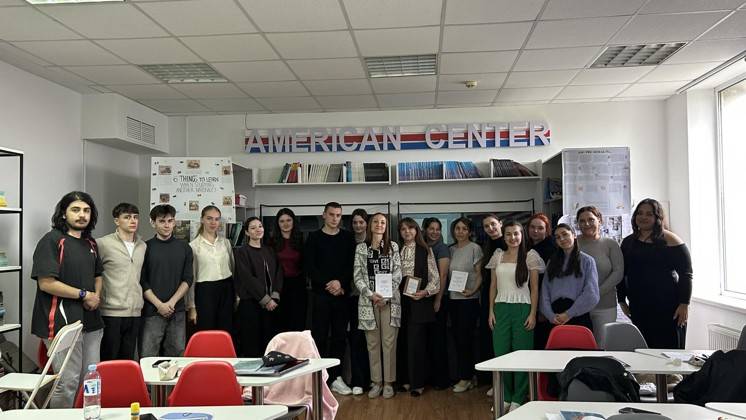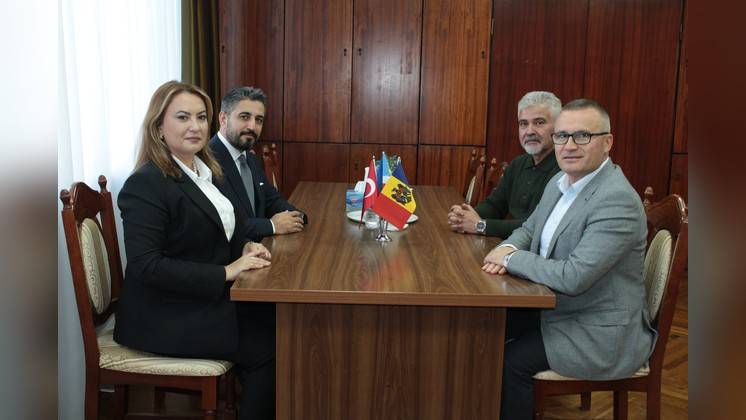







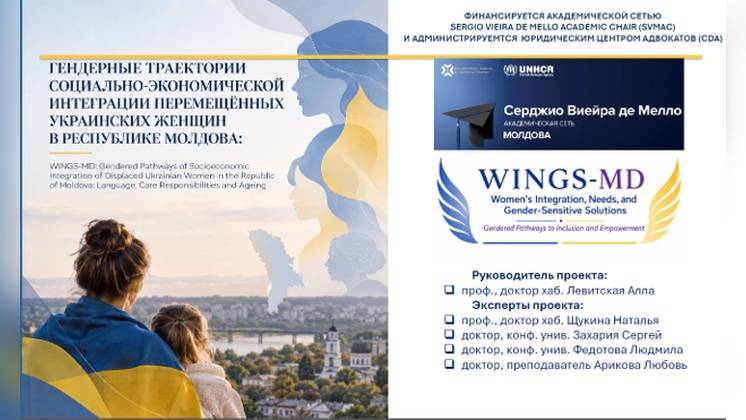
The final online meeting of the WINGS-MD (Women’s Integration, Needs, and Gender-Sensitive Solutions) project – “Gendered Pathways of Socioeconomic Integration of Displaced Ukrainian Women in the Republic of Moldova” was held to present the research findings.
The project was implemented by the Institute of Regional Economic Development (REDI), in cooperation with Comrat State University, within the framework of the Sergio Vieira de Mello Academic Chair (SVMAC) initiative in the Republic of Moldova, a strategic partnership between the United Nations High Commissioner for Refugees (UNHCR) in Moldova, SVMAC member universities, and the Law Center of Advocates (CDA).
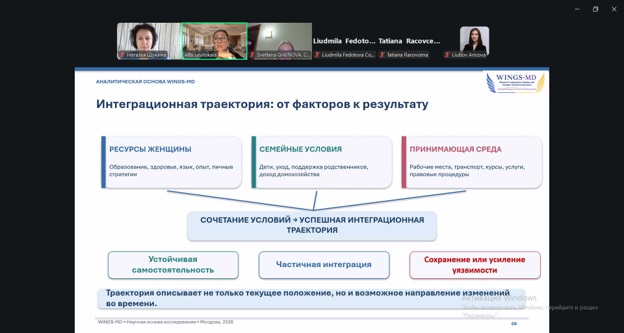
The main objective of the project was to develop and empirically validate a typology of socioeconomic integration pathways among displaced Ukrainian women in Moldova. To achieve this objective, the research examined the interrelationships between individual, family, and institutional factors, with particular attention to gender dimensions and unpaid care responsibilities.
Specific research areas included the situation of women aged 60 and over, access to essential services, and regional differences in integration opportunities. The empirical research was based on 152 completed questionnaires, four focus group discussions involving 53 participants, and 20 in-depth interviews.
An important component of the study was the comparison of the findings with integration practices in Poland and Germany. Ultimately, the research aims to develop practical, evidence-based recommendations for national and local authorities, educational institutions, and non-governmental organisations.
The key findings demonstrate that women's integration follows different pathways. Language proficiency, family responsibilities, age, professional qualifications, and region of residence significantly influence access to employment and social services. Particular attention should be paid to women aged 60 and over, single mothers, and women providing care for dependent family members.
During the meeting, practical recommendations were presented for developing gender-sensitive integration mechanisms, expanding employment opportunities, and improving social support systems.
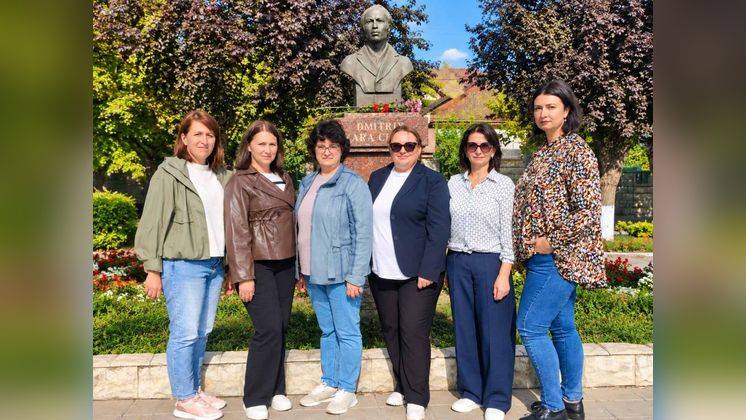
Project Team:
Project Coordinator:
Alla Levitskaia – Professor, Doctor Habilitatus.
Project Experts:
Natalia Shchukina – Professor, Doctor Habilitatus.
Sergey Zaharia – PhD, Associate Professor.
Liudmila Fedotova – PhD, Associate Professor.
Liubov Arikova – PhD, Lecturer.