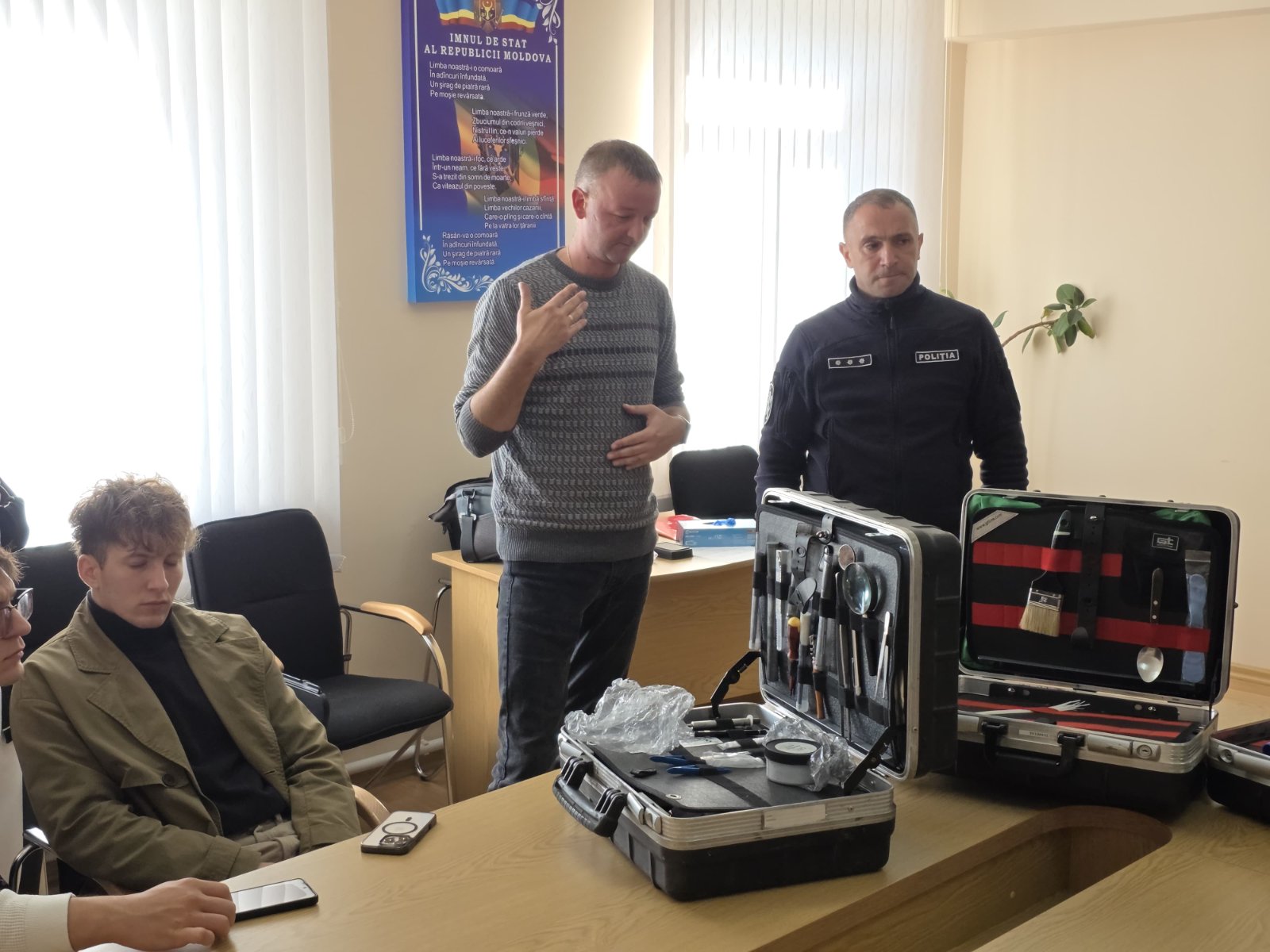




On October 14, 2025, as part of the educational process for students of the Faculty of Law of Comrat State University, the lecturers of the Department of Public Law, Doctor of Law Levandovski Nicolai and Master of Law Tatiana Sarî, held a meeting with forensic experts who demonstrated special equipment used in investigations. The purpose of the event was to familiarize students with practical tools and methods applied in forensic practice, as well as to show how important the knowledge of such technologies is for the effective investigation of crimes. The meeting began with a welcoming speech by the Chief Prosecutor of Gagauzia, Levandovski Nicolai, the Head of the Police Department of ATU Gagauzia, General Inspectorate of Police, Ministry of Internal Affairs of the Republic of Moldova, Andrei Mihailovich Sîrbu, the Chief Commissioner, who spoke about the main directions of the department’s activities, and the Deputy Chief Prosecutor of Gagauzia, Ion Bazatin, was also given the floor.
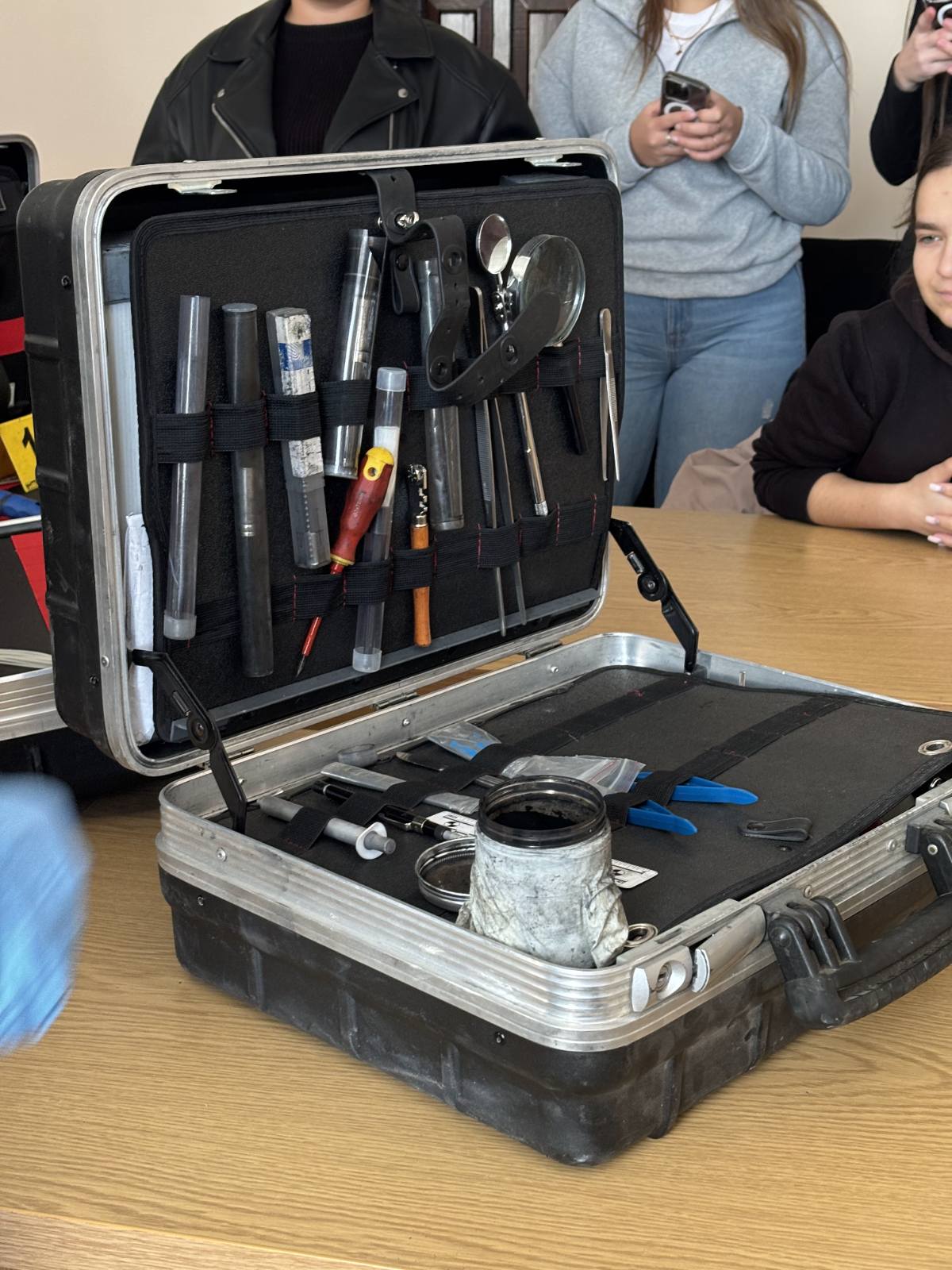
The event was conducted by employees of the Police Department of ATU Gagauzia, professionals in the field of forensics with many years of experience in law enforcement. During the meeting, the forensic experts presented several types of forensic cases, each designed to solve various tasks within the process. Among the demonstrated equipment were cases for collecting traces, sets for working with biological and physical evidence (for example, for collecting fingerprints, fibers, shoe prints), and cases for analyzing evidence. Special tools for packaging and storing material evidence, as well as devices for primary diagnostics, were also presented. The forensic experts demonstrated how to correctly collect and record evidence, explained the importance of maintaining the chain of custody of evidence, and how the use of special equipment helps to avoid errors in the investigation process.
During the event, students showed great interest in the presented materials. Many asked questions about the practical use of tools and about how forensic experts are trained to use such equipment. The students were especially interested in the details of working with fingerprint collection kits.
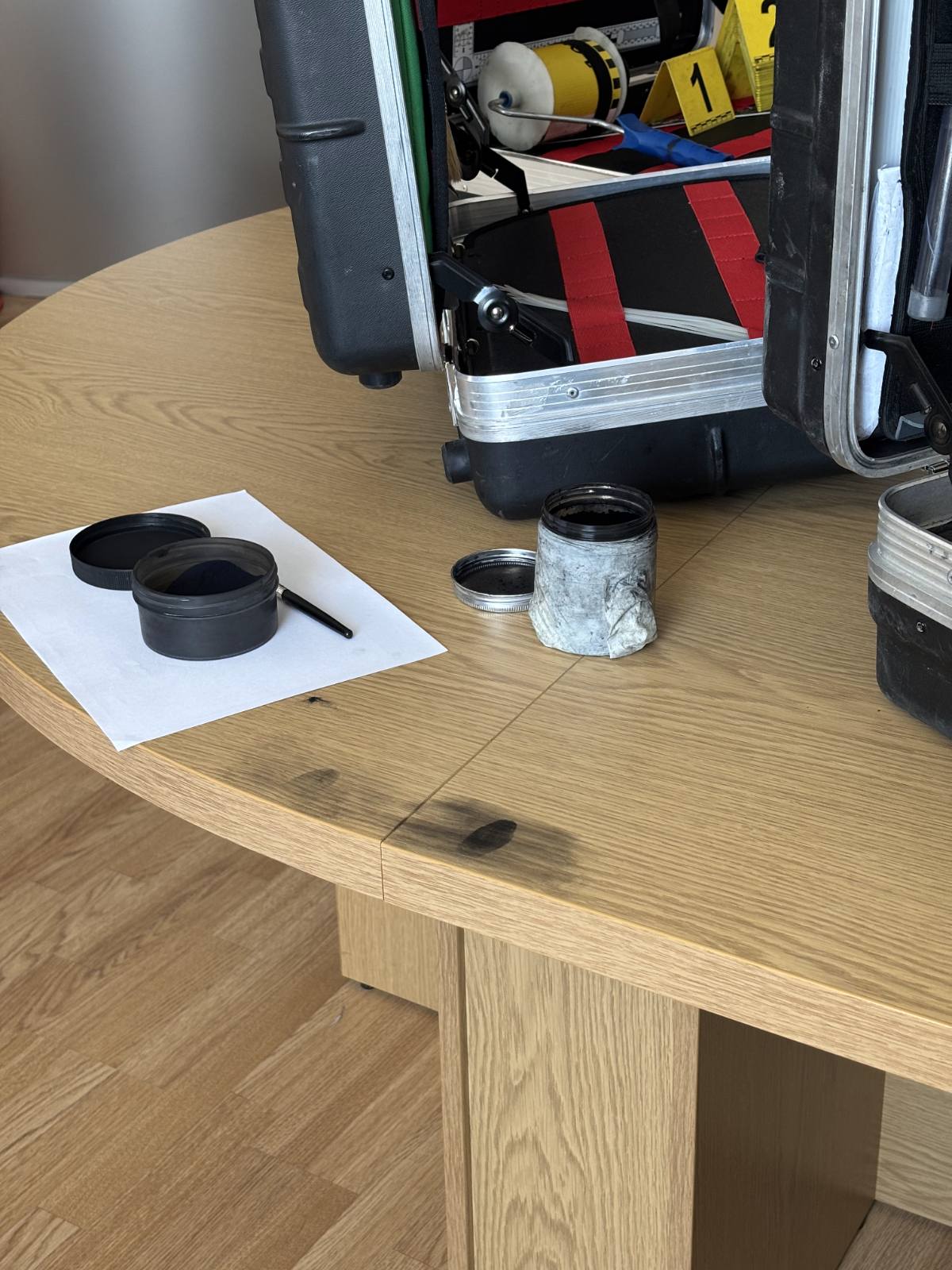
The forensic experts presented in detail the sets (“cases”) designed for collecting and recording traces and paid special attention to the procedure of taking fingerprints. During the demonstration, the following elements and stages were shown and explained (as presented by the experts, with an emphasis on the practical side, without unnecessary technical details): the participants were shown various configurations — sets for visualizing and lifting fingerprints from hard surfaces (powders, brushes, tapes for lifting fingerprints), mobile cameras for recording traces, cards and forms for registering fingerprints, as well as personal protective equipment and materials for labeling and packaging evidence. The forensic experts showed how the choice of method (powder processing, magnetic powder, etc.) depends on the type of surface and conditions. Samples of fingerprints before and after processing were demonstrated so that students could see the differences and results. The specialists visually showed the use of adhesive tape (or special plasters) to transfer the fingerprint onto a card, followed by packaging, labeling, and the preparation of accompanying documentation. The importance of maintaining the integrity and chain of custody of evidence was explained. The forensic experts emphasized which documents and marks are required when taking fingerprints as part of procedural actions, as well as how to properly record the place and circumstances of collection.
During the practical part, the students of the Faculty of Law of Comrat State University, under the supervision of experts, tried to record traces on surfaces — this allowed them to feel the sequence of actions: from visual inspection and photography to transferring the fingerprint onto cardboard and filling out registration forms. The forensic experts explained in detail the composition and use of a special case designed for work at the scene of a traffic accident. This case is an important tool used to collect and record traces that can be used as evidence in court proceedings. The case contains a variety of equipment for collecting and analyzing traces from the scene. Among the main items are cameras, measuring instruments, sets for collecting physical traces (for example, glass fragments, tire marks, fragments of car parts), as well as devices for recording and documenting the scene. The forensic experts explained how important it is to correctly record the scene of a traffic accident. It was shown how to use laser rangefinders to determine the exact length of braking distances and the distances between damaged vehicles. They also demonstrated how high-resolution cameras are used to record traces left on the road (for example, skid marks, damage to the road surface, tire-to-road contact).
The meeting with practicing forensic experts, including a detailed demonstration of working with cases and the process of taking fingerprints, proved extremely useful for the students. The event contributed to the improvement of the practical competence of future lawyers and strengthened their motivation to study forensic disciplines. The students noted that the event allowed them not only to see forensic tools in action but also to understand how important attention to detail is at every stage of the investigation. Some students expressed a desire to study forensics in greater depth and even considered the possibility of an internship in law enforcement agencies. The meeting with the forensic experts became an important stage in the educational process of the students, allowing them to experience real forensic practice and to understand how the knowledge acquired in their courses can be applied in professional activity. The students expressed their gratitude to the organizers and forensic experts for an interesting and informative meeting and expressed their desire to continue studying forensics and to learn more about the practical application of scientific knowledge.