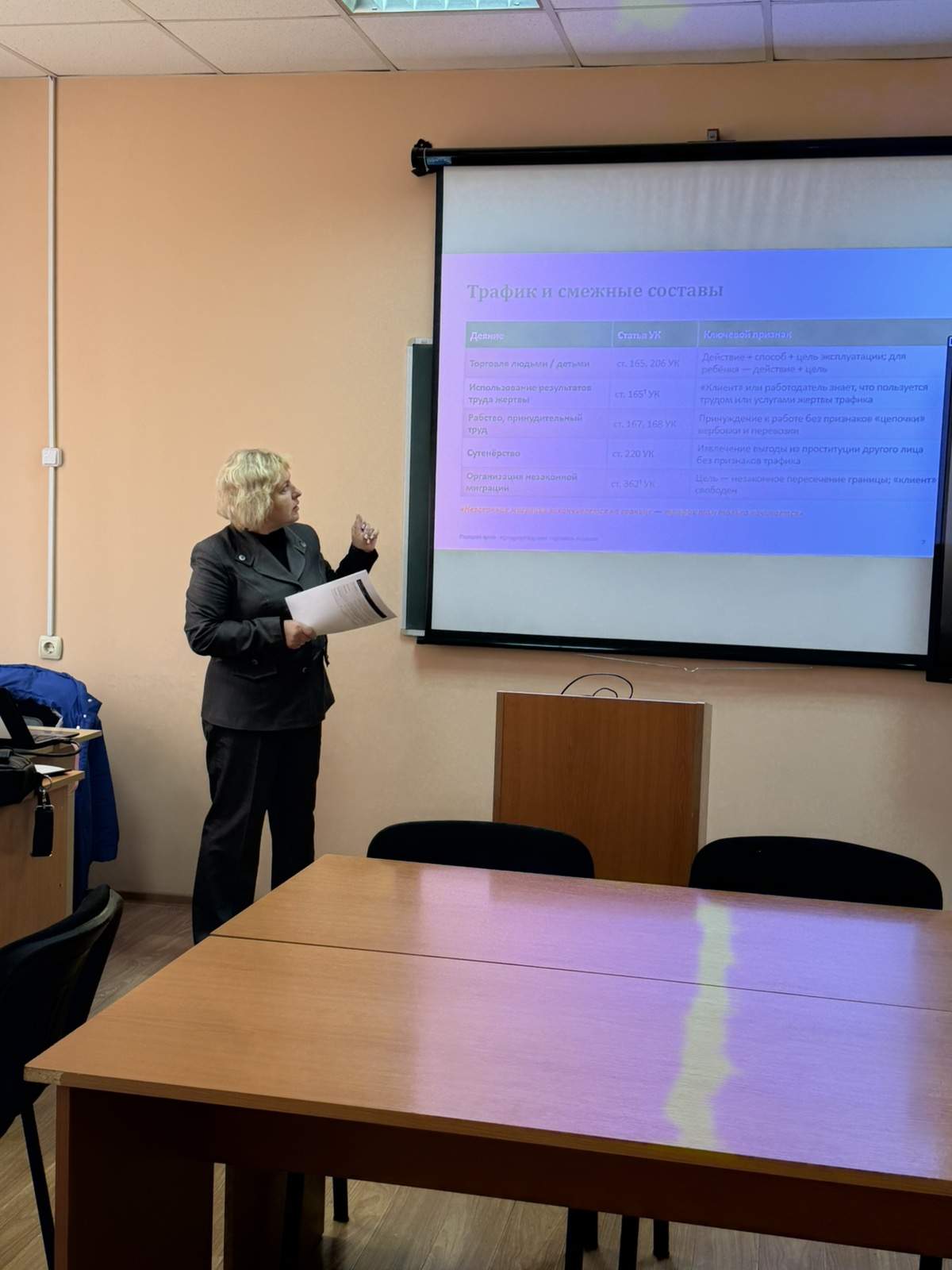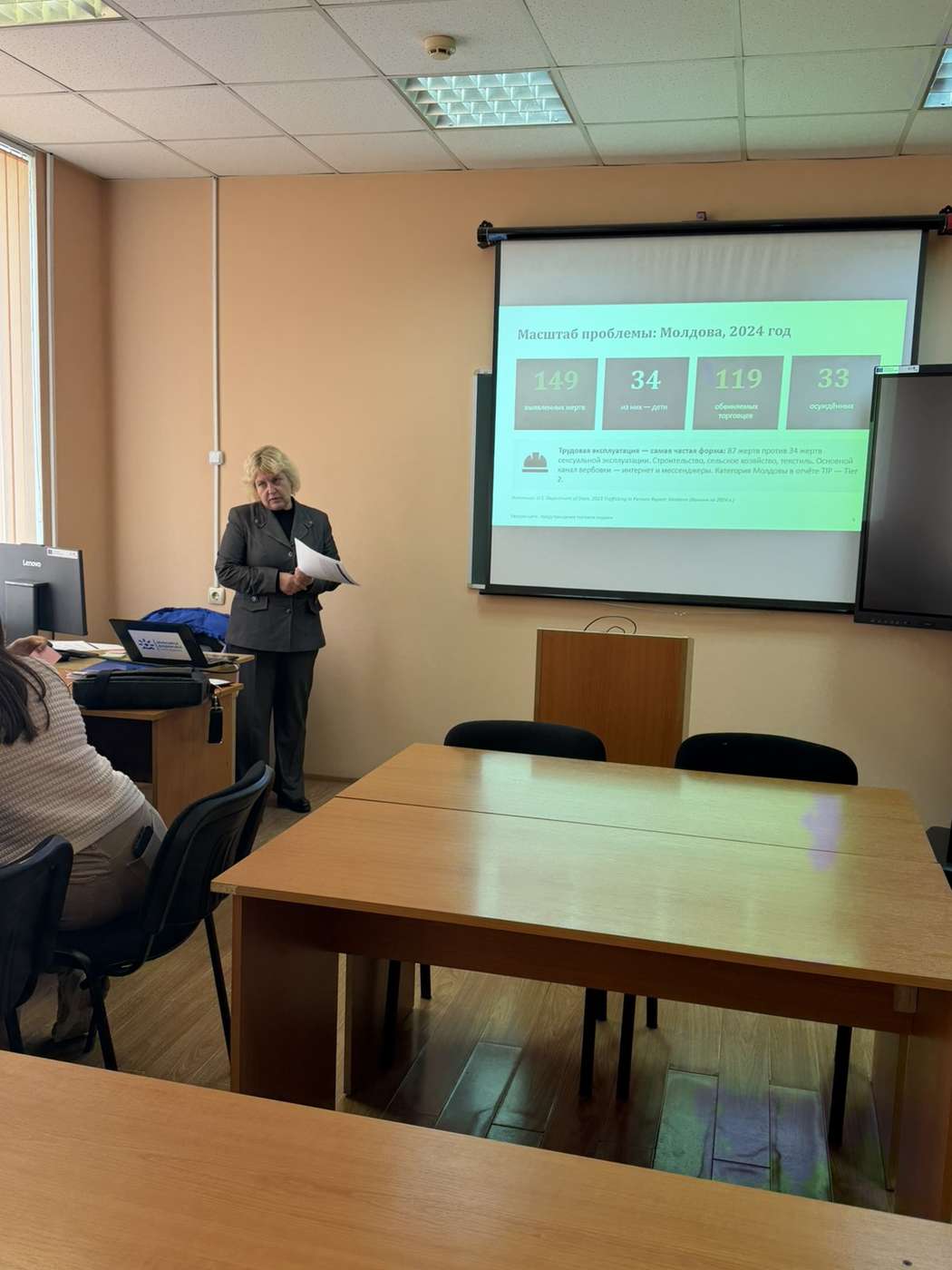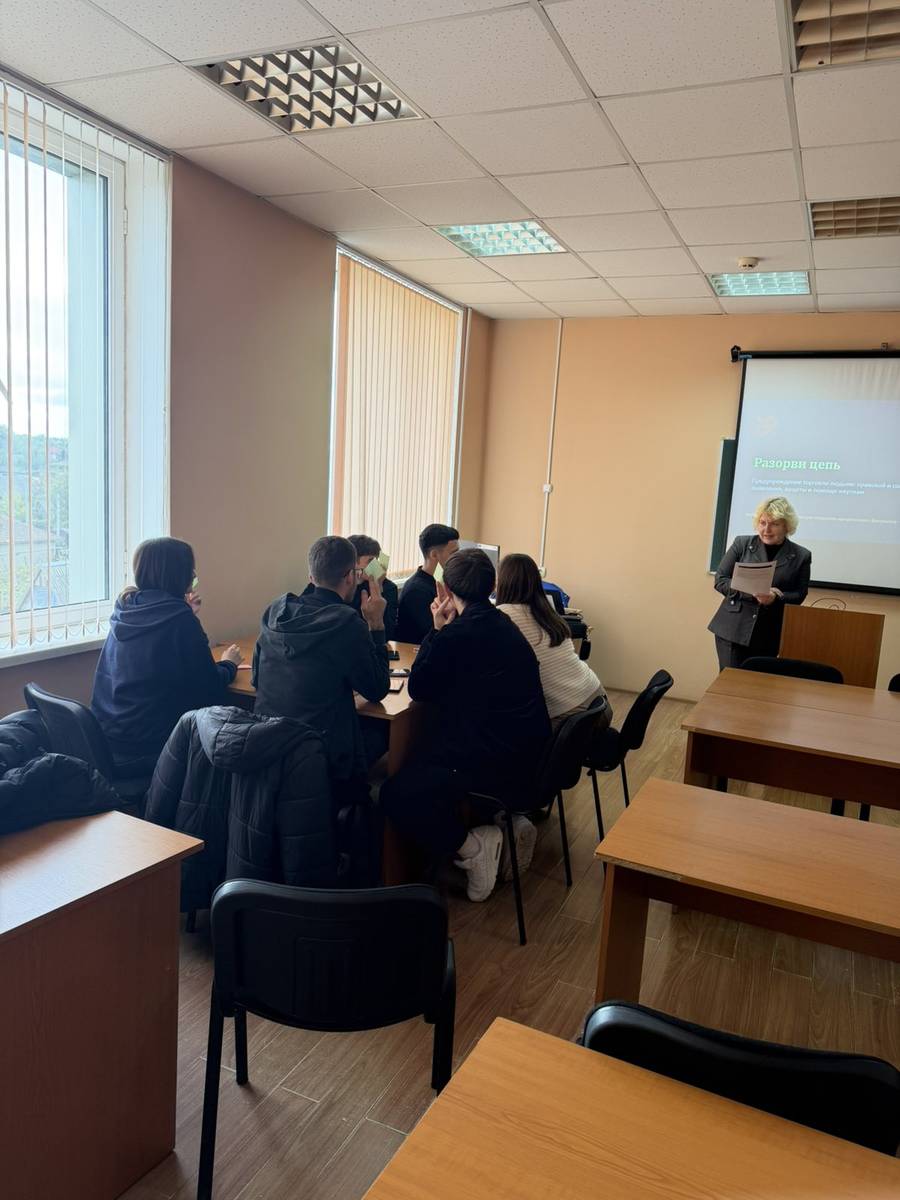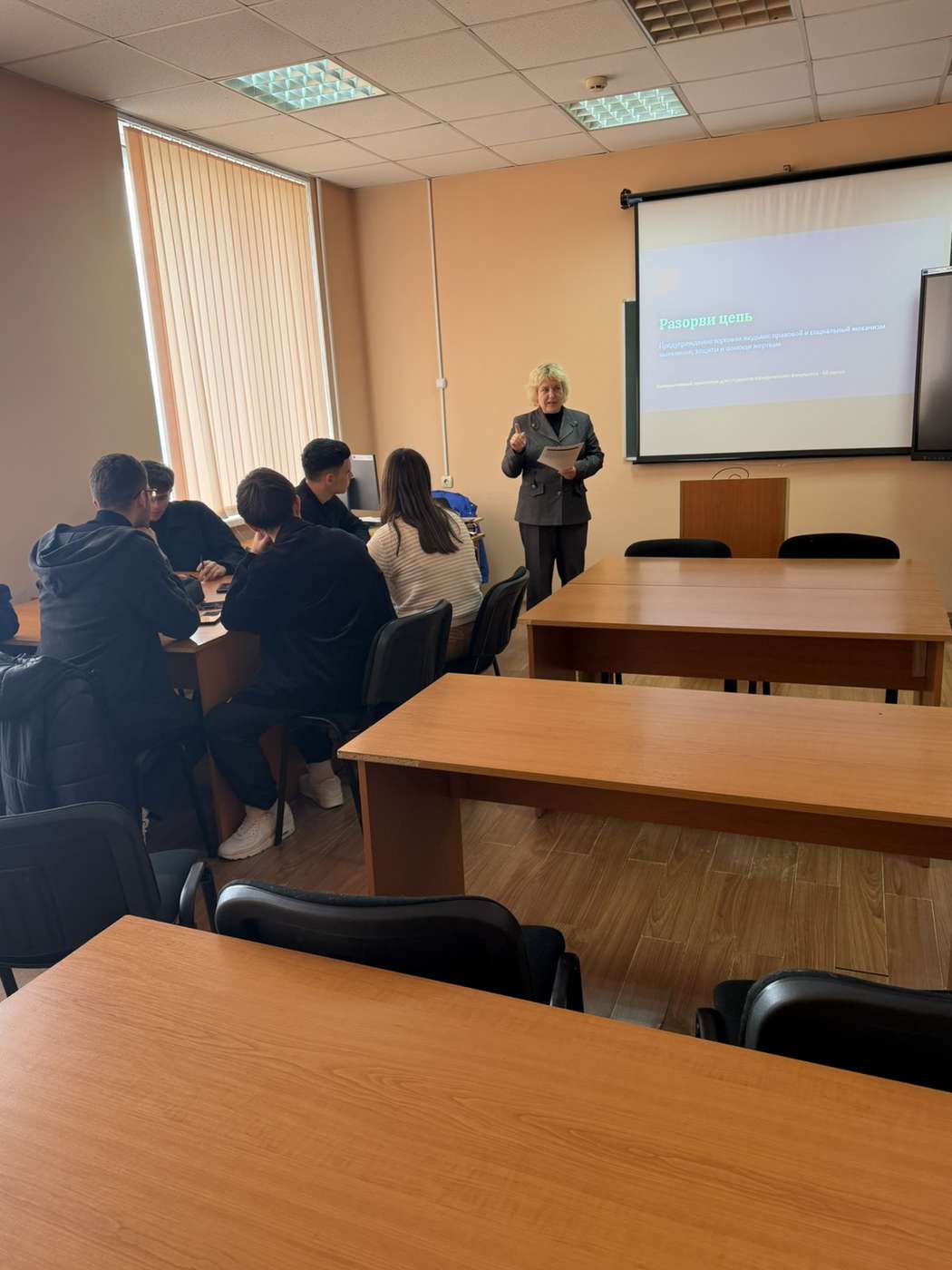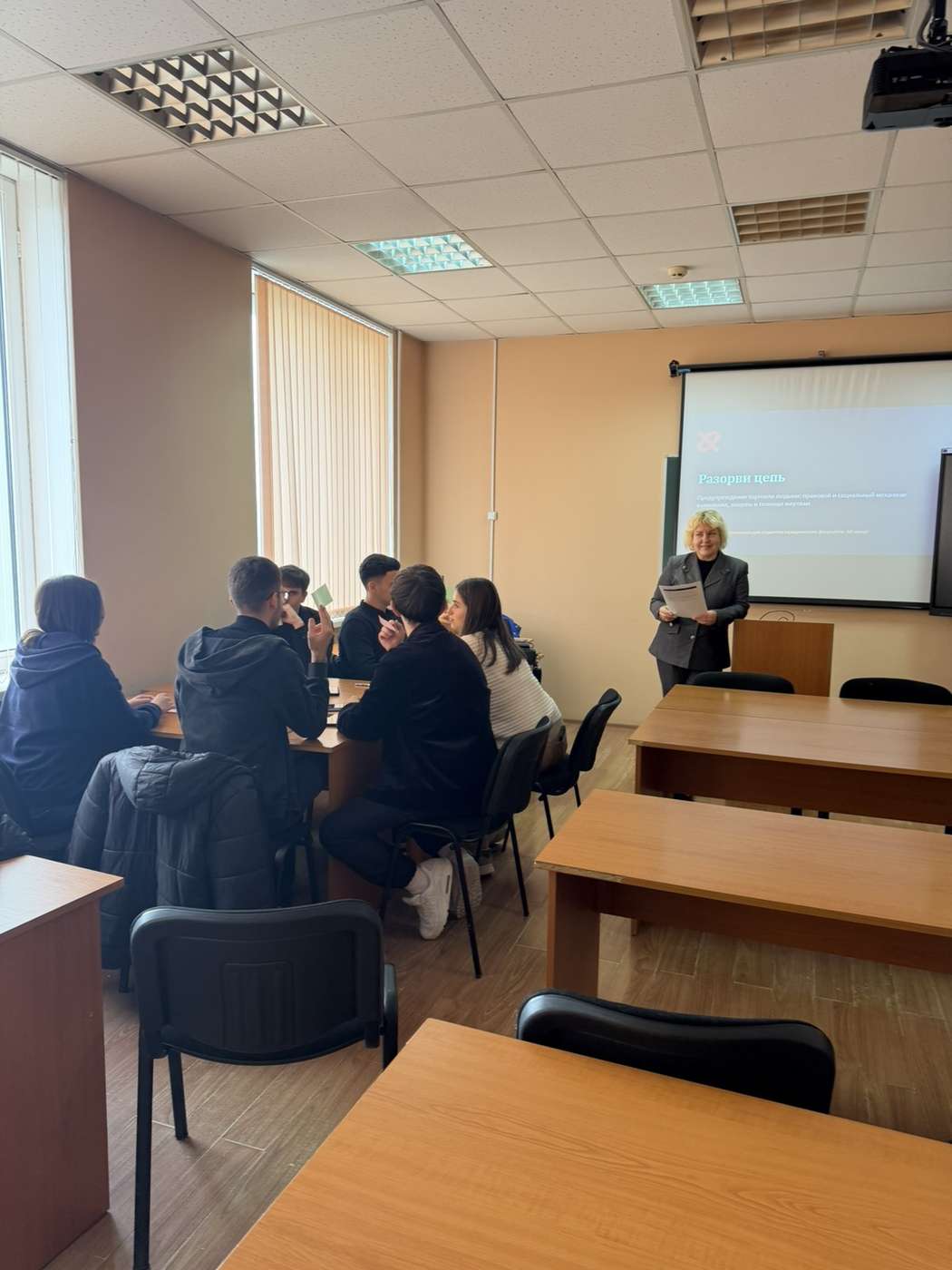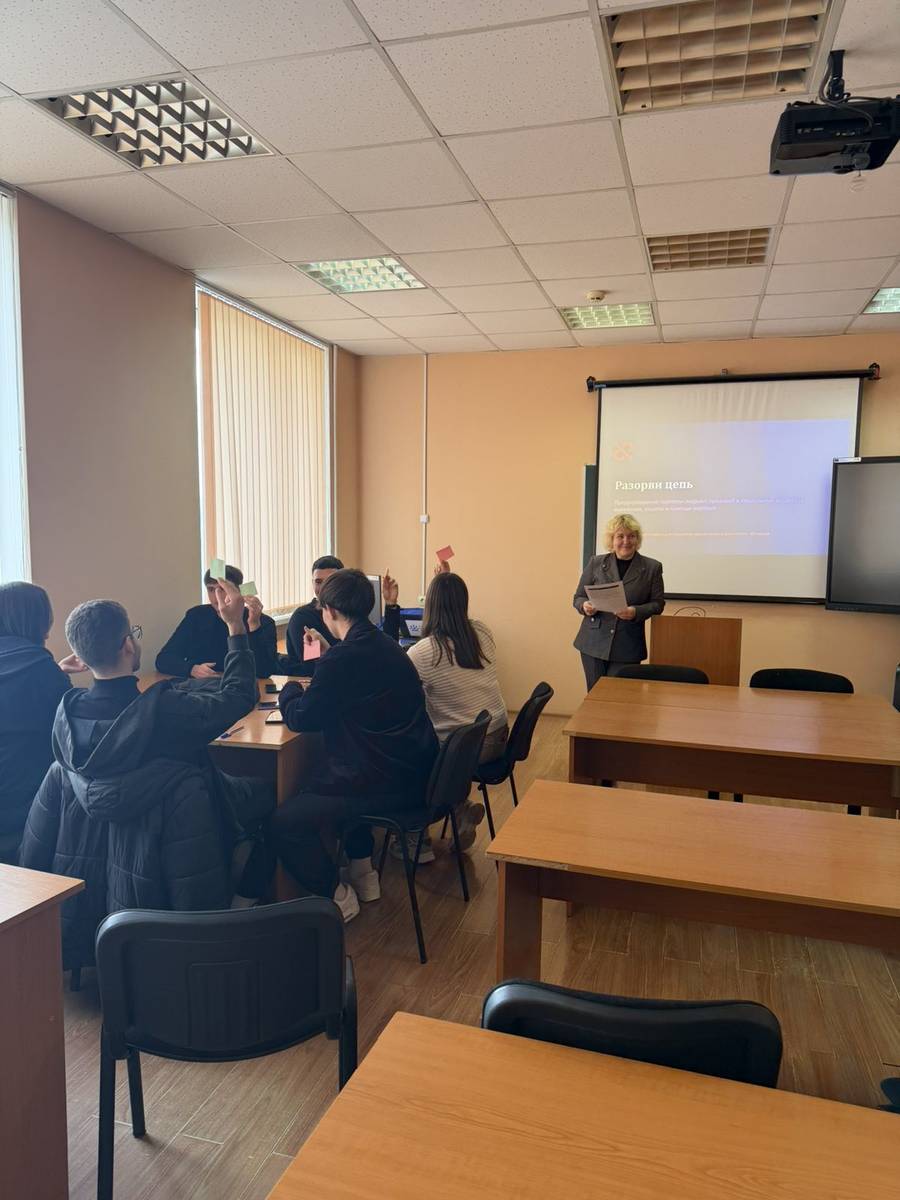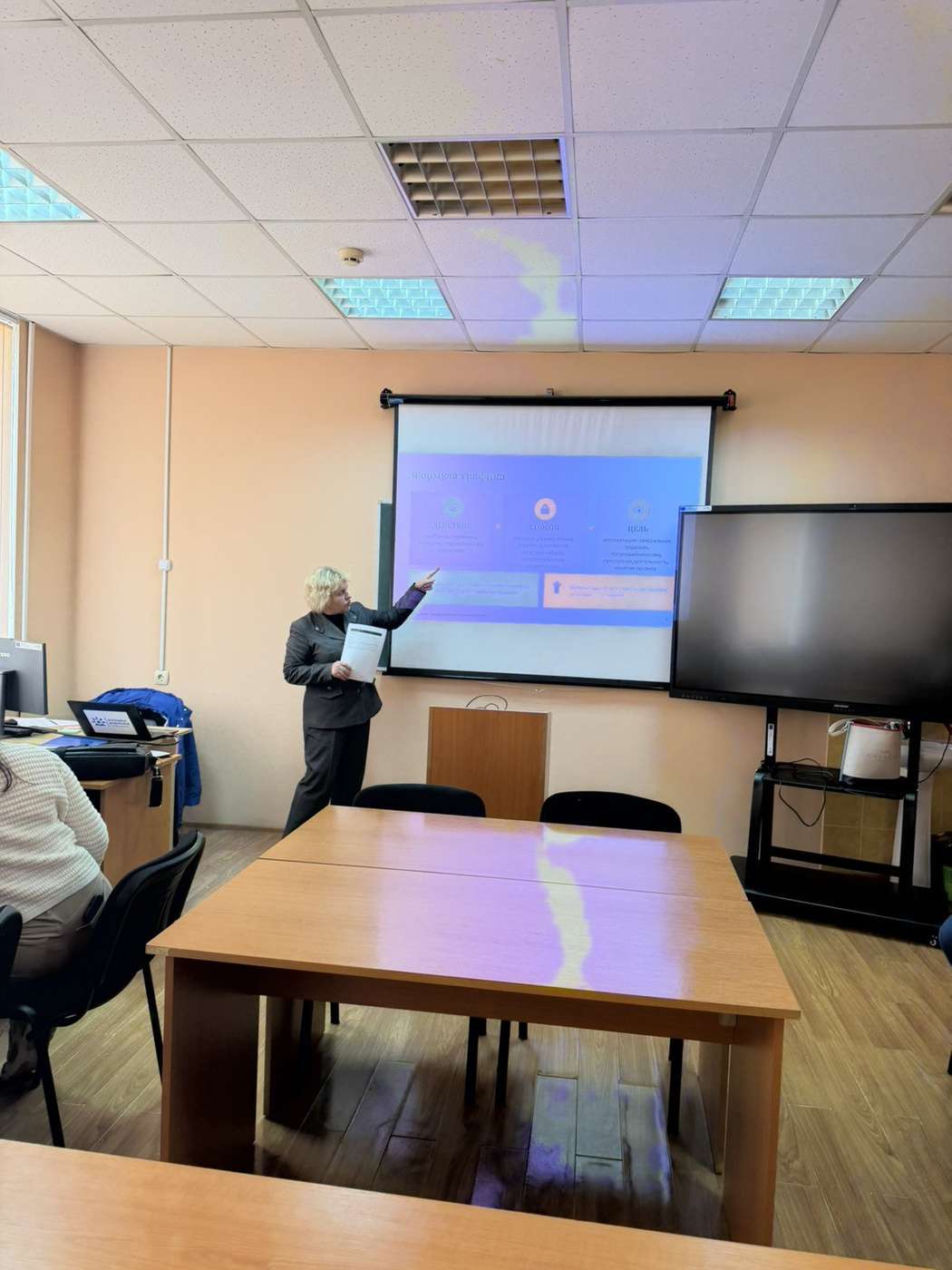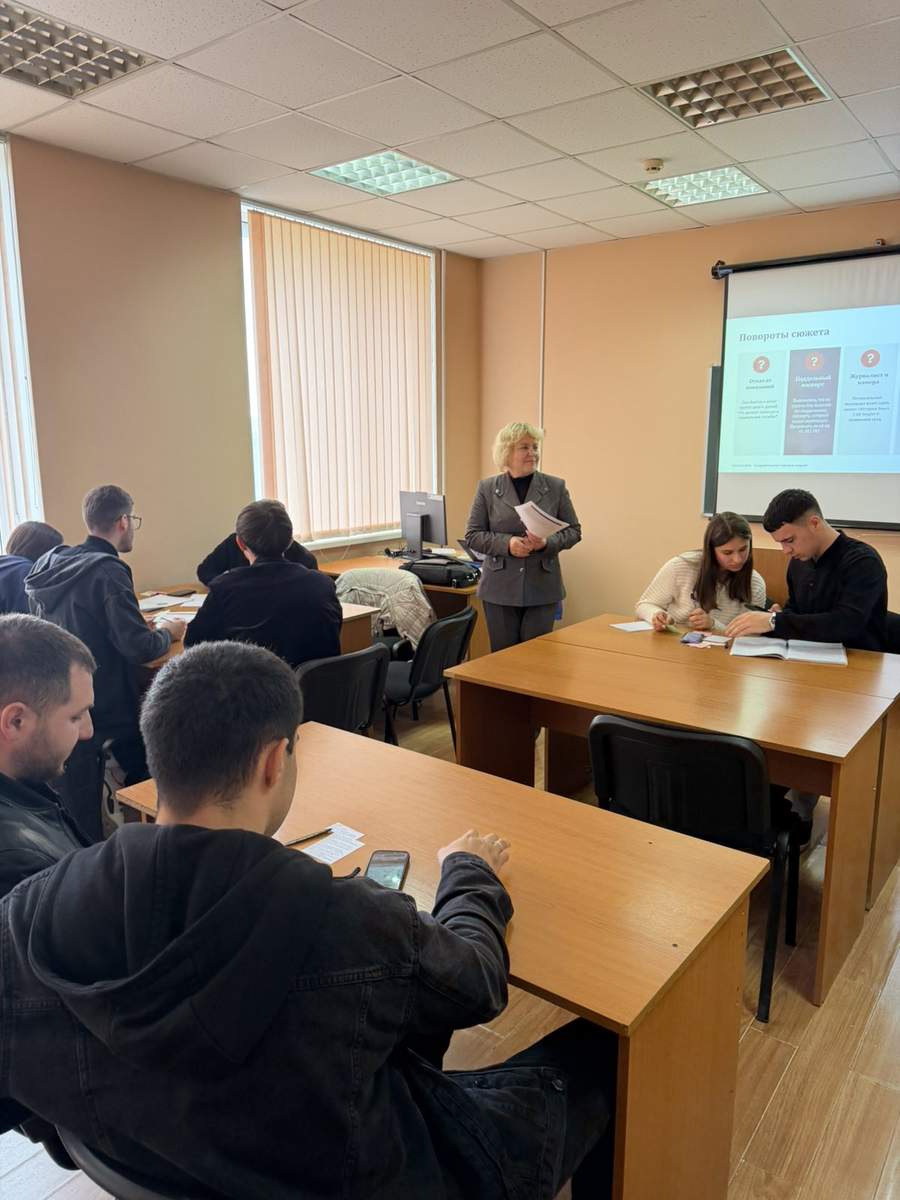



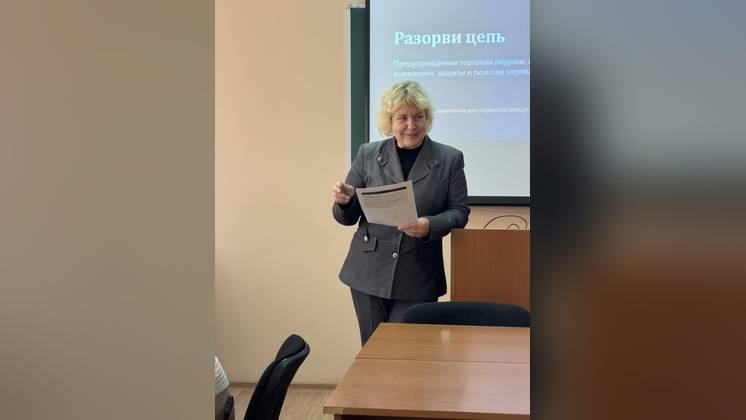
On October 20, the Faculty of Law at Comrat State University (CSU) hosted the interactive “Break the Chain” workshop on preventing human trafficking and violence. Students from groups YU-25 and YU-23 took part.
The workshop was organised and delivered by Mironova S.A., PhD, Associate Professor, together with lecturers Sary T.D. and Petrovich L.A., both holders of master’s degrees. The aim was to show future lawyers how the legal and social mechanisms for combating trafficking work: from identifying signs of an offence and determining its legal classification to referring a victim to support services and protecting their rights.
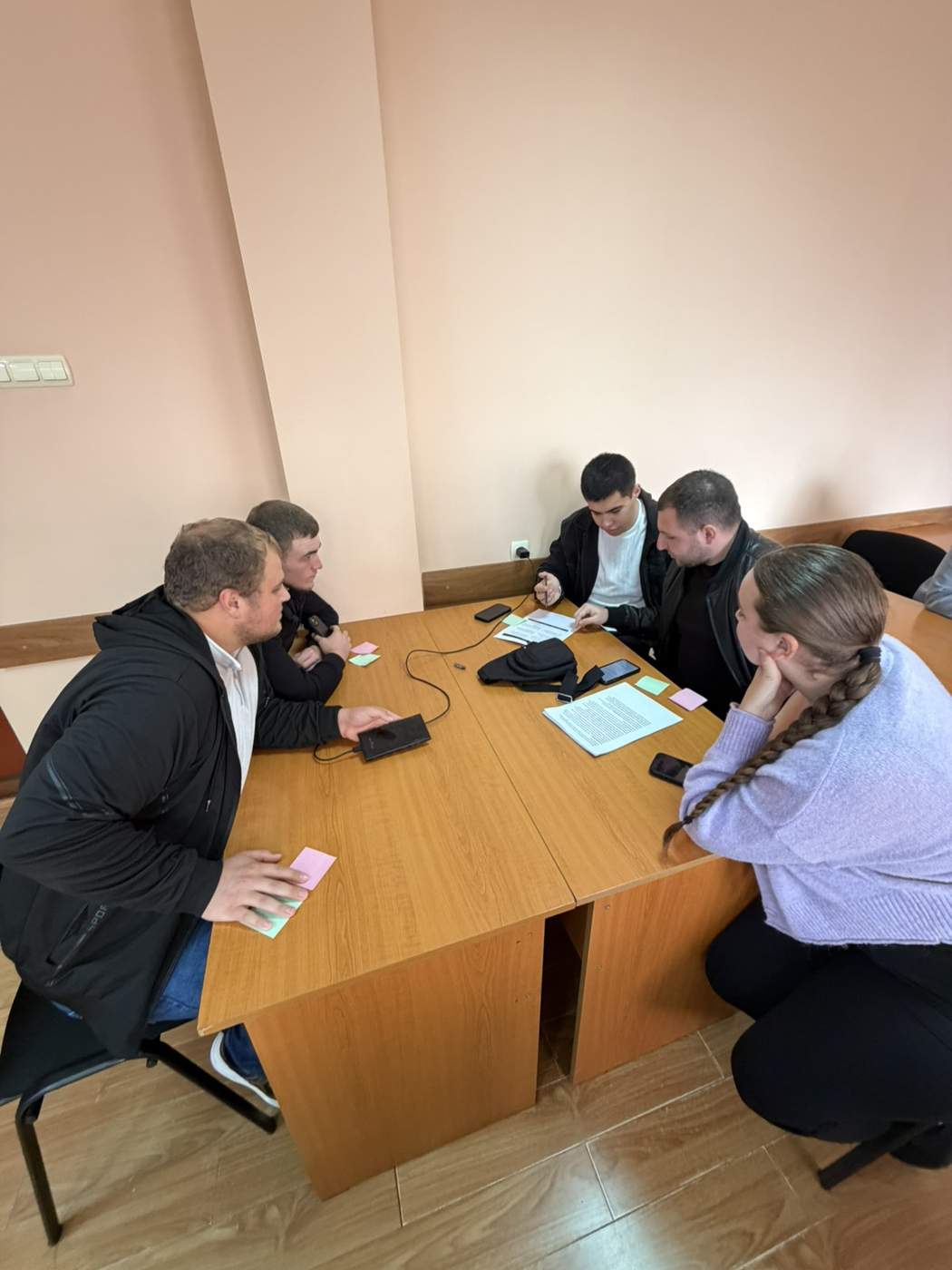
The workshop was designed as a practical session: rather than listening to a lecture, students completed the tasks themselves. It began with a warm-up activity, “Myth or Fact?”. Students tested their understanding of human trafficking and examined common misconceptions, such as the belief that trafficking always involves crossing a border or that only women become victims.
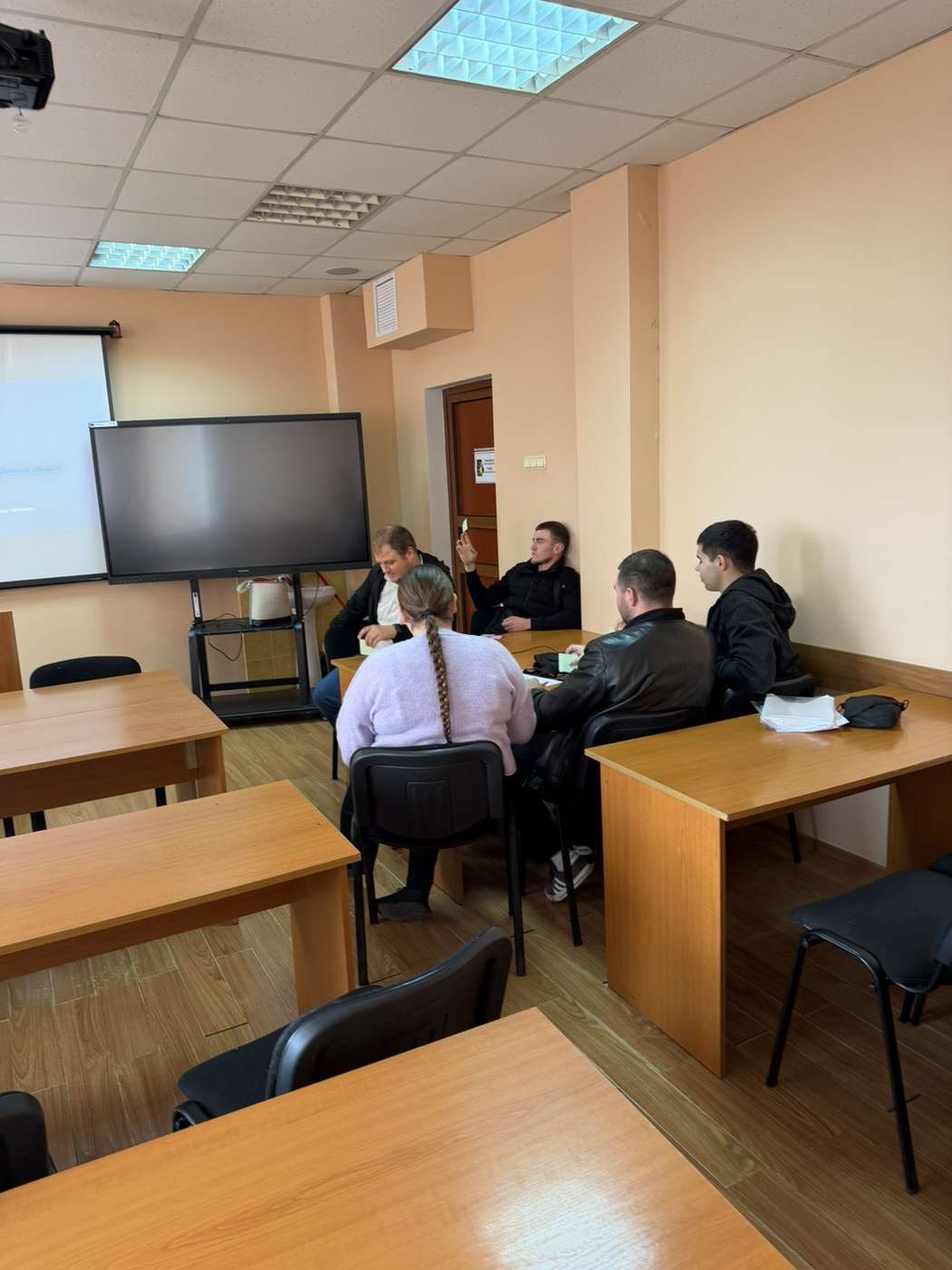
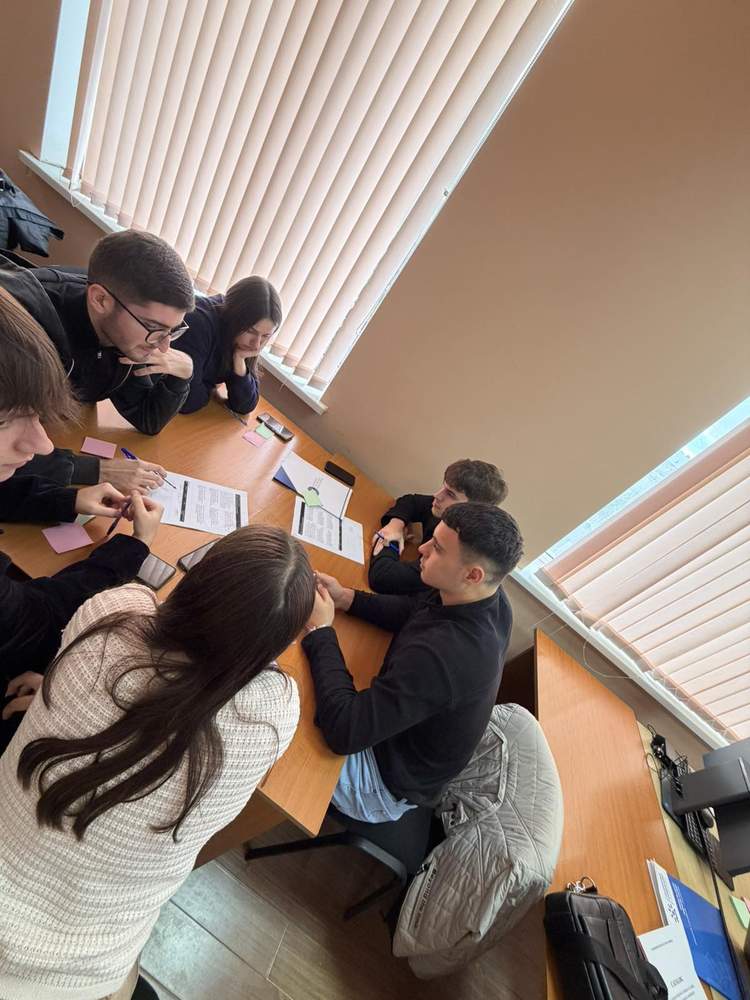
Participants then worked in groups on the “Constituent Elements” exercise. They analysed real situations and identified where there were signs of human trafficking (the act, the means and the purpose of exploitation) and where the situation involved related matters, such as a labour dispute or facilitating illegal migration. Students practised not only recognising trafficking, but also avoiding the misclassification of situations that do not constitute trafficking.
The most intensive part was the “Ana’s Route” role-play. The groups represented different services and actors: the police and prosecution service, a multidisciplinary support team, the victim’s lawyer, NGOs and the local community. Each had to plan its actions throughout the victim’s journey: from identification and referral to assistance, protection of rights, criminal proceedings and reintegration. During the game, participants faced unexpected “plot twists” that required quick decisions. These included a victim’s refusal to testify, the non-punishment principle, safeguarding confidentiality and threats to the victim’s family.
In the “Dream Job” exercise, students learned to recognise red flags in advertisements for jobs abroad: unusually high pay with no qualifications required, pressure to act quickly, withholding documents and debts for travel costs. Each group prepared a warning for their peers in the form of a social media post. Students then discussed planned legislative changes linked to harmonisation with European Union law and took part in a quick-fire quiz. To conclude, each participant wrote on a sticky note one action they would take as a lawyer to keep the “chain” of protection intact and attached it to the shared “chain” on the board.
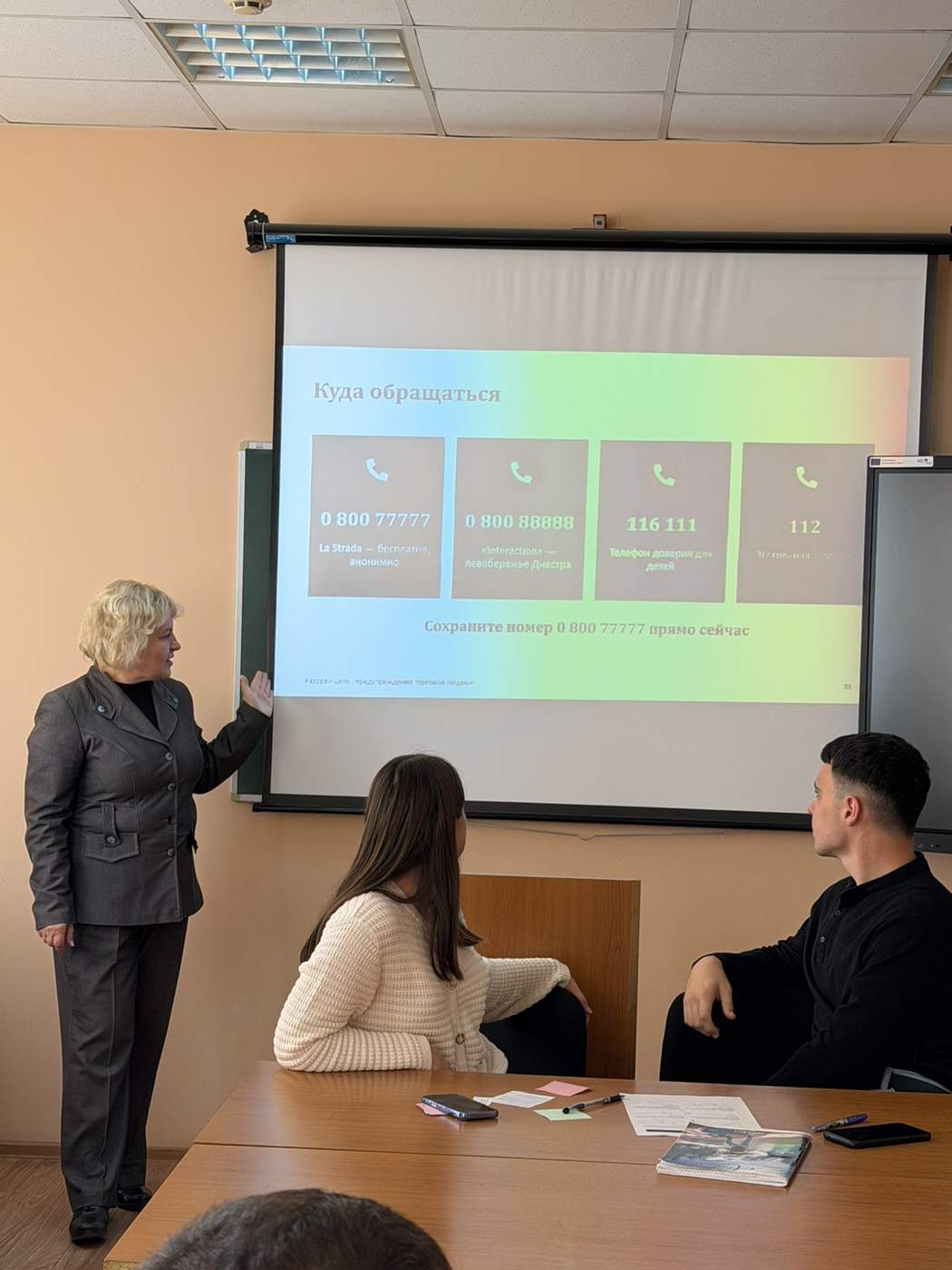
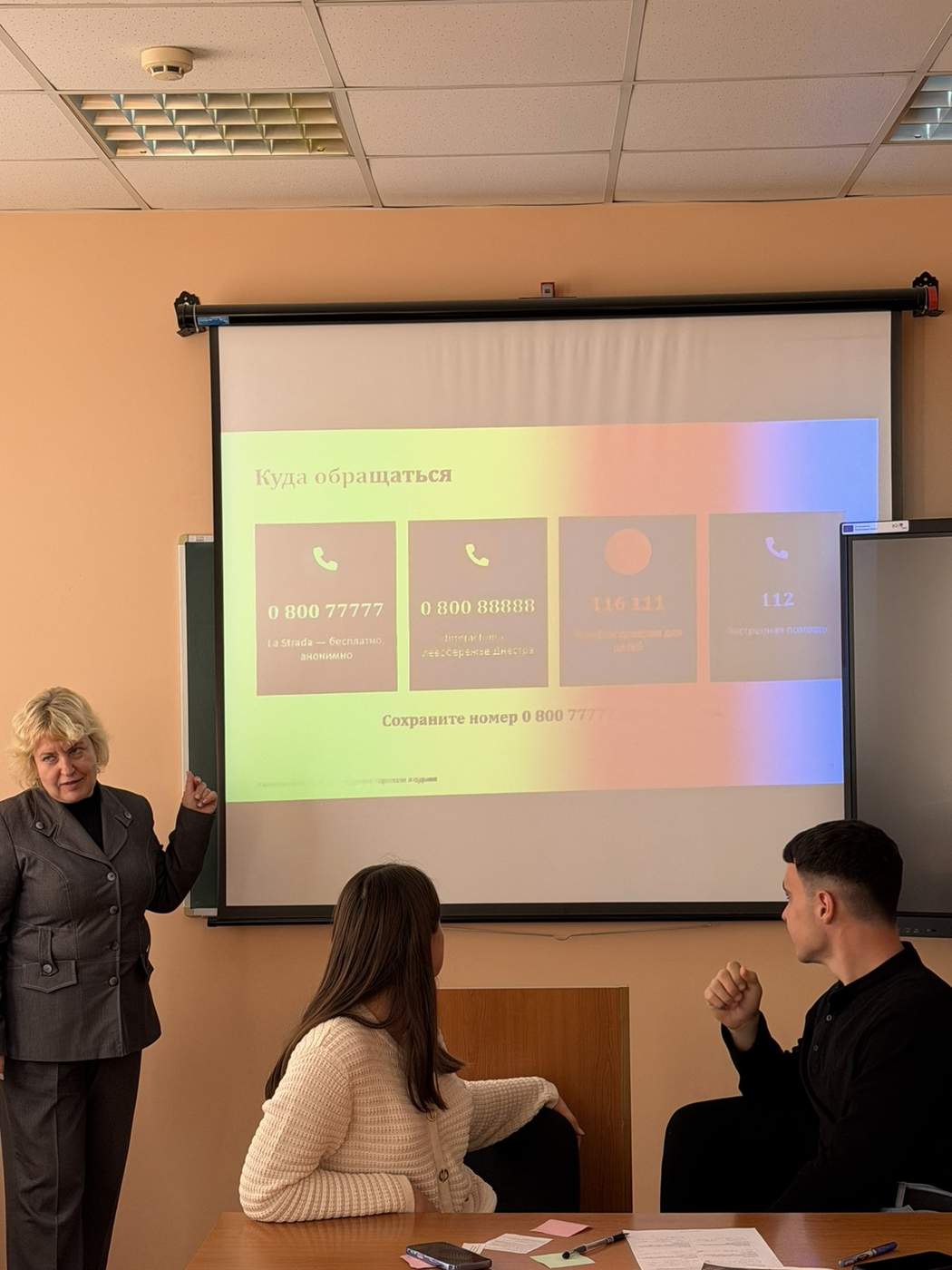
Participants described the workshop as useful and engaging. Students gained new knowledge of the legal mechanisms for combating human trafficking, developed practical trafficking-identification skills and learned where to seek help, including through the free La Strada hotline 0 800 77777.
The organisers are confident that the knowledge gained will help future lawyers protect people’s rights more effectively and recognise threats in time.