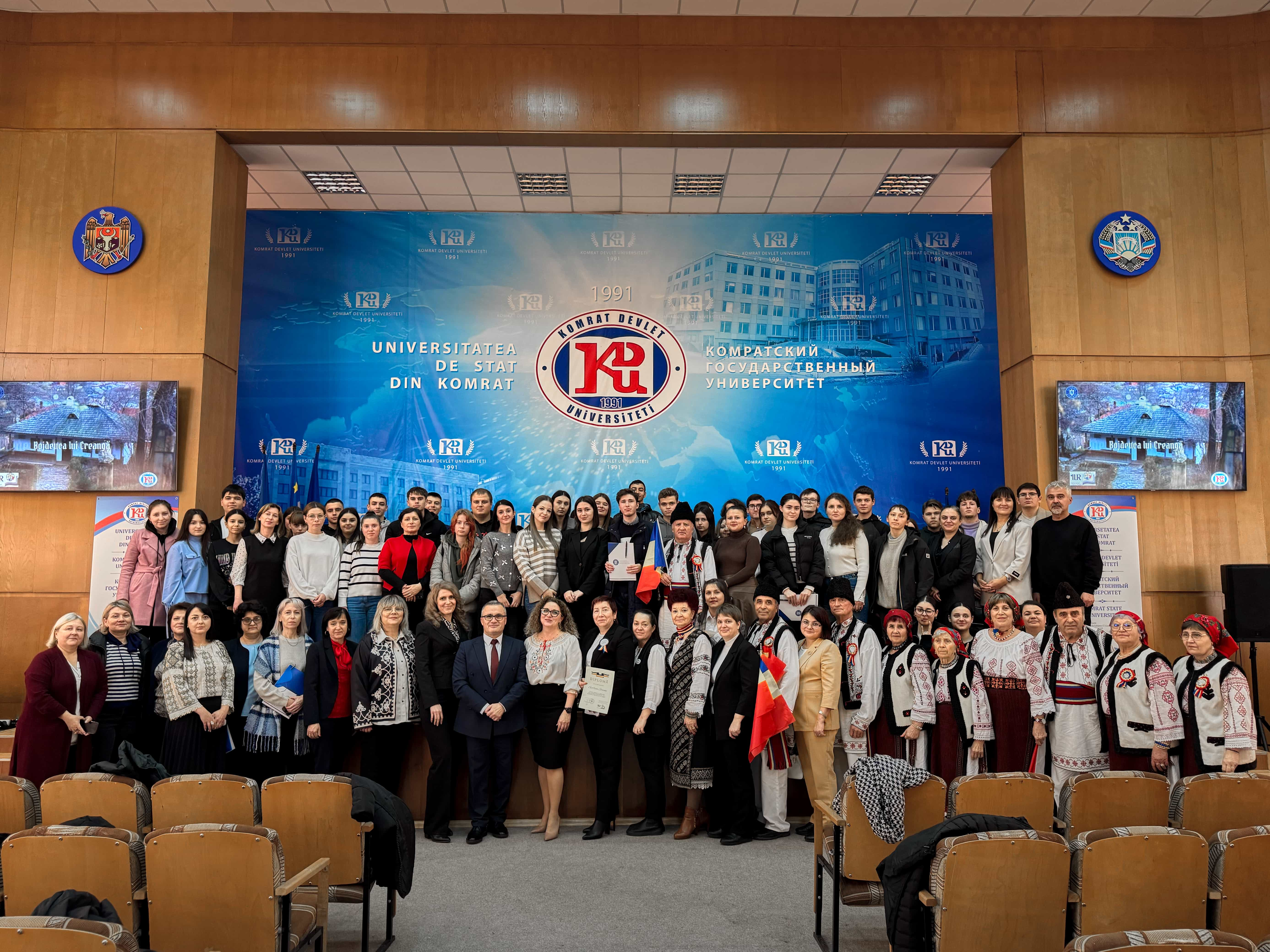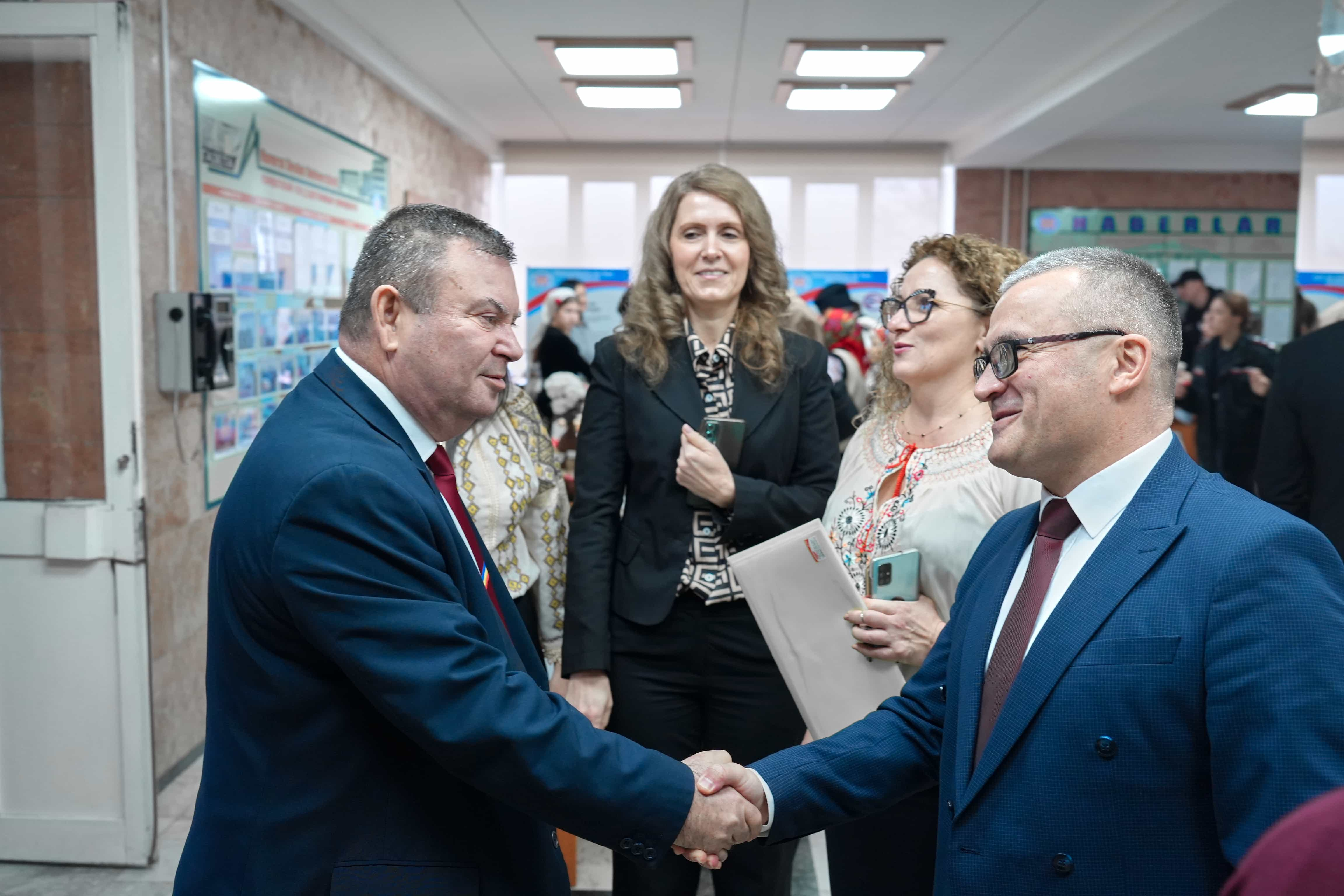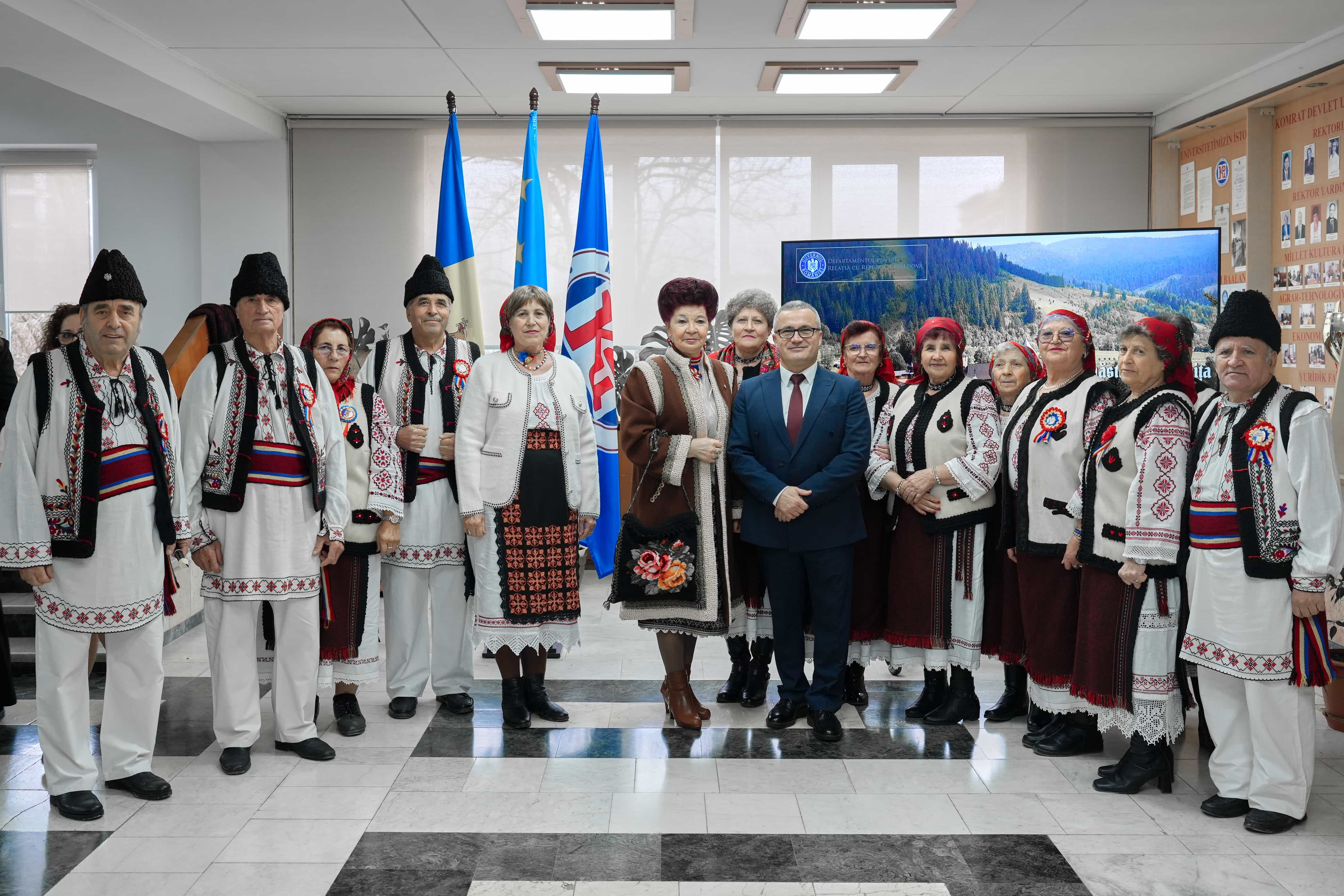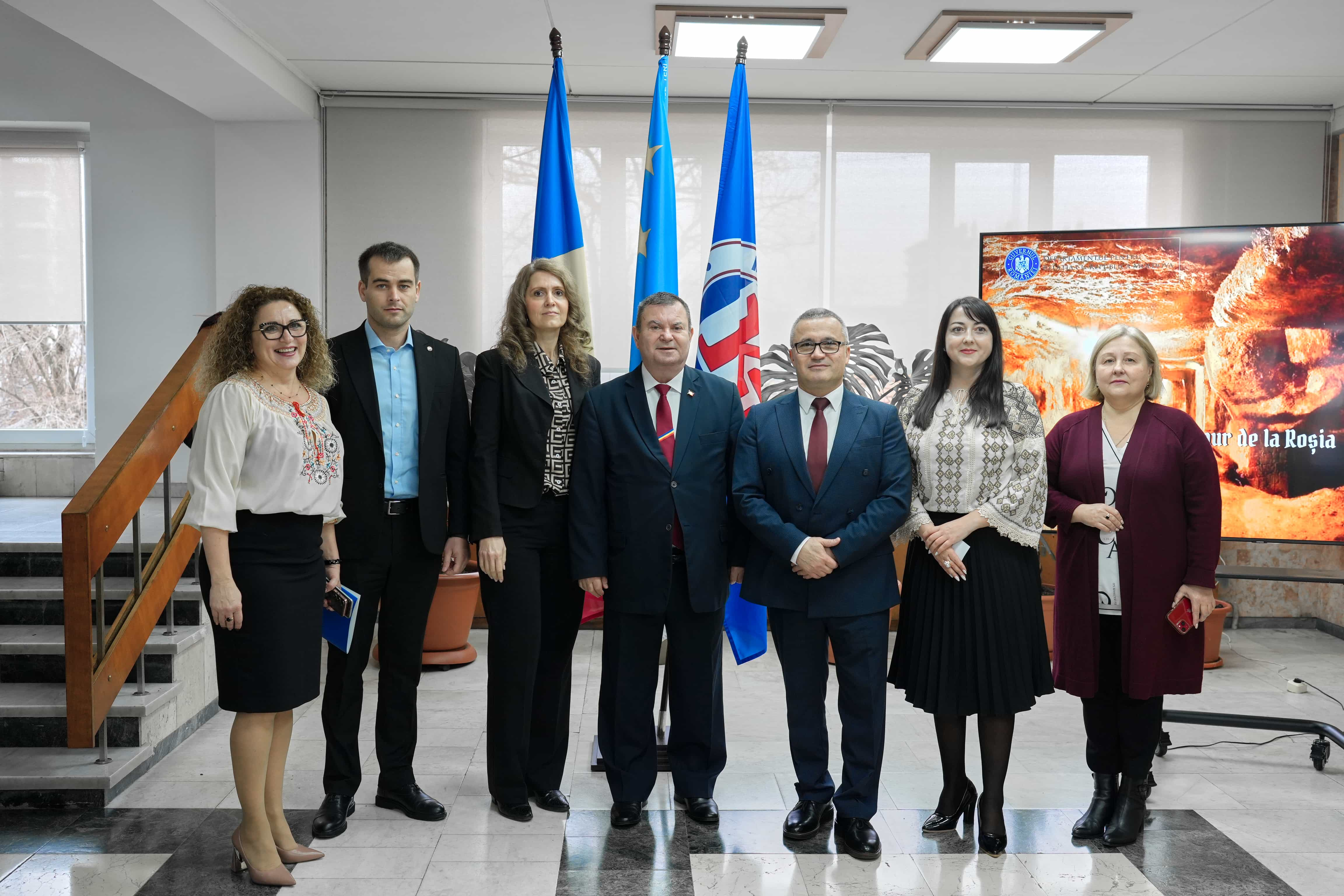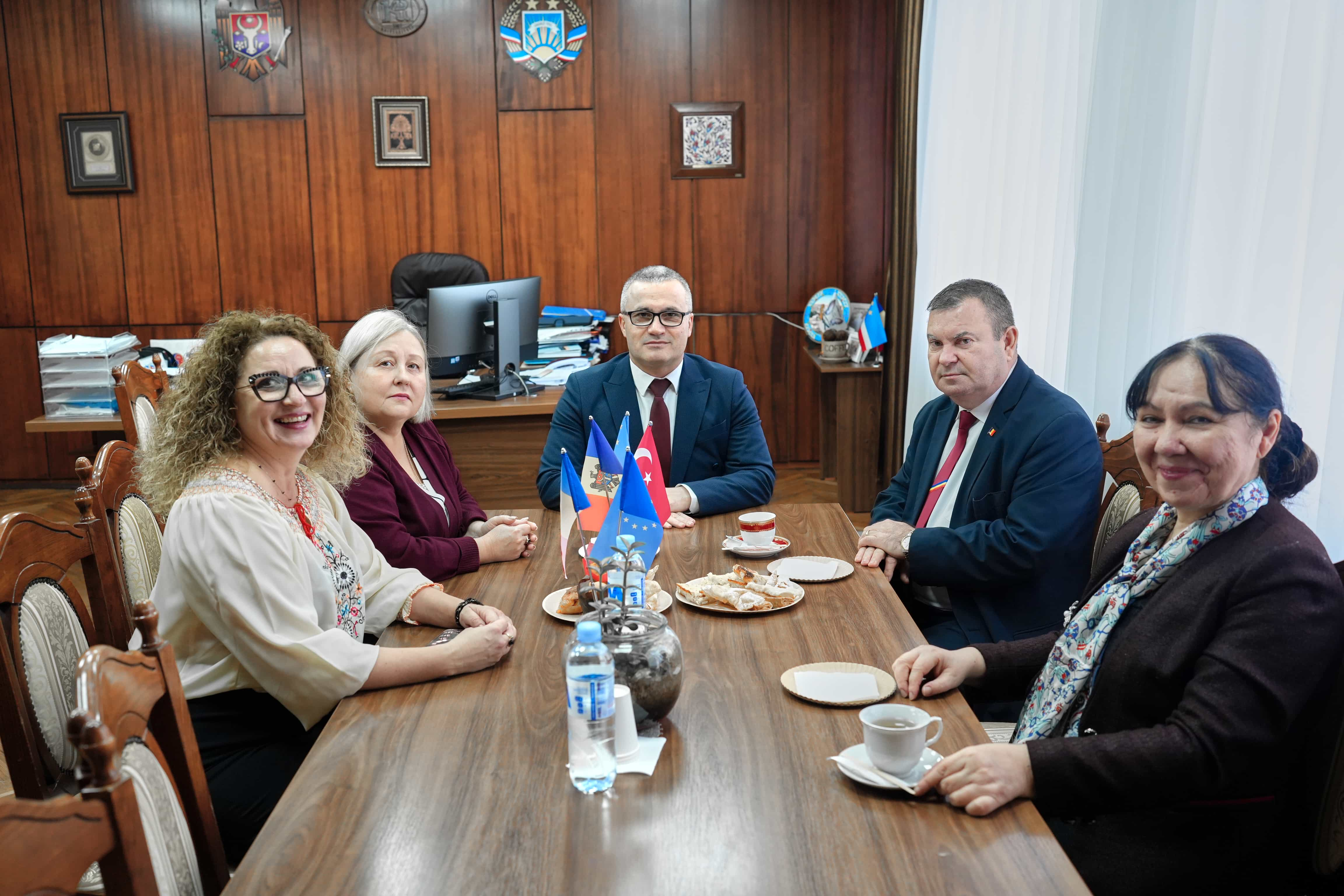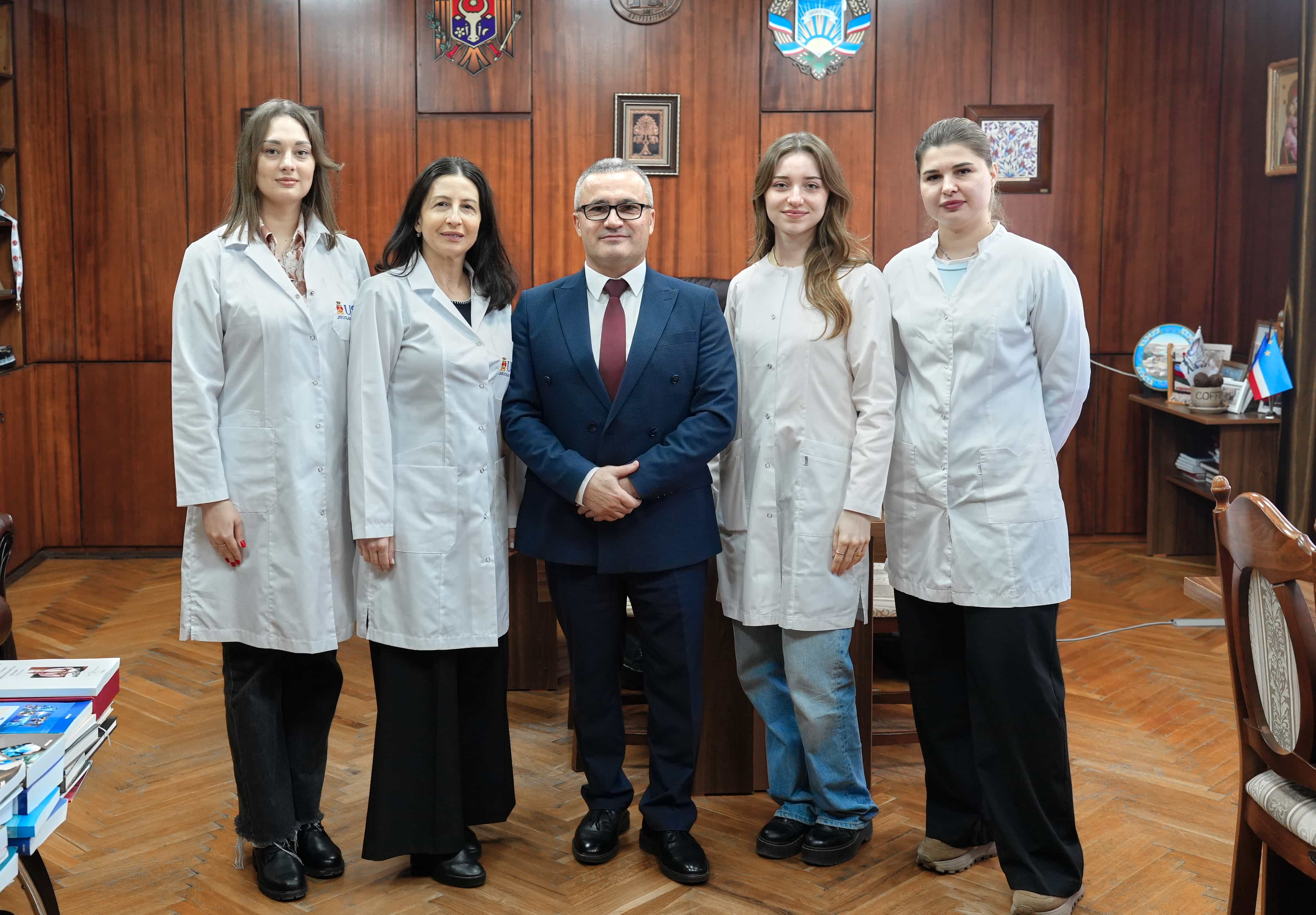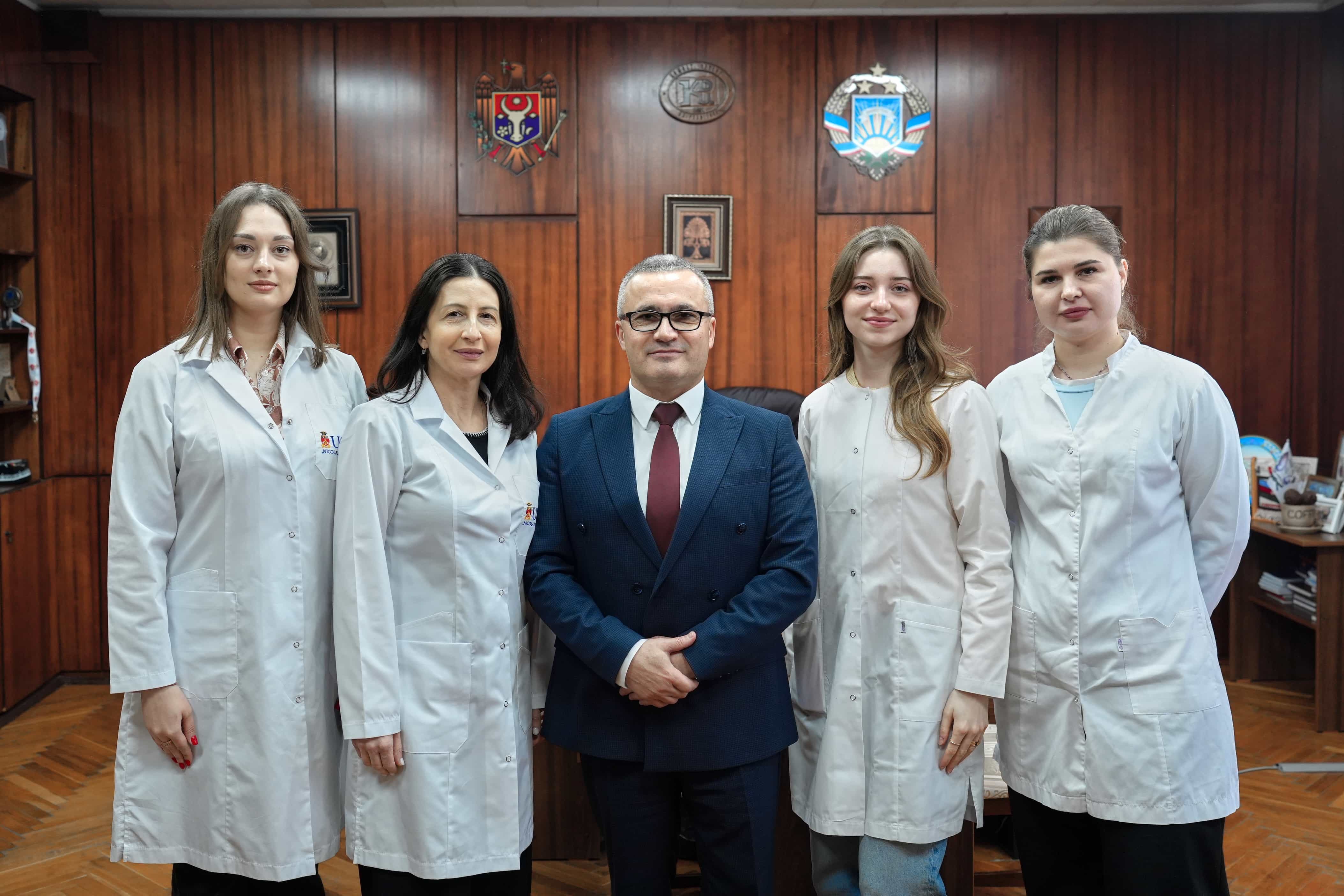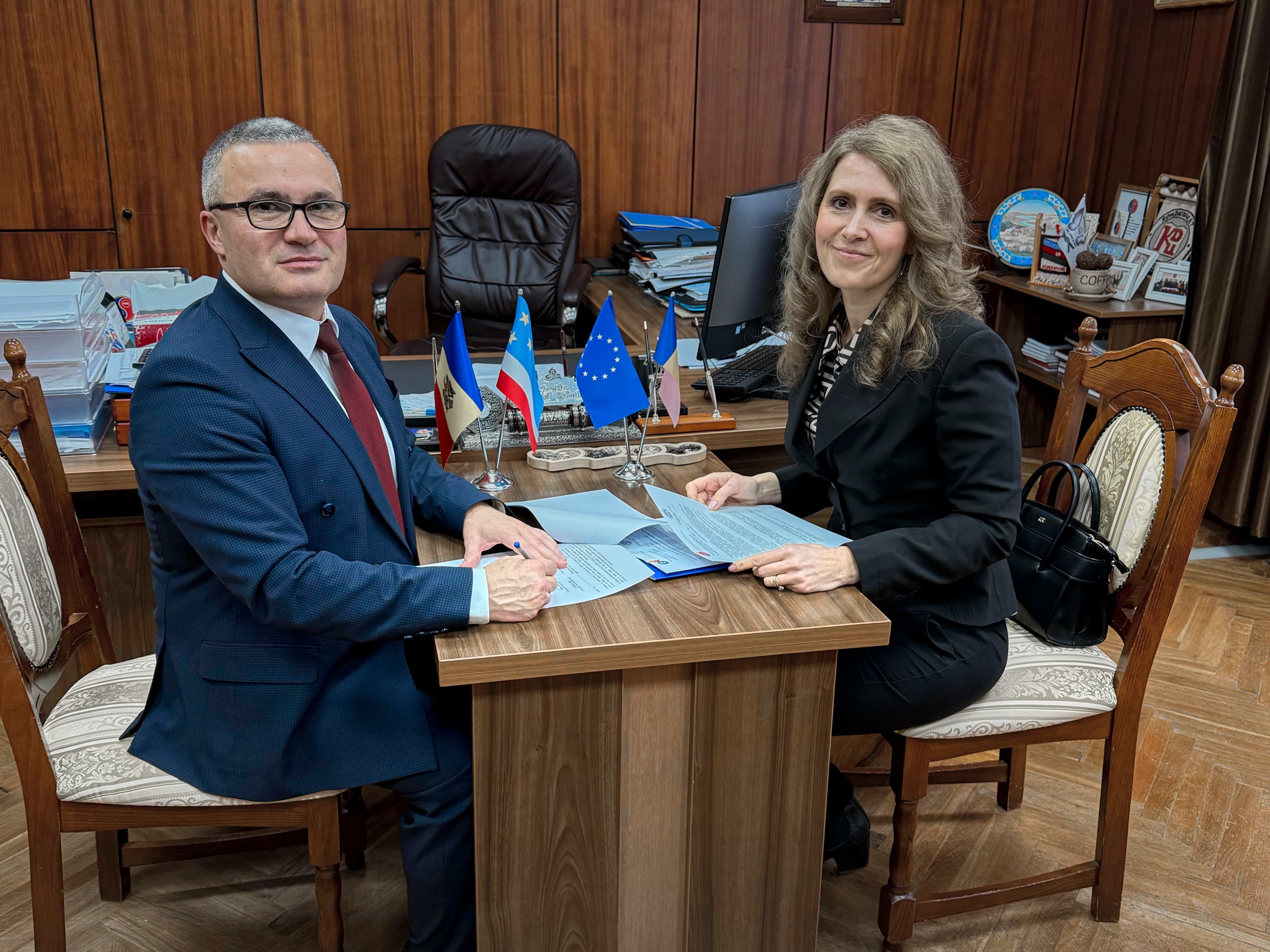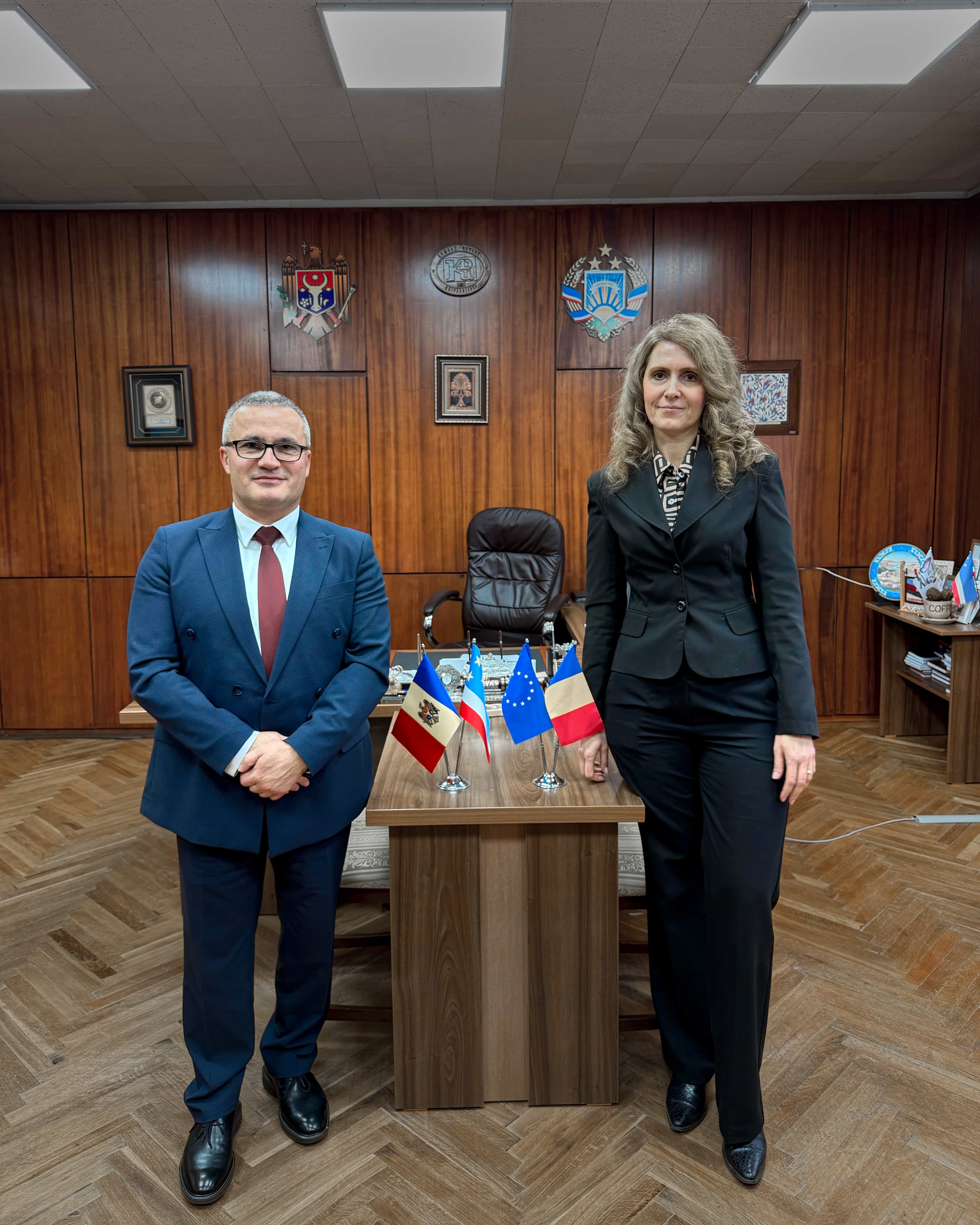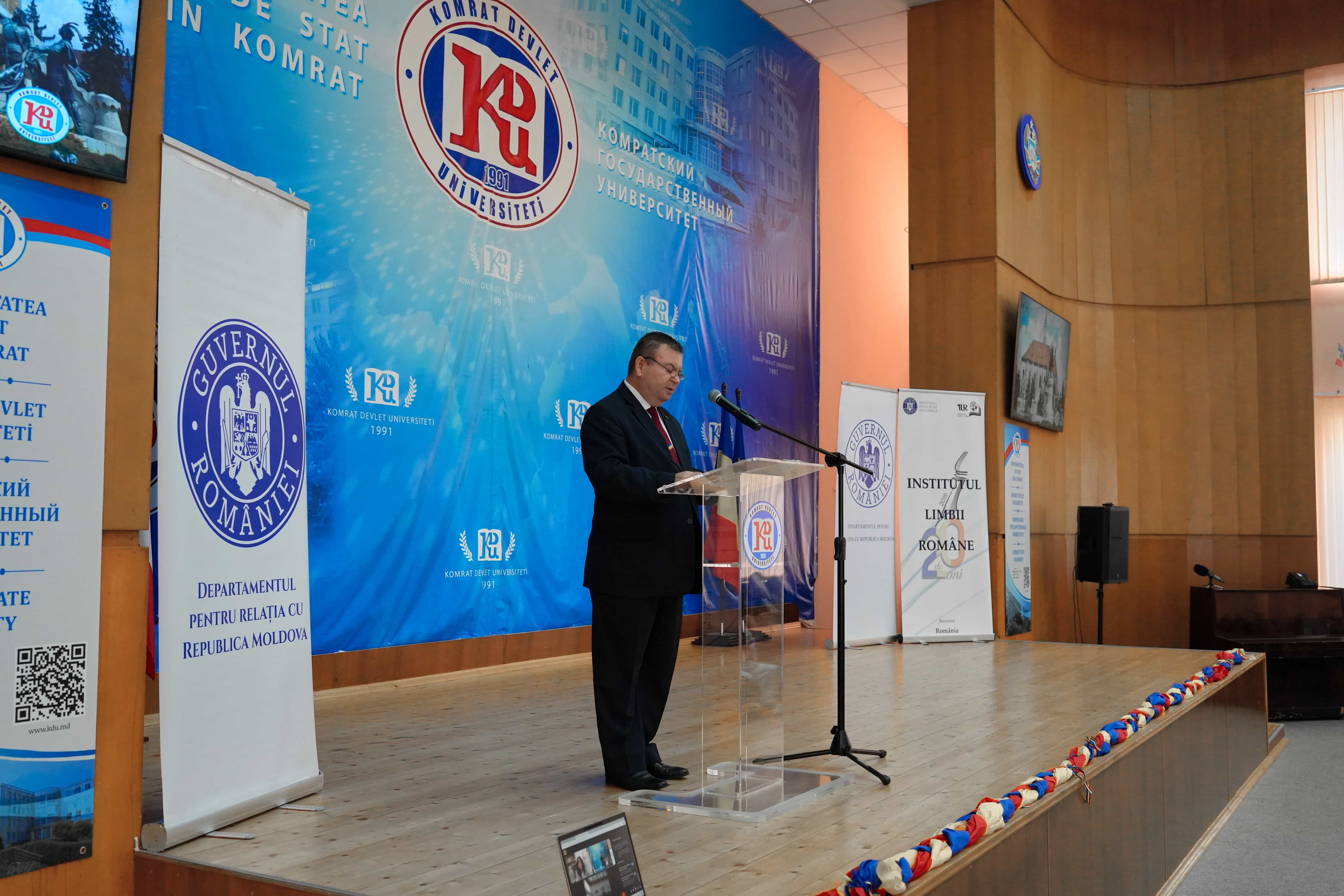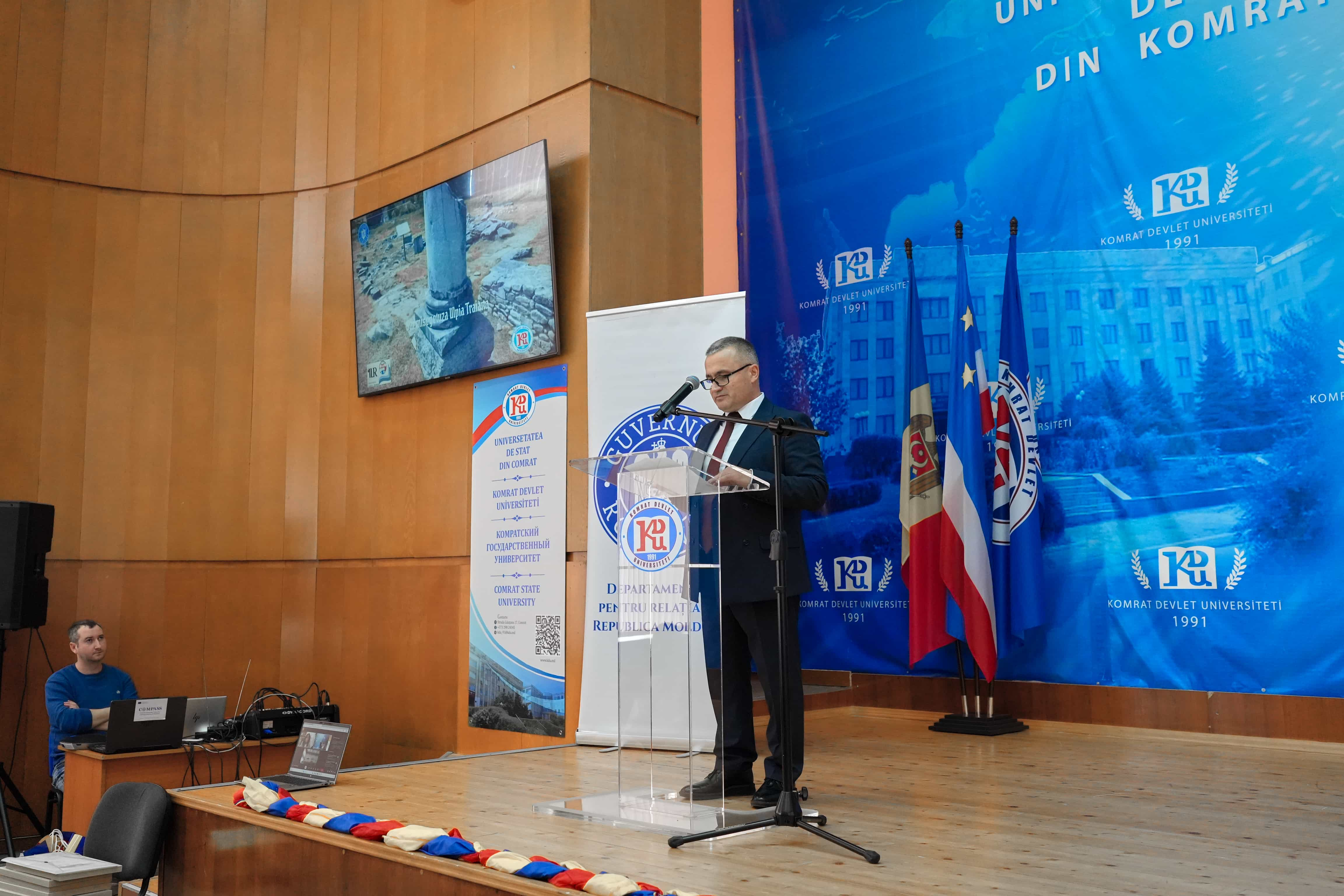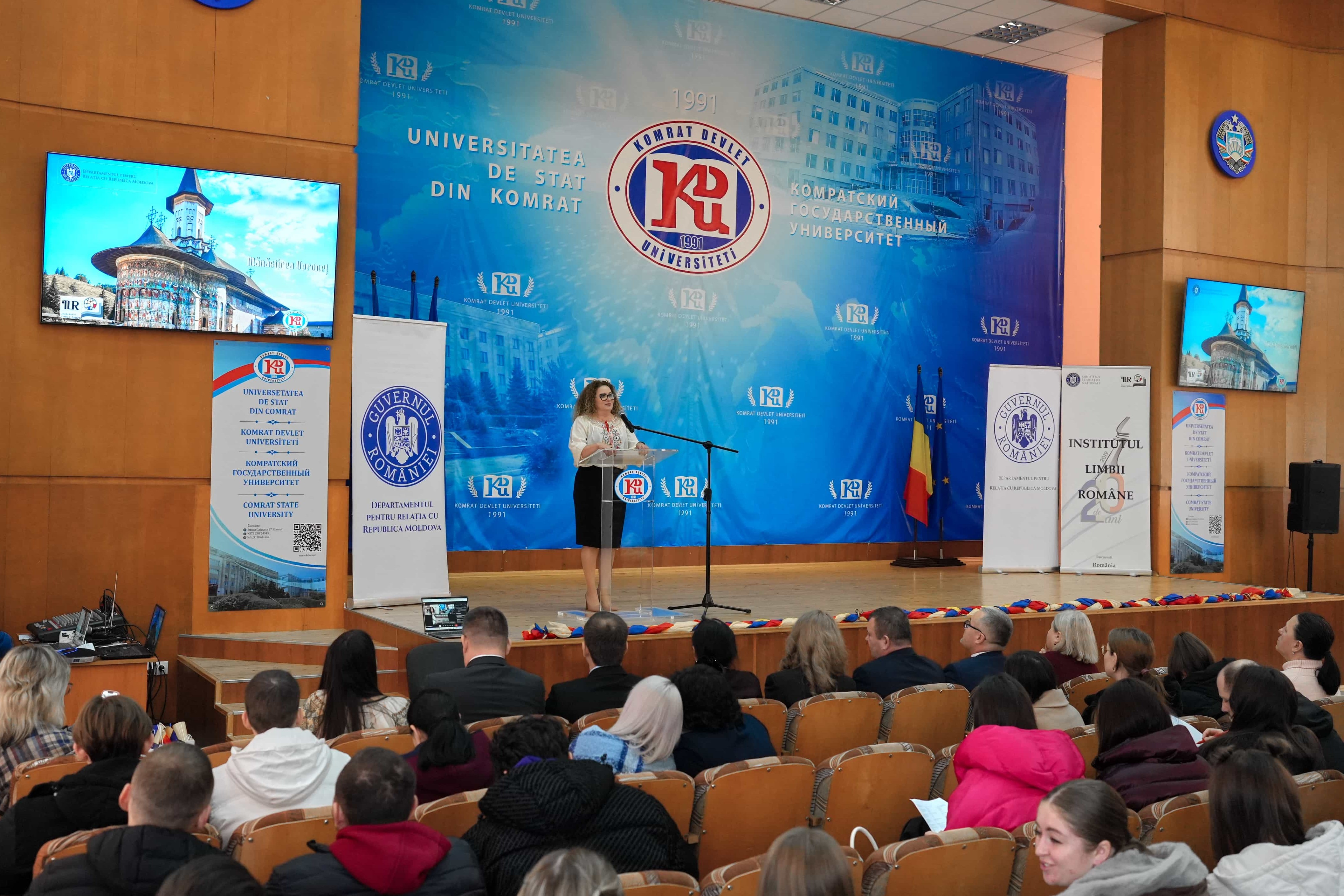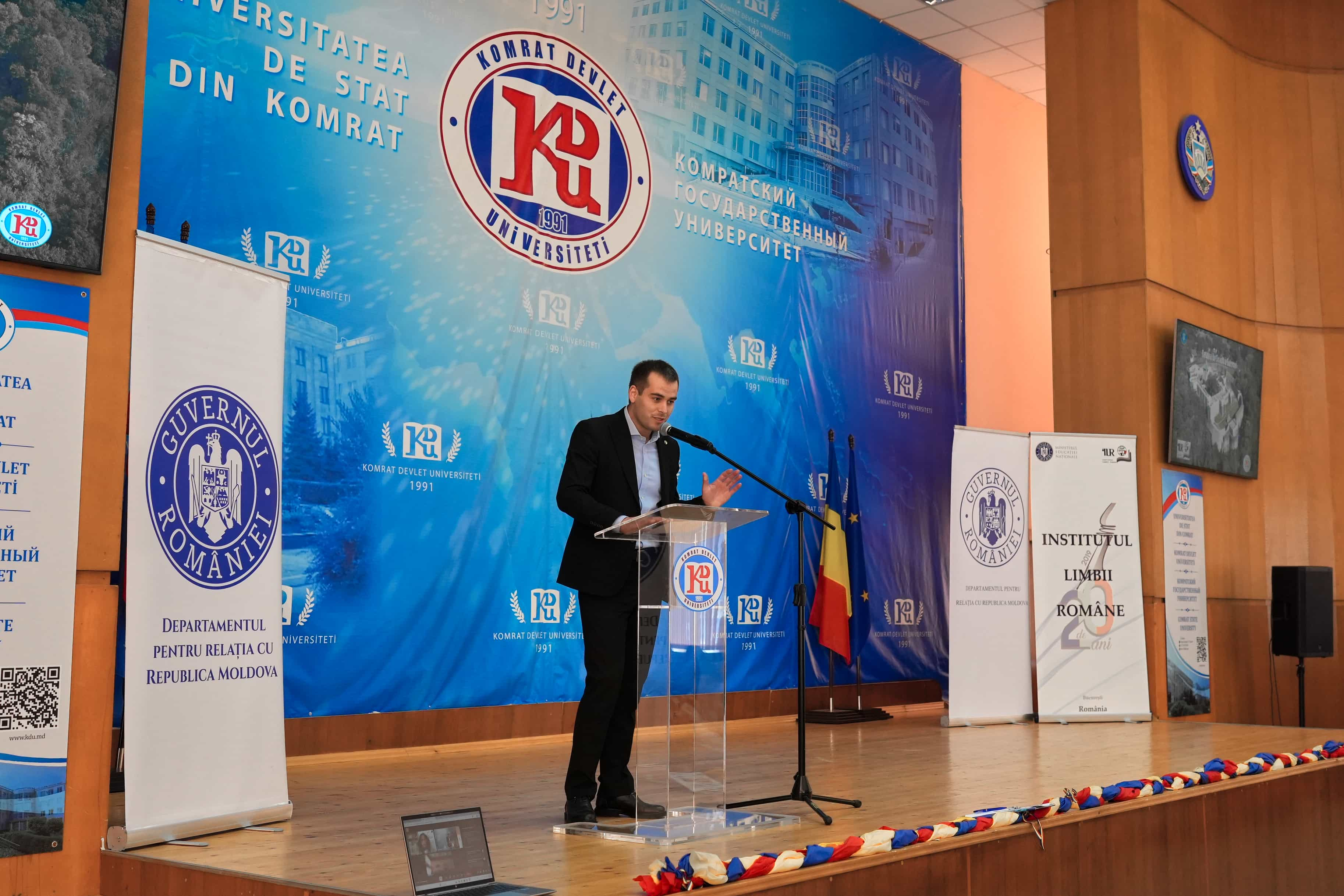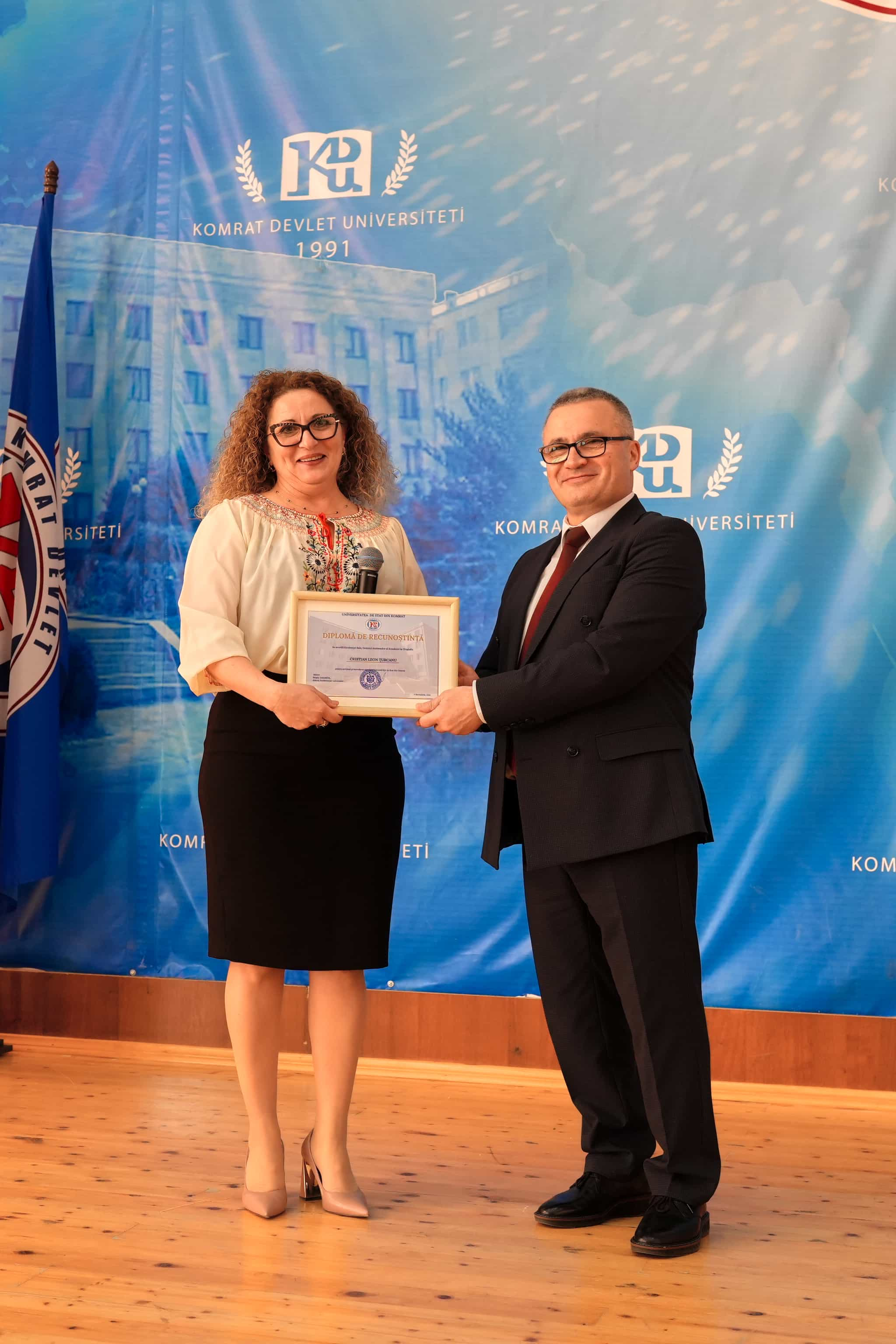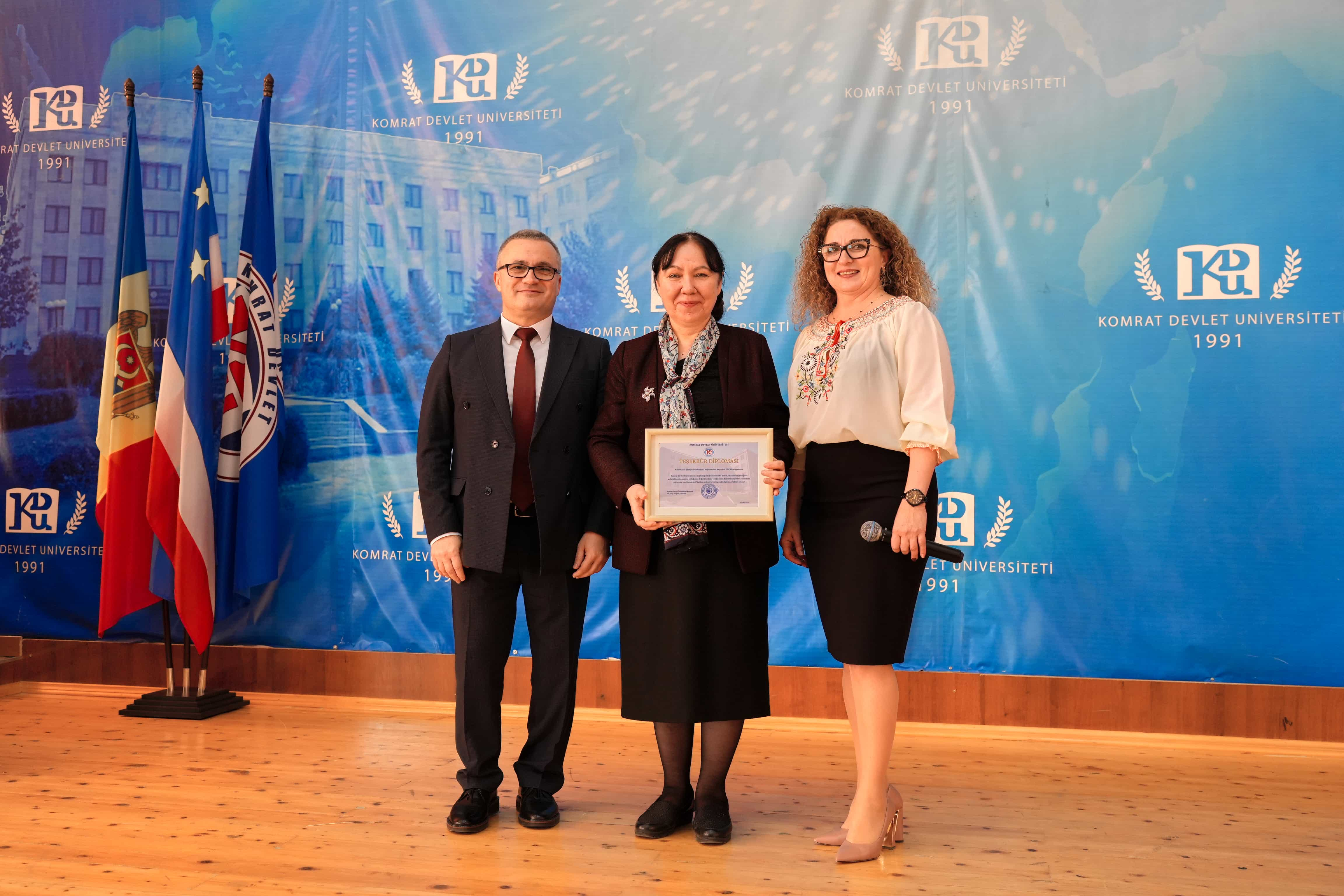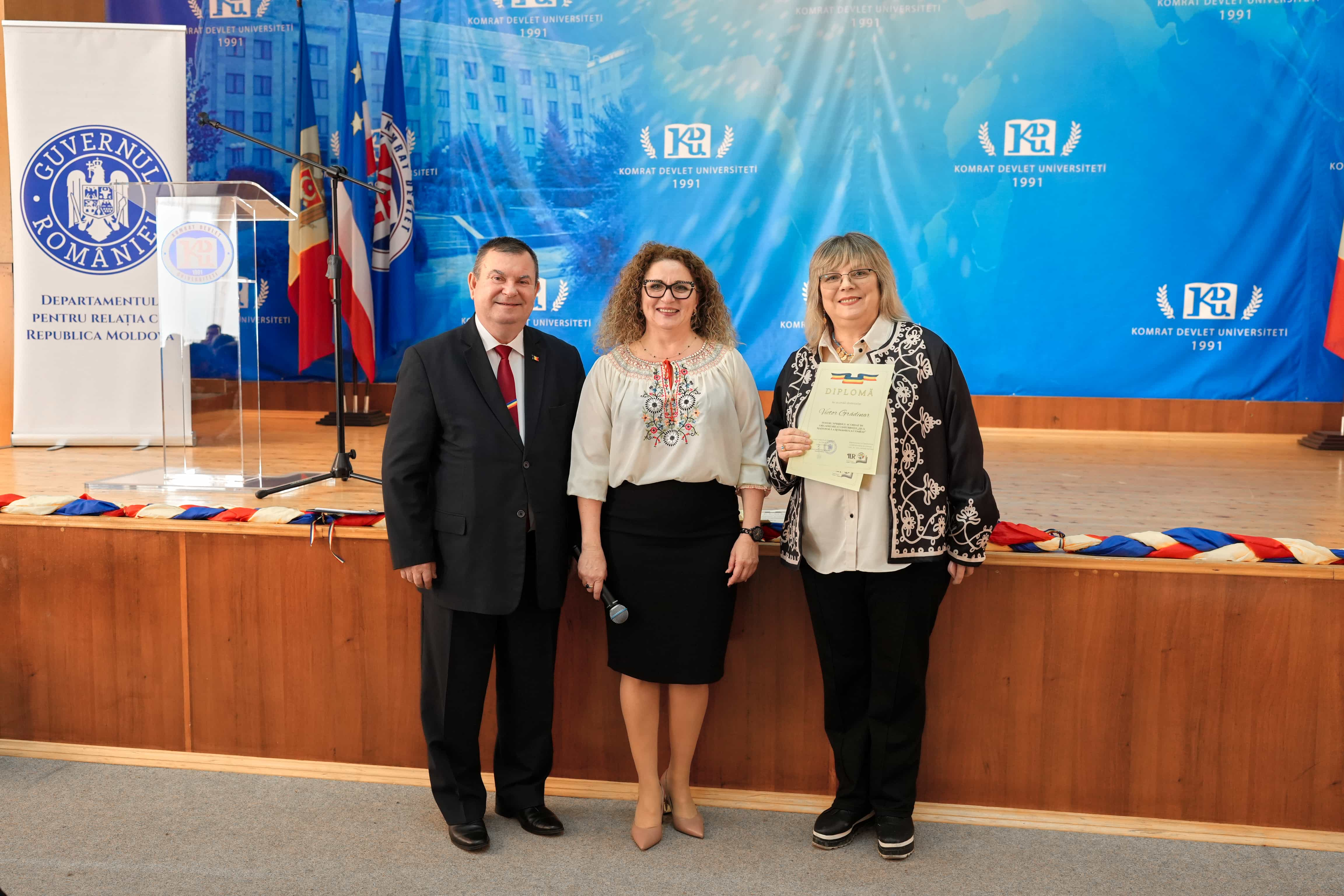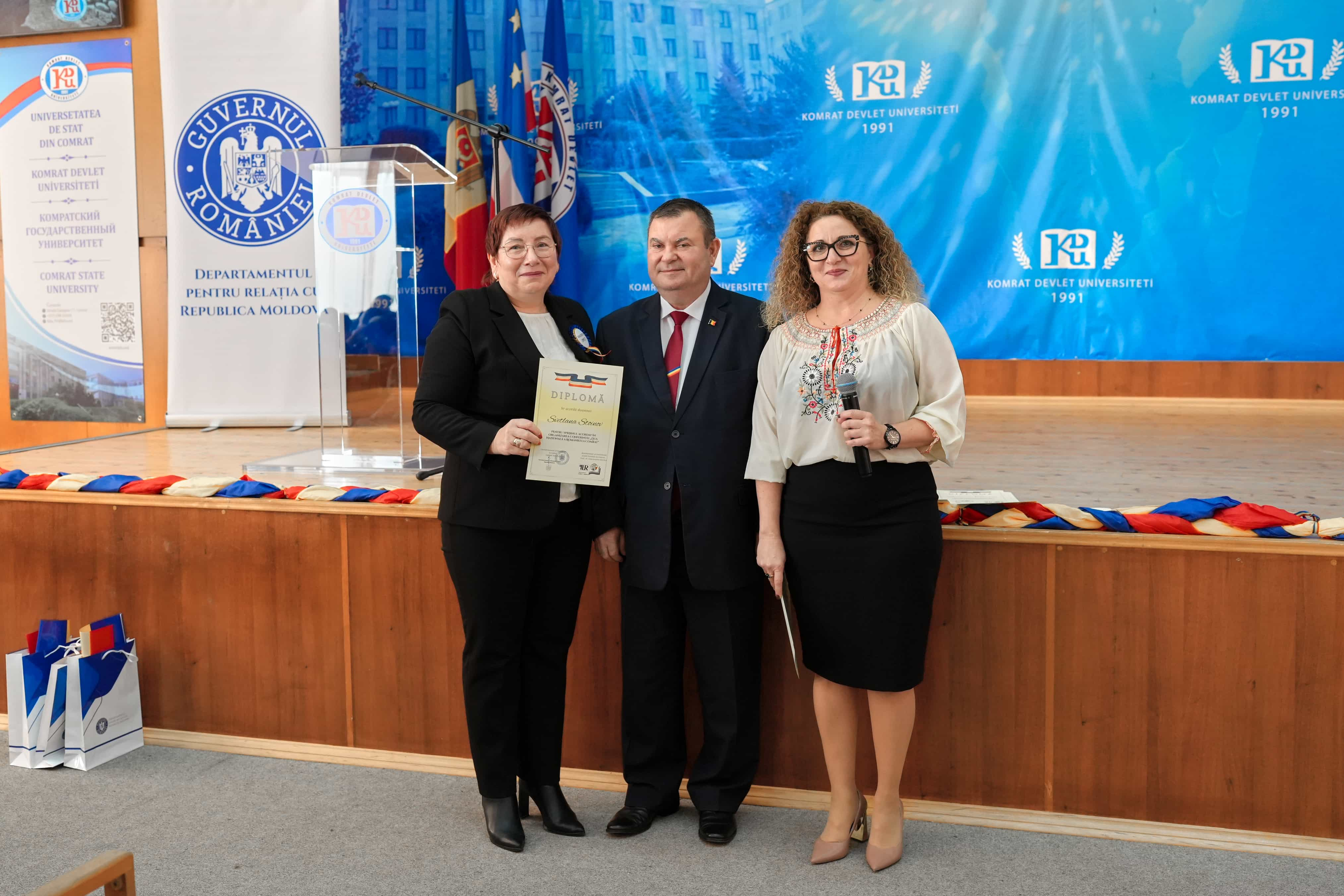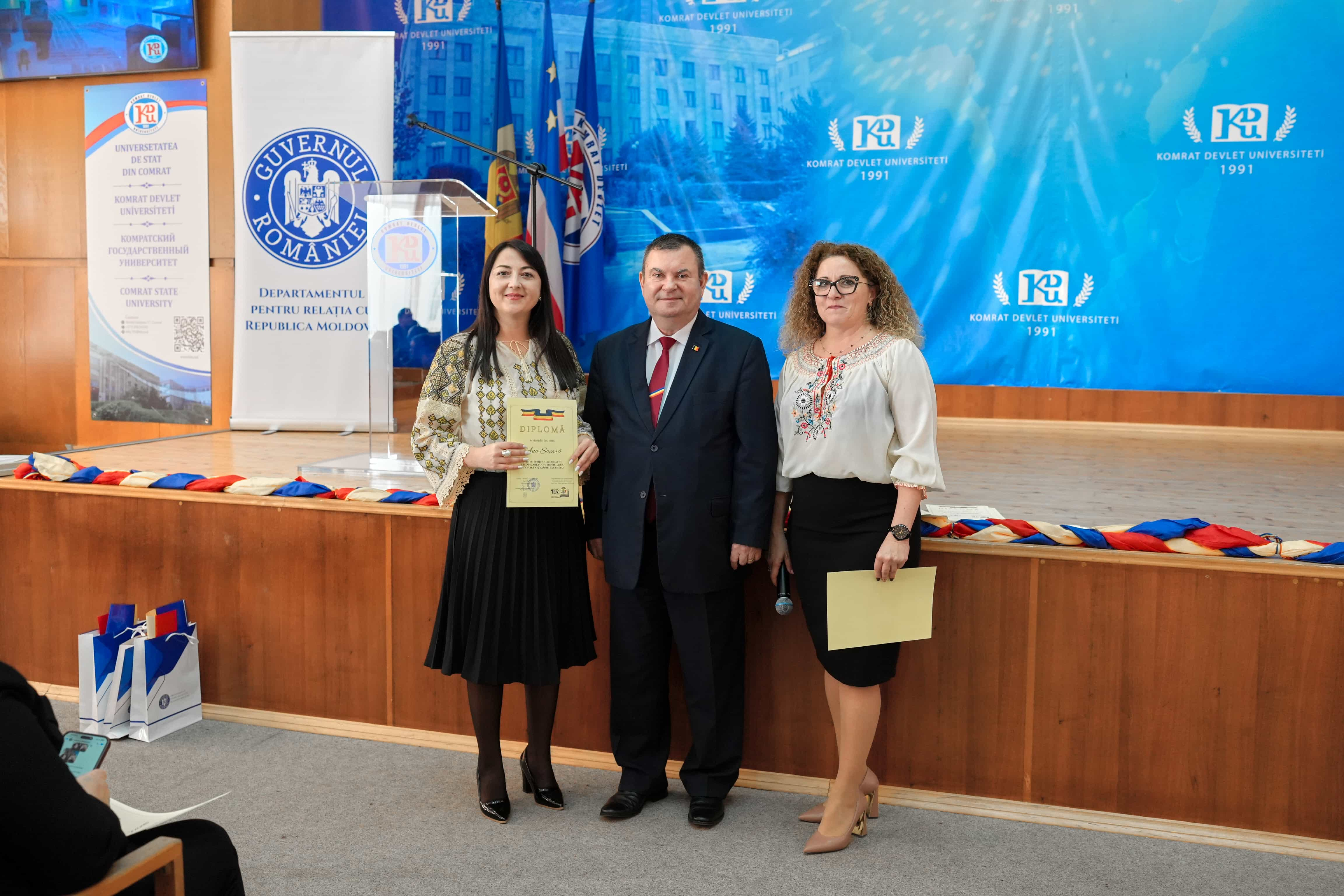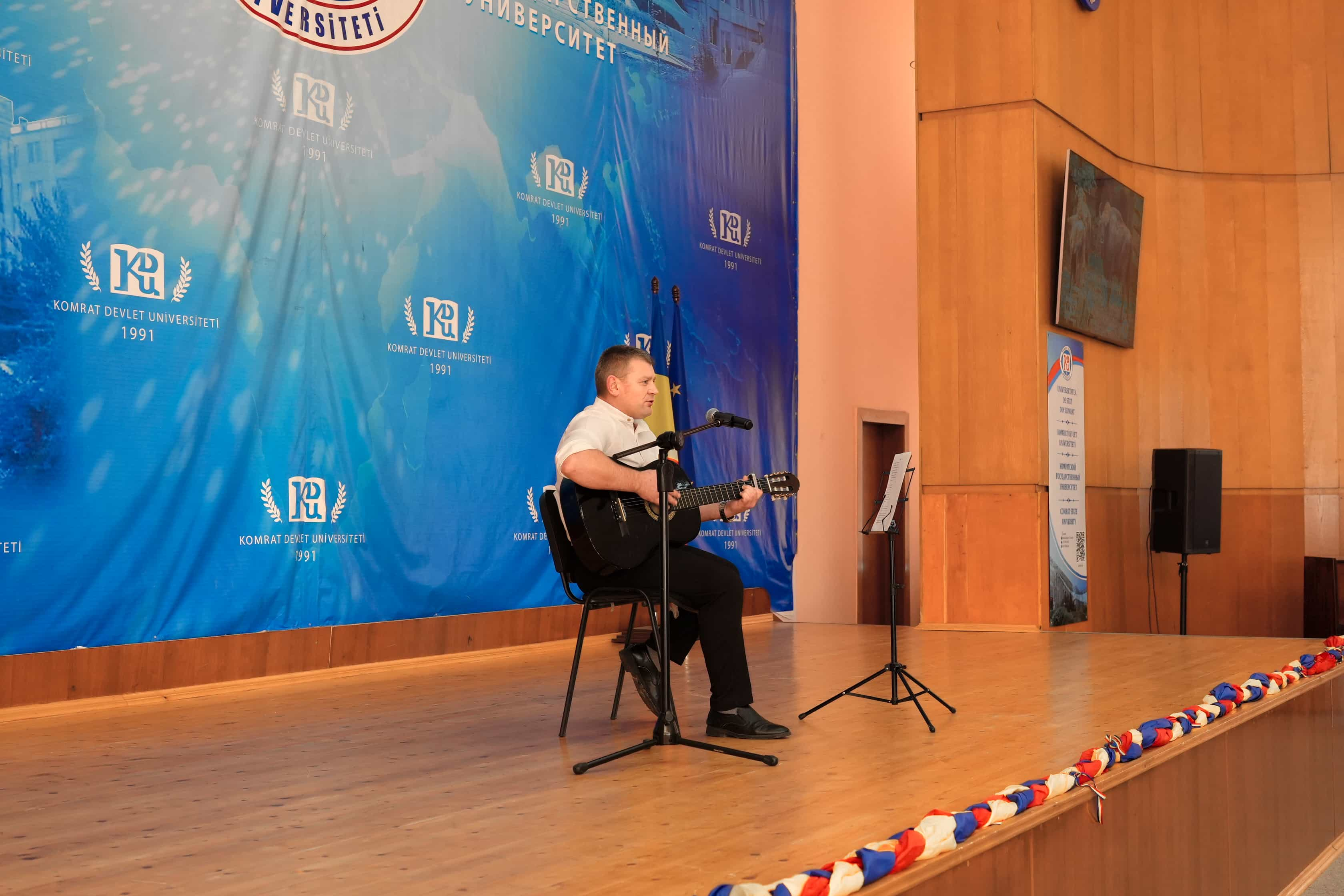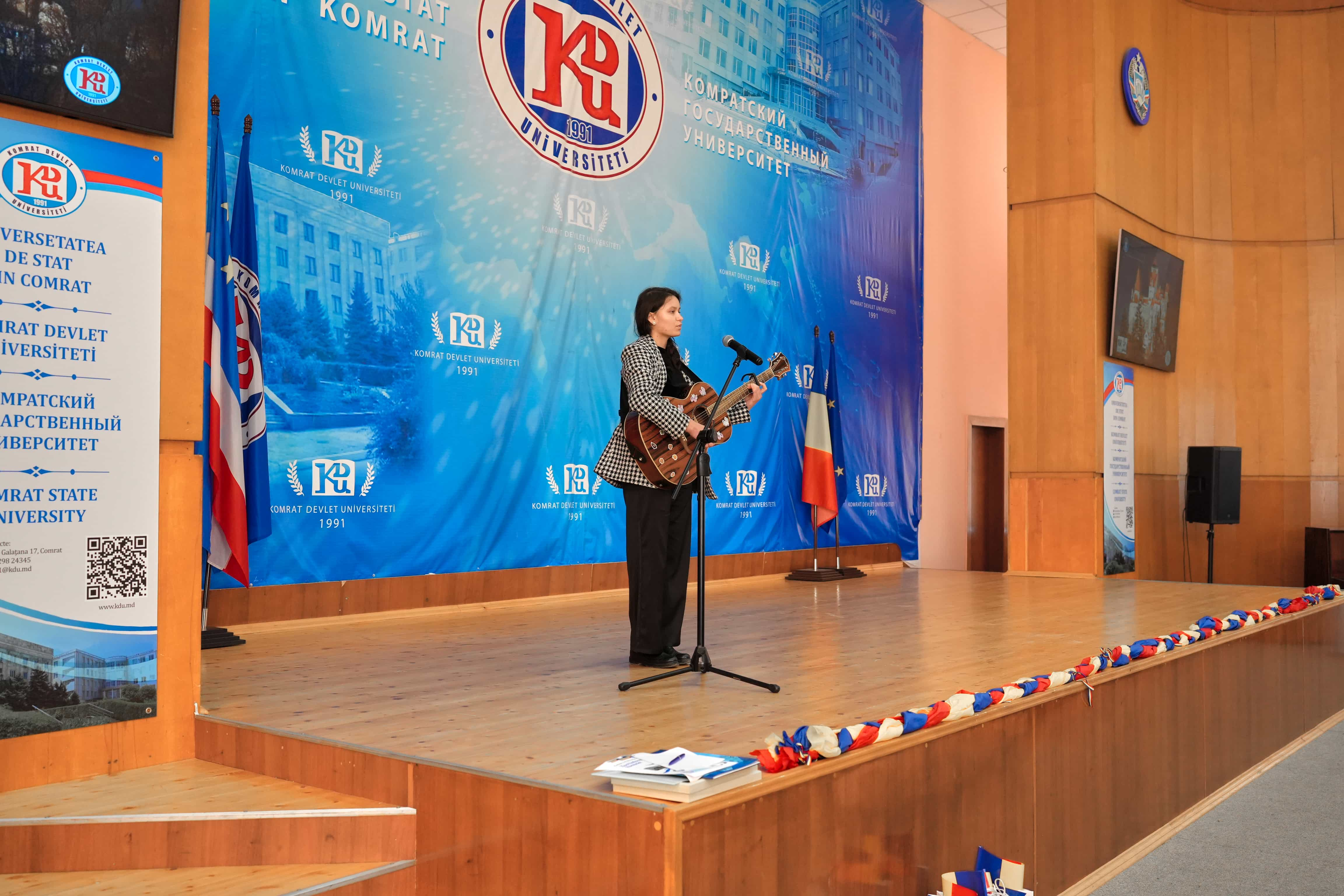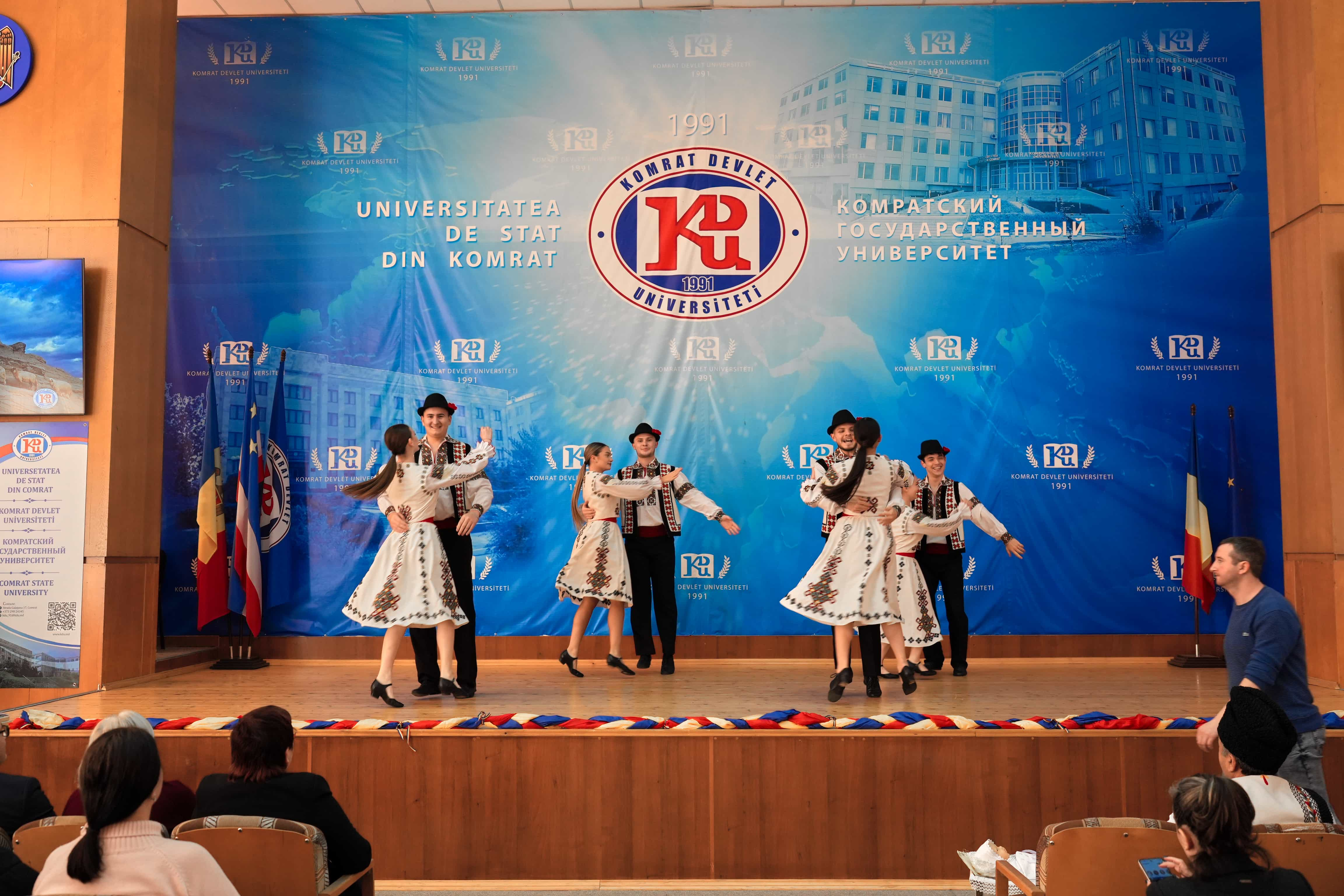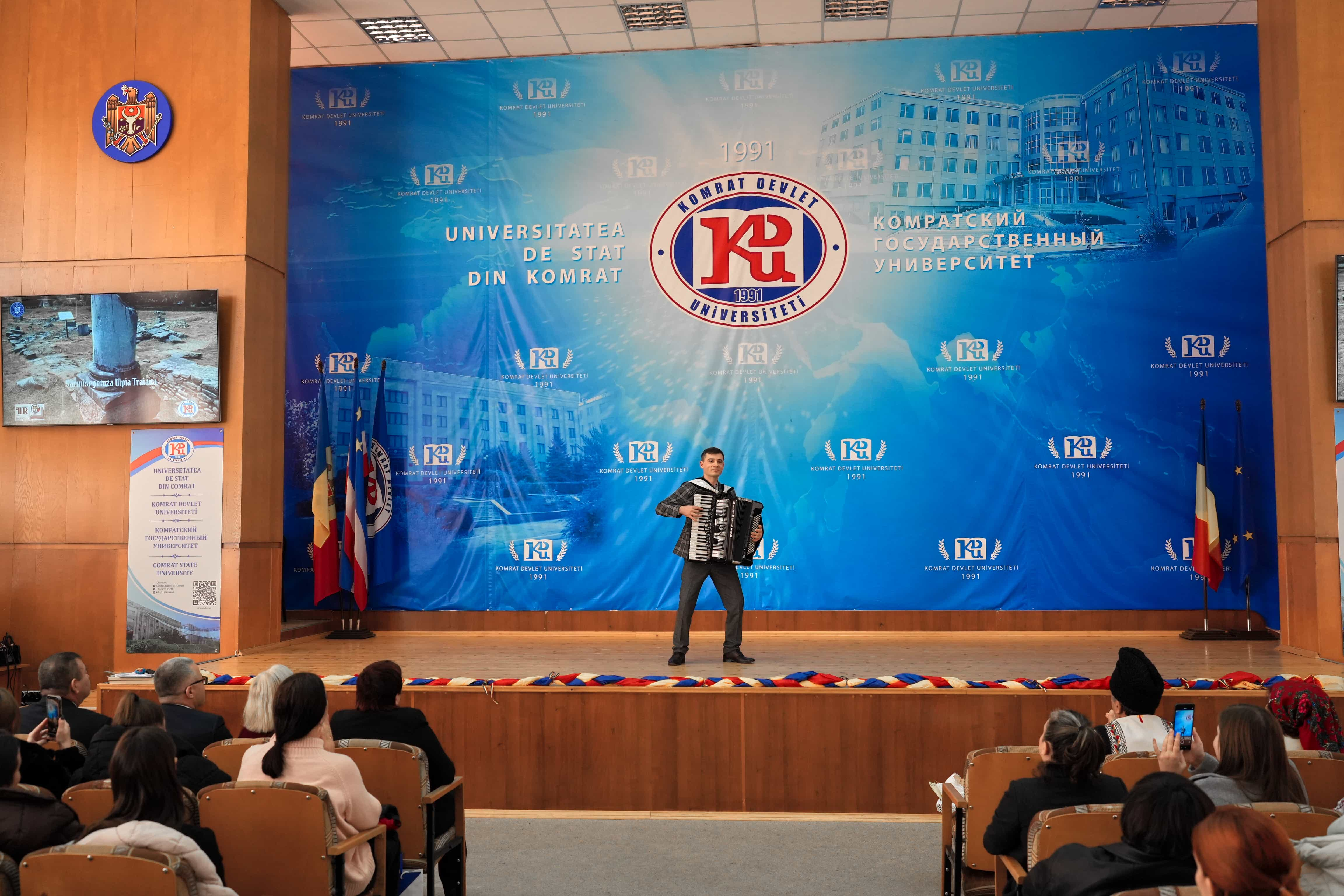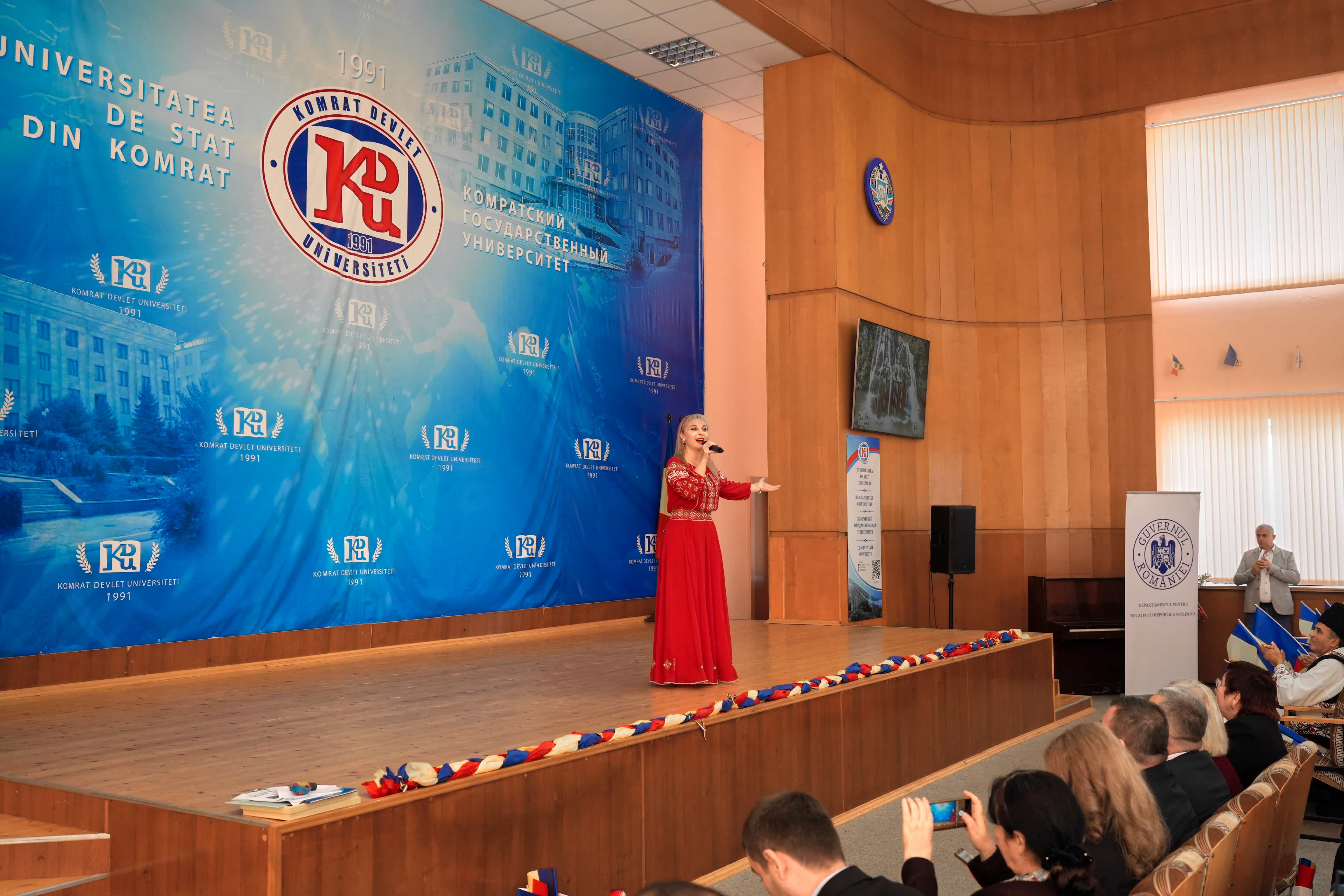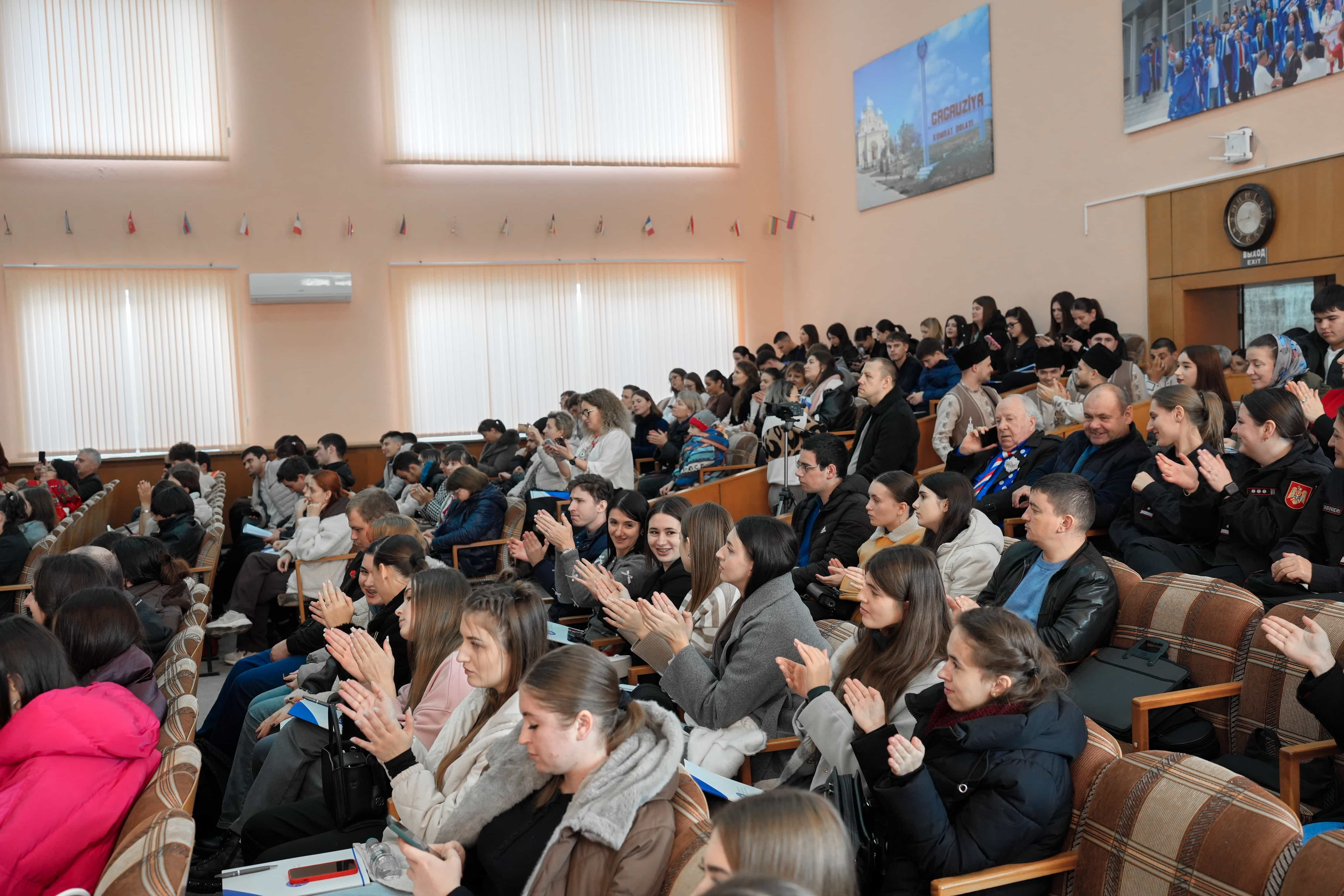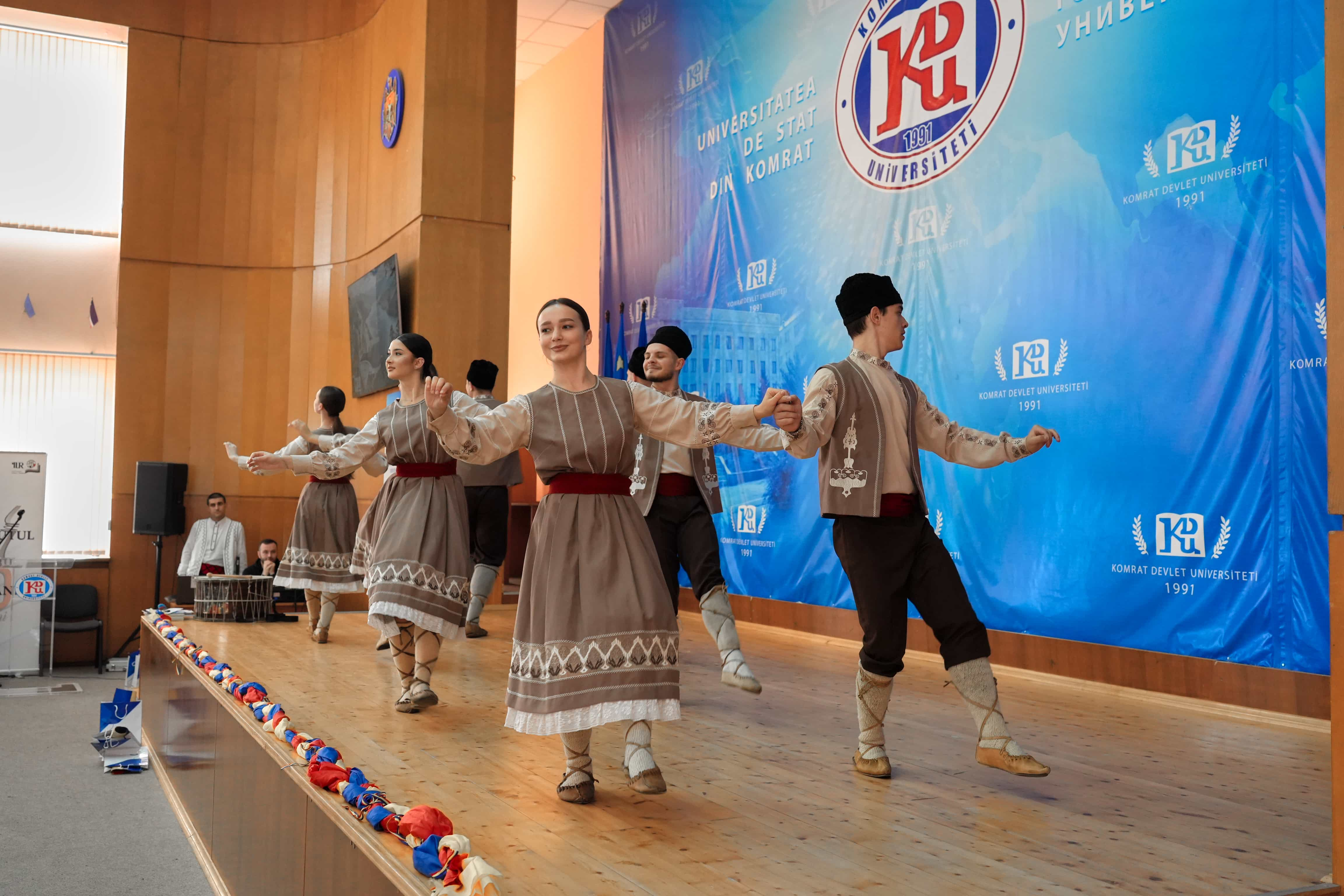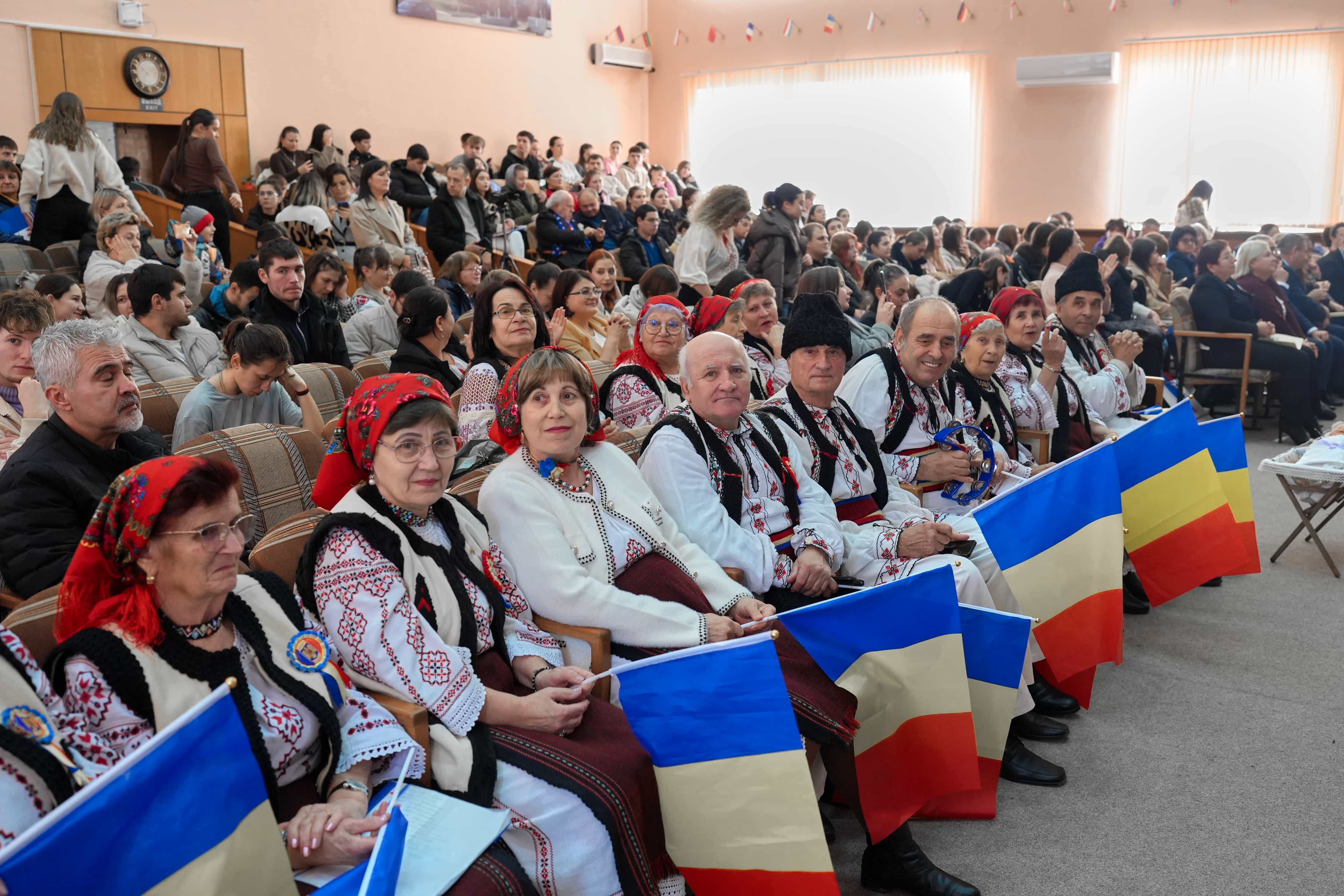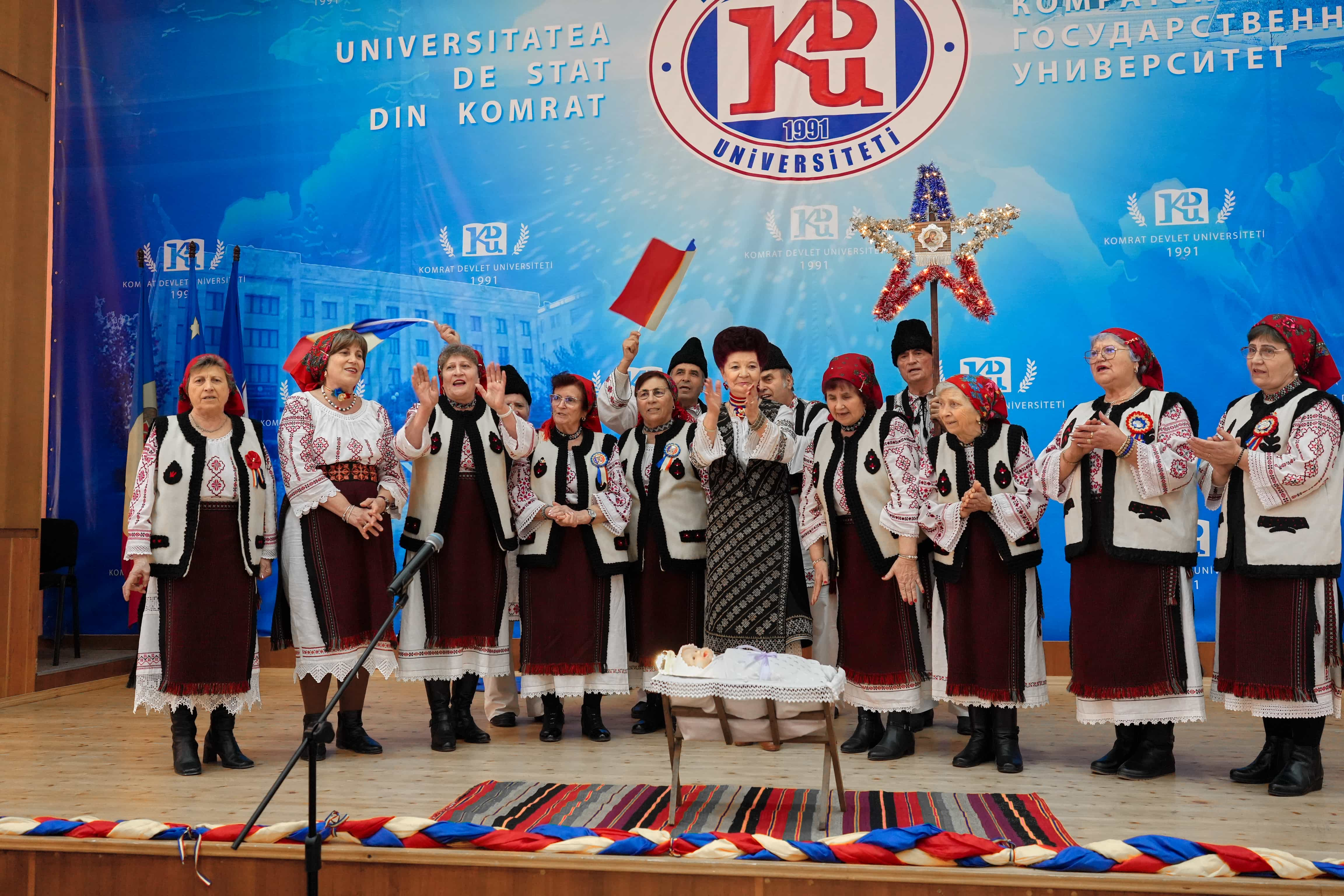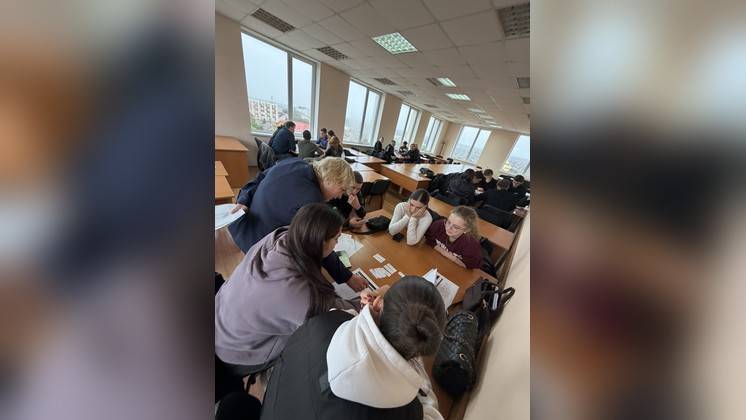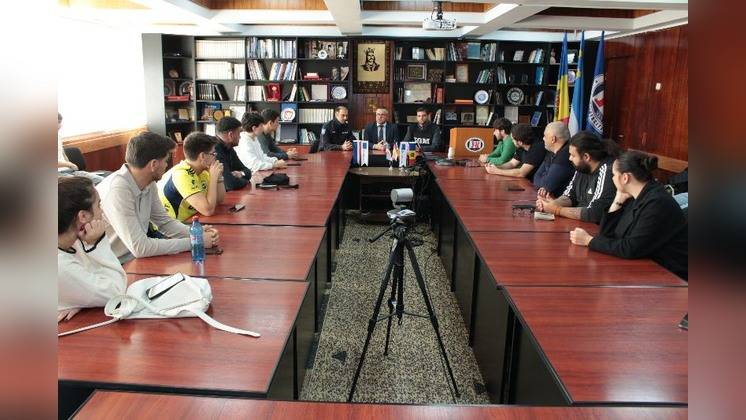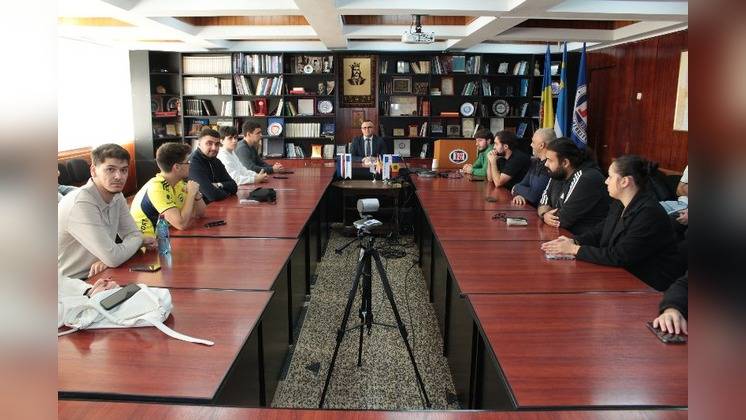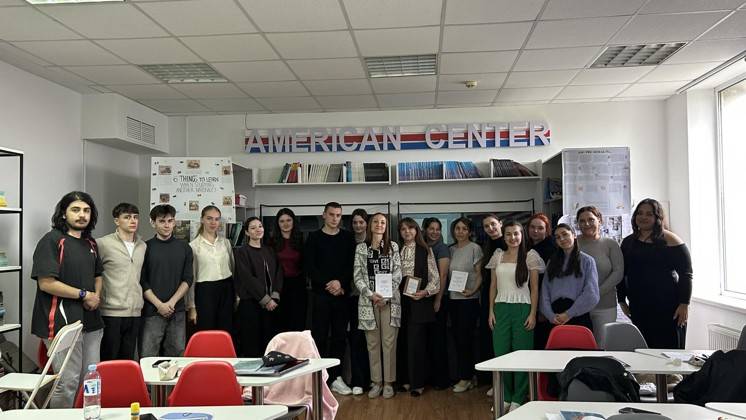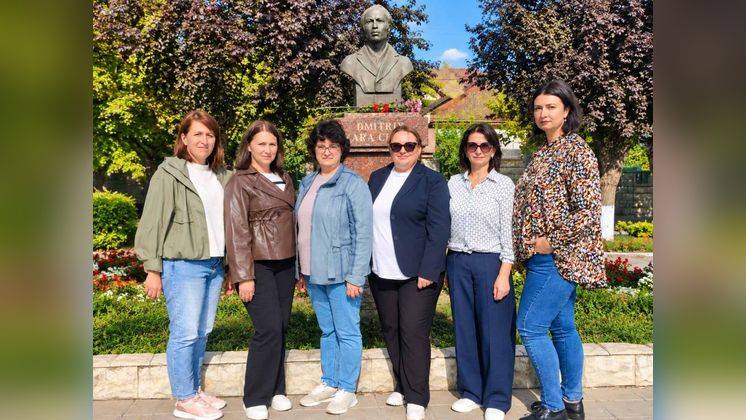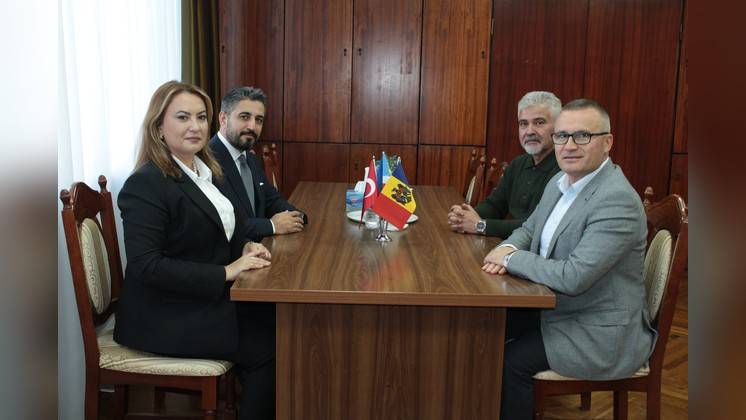




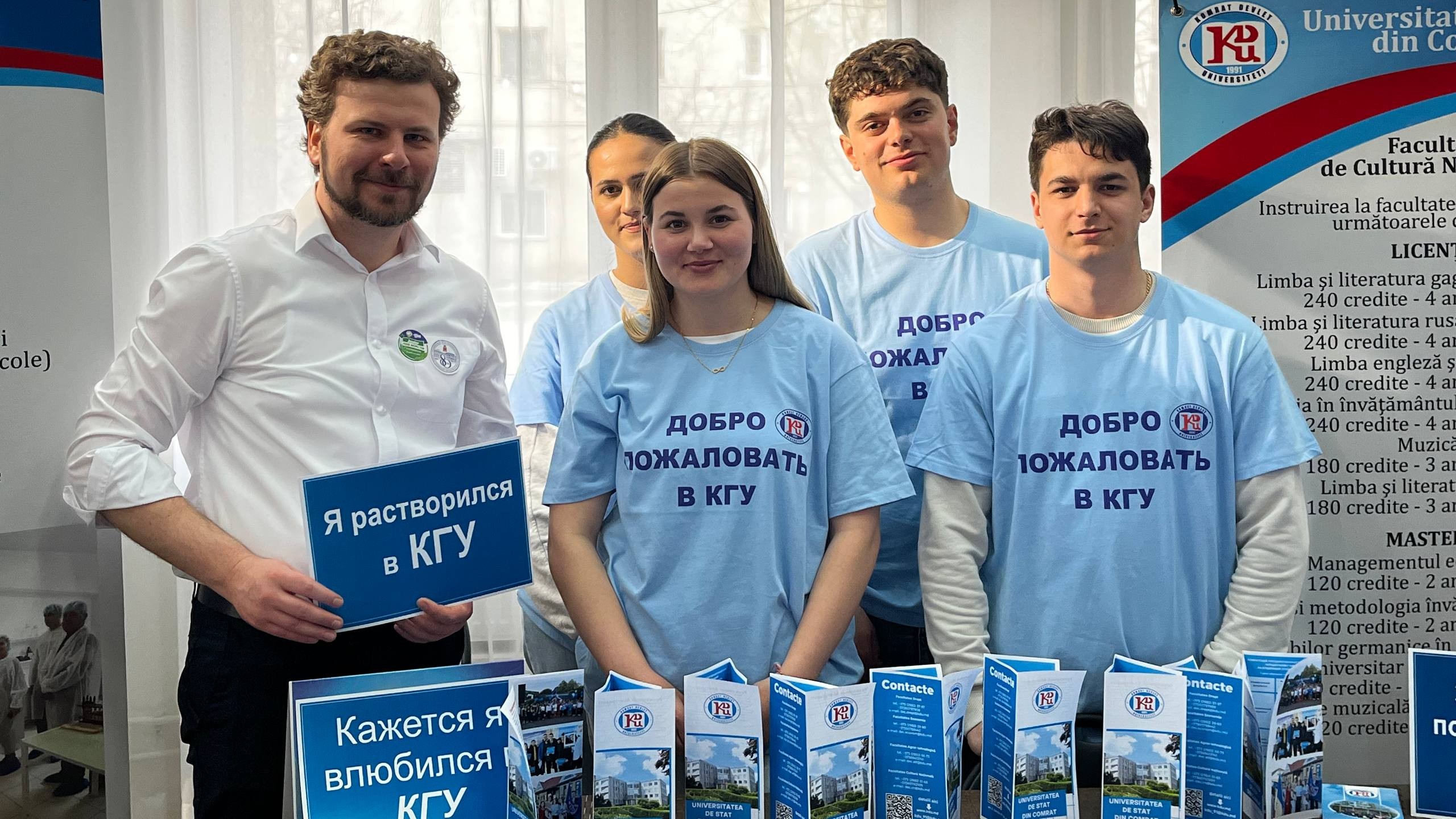



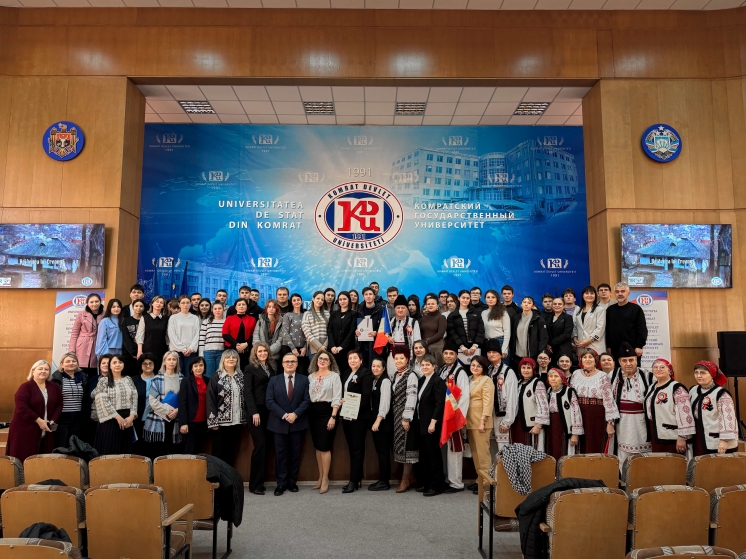

On 3–4 December 2025, Comrat State University (CSU) hosted the event “Conference: Romania’s National Day in Comrat”, organized under the Partnership Agreement between the Department for Relations with the Republic of Moldova of the Government of Romania and Comrat State University, with the financial support of the Department. The conference gathered around 250 participants, including 20 academic staff members and 175 students of CSU, representatives of the Consulate General of Romania in Cahul, the Theoretical Lyceum “Mihai Eminescu” in Comrat, the merited ensemble “Düz-Ava” of Gagauzia, the folklore group “Glasul Odăieșilor” from Galați (Romania), as well as representatives of local authorities such as Comrat City Hall, the Police Directorate of Gagauzia, the Southern Regional Directorate and the Carabinieri. The event was held within the framework of strengthening Moldovan–Romanian cooperation, aiming to reinforce interinstitutional relations and offer CSU students the opportunity to expand their knowledge about the history, geography, traditions and cultural heritage of Romania, while also improving their Romanian-language communication skills. The conference held significant social, educational and cultural value, aligning with current reforms that promote multilingualism and multiculturalism. Throughout the two days, participants attended various activities: registration and welcome coffee, opening speeches, a concert of traditional songs and dances, the podcast “CSU Students in Dialogue”, and lectures delivered by invited experts. These included the presentation by Dr. Silvia Corlăteanu-Granciuc, Associate Professor — “The History and Significance of Romania’s National Day”; the lecture by Dr. Angela Popovici, University Lecturer — “Cross-border Synergies: The Formative Role of the Romanian Language in Personal Education”; and the presentation by Dr. Gina Aurora Necula, Associate Professor — “About Homeland and Patriotism”. The event concluded with a festive lunch and a competition of Romanian songs and poetry for students. Participants emphasized that multilingualism opens doors to the future, while monolingualism limits communication and reduces tolerance and inclusion. The program contributed to strengthening students’ understanding of the importance of cooperation between neighbouring countries, enhancing Romanian language proficiency among CSU students, preserving cultural identity within local Romanian communities, and expanding linguistic competencies among educators and children