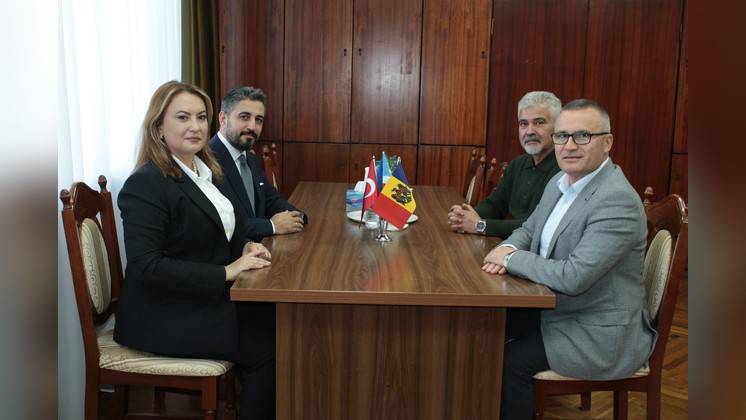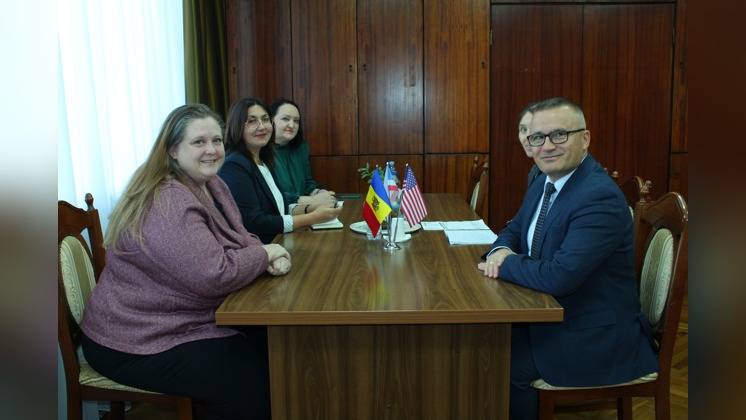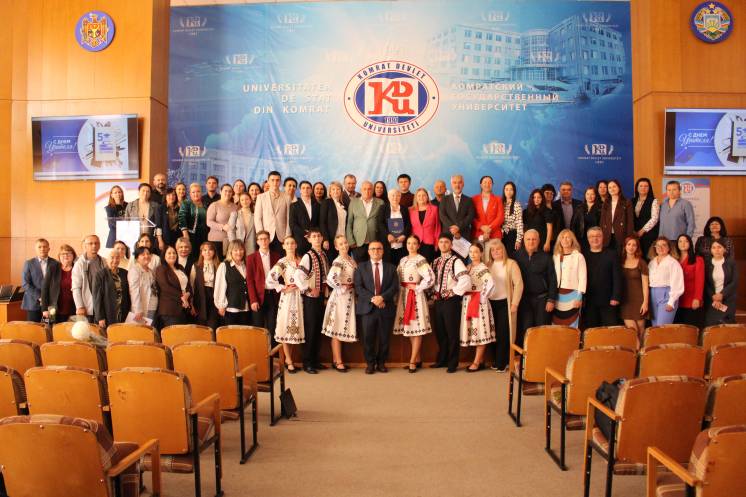








On October 15, 2024, Comrat State University hosted a delegation of foreign ministers and the state secretary from the Northern Baltic Eight (NB8) countries, which include Denmark, Iceland, Latvia, Lithuania, Norway, Finland, Sweden, and Estonia. The delegation's mission was to engage with students, faculty, NGO representatives, business leaders, and local authorities in a discussion on the prospects of European integration. Among the attendees were Baiba Braže, Minister of Foreign Affairs of Latvia Espen Barth Eide, Minister of Foreign Affairs of Norway and Pasi Rajala, State Secretary of the Ministry of Foreign Affairs of Finland. Latvian Ambassador to the Republic of Moldova, Mr. Edgars Bondars, also attended the event. The distinguished guests were welcomed by the Rector of Comrat State University, Assoc. Prof., Dr., Serghei Zaharia., who provided a brief history of the university’s development. During the discussions, the NB8 representatives reaffirmed their support for Moldova’s path towards European Union membership. Topics included the current geopolitical situation, regional security, the fight against propaganda and disinformation, migration, the strengthening of cybersecurity, and trade-economic cooperation. Baiba Braže explained that migration is a natural process within the framework of free movement in the European Union. However, she emphasized that Latvia remains home to all its citizens, many of whom return, and that thanks to free movement, Latvians have the opportunity to work and study in any EU country. Espen Barth Eide highlighted that Norway has chosen its own path based on national interests but actively cooperates with the EU through the economic zone, allowing it access to markets without sacrificing independence. State Secretary Pasi Rajala noted that despite challenges such as the global financial crisis or the pandemic, the benefits of EU membership for Finland far outweigh the disadvantages. Finland feels safer and more economically resilient thanks to the support of the European Union. Baiba Braže further noted, "When Latvia joined the European Union 20 years ago, 60% of our citizens supported this decision. Today, support has grown to 80-82%. For the modern generation in Latvia, EU membership is both natural and beneficial." The meeting in Comrat revealed that Gagauzia's residents have many questions regarding European integration and the preservation of autonomy. EU representatives answered openly, but the key point emphasized was that the choice of the future lies with the people of Moldova and the Autonomous Territorial Unit of Gagauzia. The EU is ready to support that choice and offer its expertise, but the final decision must come from the people.